

U.S. ethanol industry sets its sights on the world
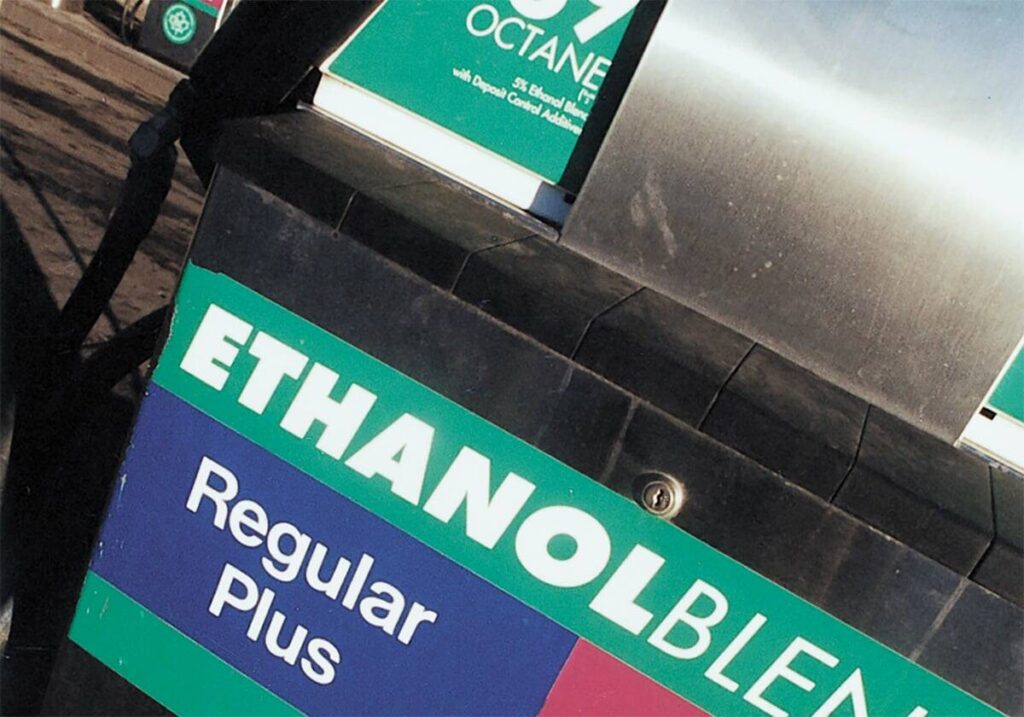
SASKATOON — Canada remains the top export market for U.S. ethanol, purchasing 757 million gallons of the fuel in 2024-25.
The country blended the fuel at a 10 per cent level (E10) nationwide last year, with some provinces adopting an E15 mandate.
“As they continue to move to E15, they could be our first billion-gallon market,” Ryan LeGrand, president of the U.S. Grains and Bioproducts Council, told delegates attending the U.S. Department of Agriculture’s 102nd annual Agricultural Outlook Forum.
Read Also

Year-round food production coming to Saskatchewan First Nation
Cowessess First Nation is planning to construct another sustainable project with the help of the federal government.
The United States shipped out a record 2.13 billion gallons of ethanol around the world in 2024-25, up from the 1.75 billion gallons exported the previous year.
LeGrand said the goal is to continue expanding exports until the country is fully using its two billion gallons of excess production capacity.
WHY IT MATTERS: Ethanol exports will help mop up potentially large corn carryout in future years.
There are plenty of promising markets, but Mexico tops the list. The country passed an E10 mandate in 2017, but it was later struck down by the courts due to a technicality.
Mexico’s new president, Claudia Sheinbaum, is an ethanol proponent, so LeGrand is hopeful E10 can be resurrected. That would create a 1.3-billion-gallon market for the fuel.
“We will get nearly 100 per cent of that market,” he said.
“We’ve got rail, truck and vessel access to our neighbour to the south.”
The European Union has been a good customer, but only three per cent of their ethanol can be produced from crops. The U.S. is trying to get it to increase that percentage.
The U.S. was shipping 230 million gallons of ethanol to the United Kingdom at a 19 per cent duty. Exports to that market are expected to jump to 360 million gallons following a new trade pact that eliminates the duty.
Nigeria just built Africa’s largest oil refinery, which that has a pipeline that can pump ethanol from an ocean vessel to a dedicated storage facility.
That is a 300-million-gallon market that does not exist today.
India does not buy fuel ethanol. However, there could be a market in that country for using ethanol as a cooking fuel to replace wood, charcoal and animal dung burned in confined household spaces.
Every one per cent of that cooking fuel market that is converted to ethanol amounts to 40 million gallons of demand, and the clean-burning fuel would improve the health of Indian families.
Japan was using Brazilian ethanol to make ethyl tertiary-butyl ether (ETBE), but it recently switched to U.S. ethanol, creating a 144-million-gallon market.
Japan intends to implement an E10 mandate in 2030, which would create a 1.2-billion-gallon market for the fuel. LeGrand expects the U.S. to get the lion’s share of that market with Brazil taking the remainder.
However, the biggest opportunity is in the maritime industry, which consumes 135 billion gallons of fuel annually.
“A fraction of that moves the needle in a big, big way for our industry,” said LeGrand.
Ethanol can be used as a drop-in fuel in the new dual fuel engines being installed on ships.
“With the right regulatory framework, this could be a real game changer,” he said.

Source: producer.com