
U.S. trade rep credits Trump for ‘paradigm shift’
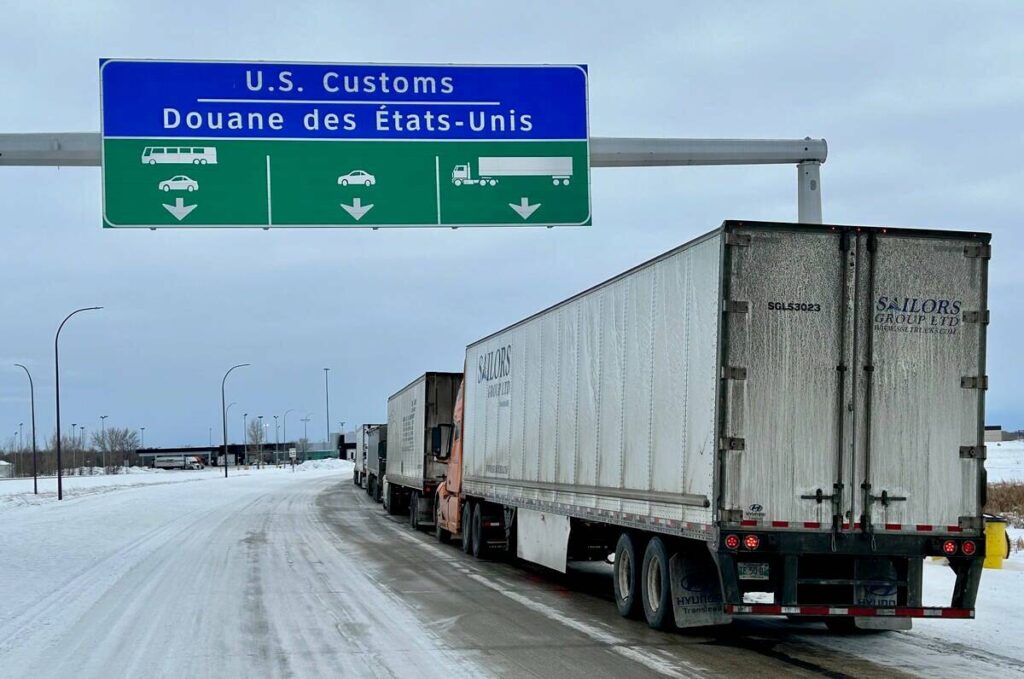
SASKATOON — The U.S. Trade Representative does not want the status quo when it comes to agricultural trade relations with Canada.
Julie Callahan, chief agricultural negotiator with the USTR, said the U.S. ag trade deficit with Canada has gone from US$3 billion in 2020 to $12 billion in 2024.
“There’s something going on there that we really need to look at,” she told delegates attending the U.S. Department of Agriculture’s 102nd annual Agricultural Outlook Forum.
Read Also
In case you missed it; your national ag news recap for Feb. 20, 2026
https://youtu.be/3qWU-B6N8HA Canada’s global trade deficit narrows, U.S. exports hit low Canada’s trade deficit narrowed in December even as its share of exports…
That issue will be thoroughly vetted during the 2026 review of the Canada-U.S.-Mexico Agreement (CUSMA).
WHY IT MATTERS: The U.S. accounts for 62 per cent of Canada’s annual agri-food exports.
Callahan recognizes how important the trade deal has been for U.S. agriculture, acknowledging that it was a big improvement over the previous North American Free Trade Agreement.
She has seen the letter signed by 124 national and state farm organizations calling for a 16-year renewal of the pact.
However, she has also heard feedback from groups who say CUSMA isn’t working in their favour.
“There is room for improvement,” said Callahan.
One area she wants addressed is how Canada administers its dairy tariff rate quota (TRQ) system.
“Canada knows and we know we want that improved,” she said.
The USTR has been meeting with Canada and Mexico in advance of the review, so there is full transparency on what issues the U.S. wants addressed.
Callahan was asked about a rumour that the U.S. would prefer to negotiate two separate bilateral agreements rather than sticking with the trilateral pact.
She said there have been bilateral discussions on various issues, but that was the case during the original CUSMA negotiations as well.
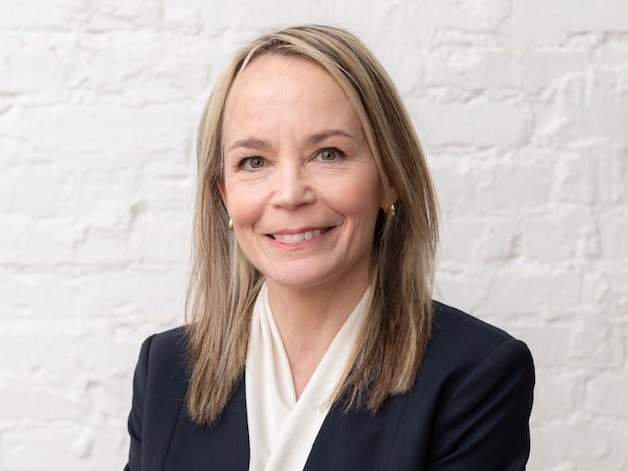
photo:
USTR.gov
“At this point it’s too early to see what ultimately that review will entail, but we are taking our bilateral frictions seriously,” she said.
Callahan said U.S. president Donald Trump’s administration has created “a paradigm shift” in how the USTR operates.
She said Trump’s reciprocal tariffs have caused a “wholesale reset” in how negotiations are conducted with dozens of negotiations now happening simultaneously.
The U.S. finalized agreements with Taiwan, Guatemala, Malaysia, El Salvador, Bangladesh, Argentina and Cambodia in 2025.
The contours of many other agreements have been set but need to be finalized. That includes agreements with Indonesia, Vietnam and other Southeast Asian and Latin American countries.
“We need to get those over the finish line,” said Callahan.
Then her focus will turn to emerging markets in sub-Saharan Africa where there are some “truly egregious trade barriers.”
Many of those markets have untapped potential due to rising populations and incomes.
“We’re not going to rest at the USTR,” she said.
“We’re not going to stop getting on planes and going into countries.”
One delegate attending the conference asked Callahan why these new reciprocal agreements have no specific trade volume obligations.
Callahan said the agreements are focused on two objectives: removing non-tariff trade barriers and negotiating preferential tariff access for U.S. agricultural products.
“What we are really looking for is long-term market access opportunities,” she said.
What happens after that is up to the private sector.
Luke Lindberg, undersecretary for trade and foreign agricultural affairs at the USDA, said that is where the USDA comes in with its trade missions and trade promotion programs following successful USTR negotiations.
The USDA aims to get U.S. commodity groups on the ground in those countries within weeks of agreements being signed.
That led to a whole bunch of travel in 2025.
“Never in the history of the United States have we had so many wins on opening up new access for our producers in such a short period of time,” he said.
Lindberg said the agreements appear to be paying dividends, noting that the USDA is forecasting an agricultural trade deficit of $36 billion for 2026 versus $50 billion at the same time last year.
“We’re making progress. We’re chipping away,” he said.
One example stems from the U.K.-U.S. Economic Prosperity Deal that opened the TRQ for U.S. ethanol by 50 per cent.
By the end of this quarter the U.S. will be shipping 50 per cent more ethanol to the United Kingdom than it was a year ago.
“The progress is happening,” said Lindberg.
“The wins are coming across the finish line.”
‘Not a given’
Callahan said a number of trading partners were “lukewarm” about addressing non-tariff trade barriers in the past.
That changed dramatically when Trump introduced his reciprocal tariffs.
“It’s really a unique opportunity to have a president that comes out and says, ‘you know what — access to the U.S. market should not be considered a given or a right,’ ” she said.
Callahan called Trump’s reciprocal tariffs “a game changer.” Suddenly dozens of motivated trading partners wanted to negotiate.
Her remarks were made one day before the U.S. Supreme Court ruled that Trump exceeded his authority by using emergency powers to impose the reciprocal tariffs.
Callahan noted that in the past, trade partners were always coming up with new certification or registration requirements for U.S. food products and production facilities that would disrupt trade.
In the new agreements, countries commit to accepting the certifications and oversight of U.S. regulators.
“This is a monumental shift,” she said.
Lindberg said Trump’s One Big Beautiful Bill doubles the amount of Market Access Program and Foreign Market Development funding effective October 2026, which will greatly help the USDA’s trade promotion agenda.
He also mentioned the GSM-102 program, which provides foreign buyers with a credit break to purchase American food products.
Callahan said the metric she will use to judge herself is whether the U.S. ag trade deficit is shrinking and moving toward a surplus.
“That really is the proof of whether what we’re doing is working,” she said.

Source: producer.com