
UNDRIP appearing in agriculture sector’s radar
WINNIPEG — British Columbia farmers are alarmed about recent Indigenous rights legislation due to their unique treaty situation. The risk for the rest of Western Canada is that critical shipping infrastructure through that province will be delayed or halted entirely.
Six months ago, few Canadians were familiar with a law called the United Nations Declaration on the Rights of Indigenous Peoples (UNDRIP) Act.
Now, it’s drawing a lot of attention in B.C. and may soon become a familiar topic across Canada, but not likely carrying the same level of risk because the treaty framework exists in other provinces. Much of B.C. is on unceded land, including major urban centres.
Read Also

U.S. wheat sales to Indonesia about to rise significantly
U.S. wheat sales to Indonesia are set to rise following a trade agreement between the two countries, but not necessarily at the expense of Canadian wheat.
Some legal experts say the laws, passed in 2019 in B.C. and in Ottawa in 2021, give First Nations a veto over natural resource projects. Critics also worry that Indigenous groups will co-manage or decide what happens on public lands, such as crown lands for grazing and national parks.
There’s a small risk that First Nations will use UNDRIP to challenge the “cede and surrender … the land” language in the historic treaties on the Prairies.
Another group of lawyers see this as progress.
It isn’t the end of democracy, resource development and property rights in Canada. It’s about the country moving forward, they say.
The debate is messy but one thing is clear — the United Nations Declaration on the Rights of Indigenous Peoples Act is an important piece of legislation.
It requires the federal government to ensure that Canadian laws are aligned with the UN declaration and have an action plan to achieve the goals of the declaration.
“Those are statuatory requirements,” said Dwight Newman, a law professor at the University of Saskatchewan and Canada Research Chair in Rights, Communities and Constitutional Law.
“Those passing it might of thought it was symbolic, but it’s going to be a real thing.”
Interpretation
The UN Declaration contains 46 articles, which detail basic rights of Indigenous people.
Some articles seem inconsistent with Canadian laws.
Article 32 mentions the need for government to obtain the “free and informed consent (of Indigenous people) prior to the approval of any project affecting their lands or territories and other resources.”
That sort of language isn’t in Section 35 of Canada’s constitution, which lays out the rights of Indigenous people.
UNDRIP is already influencing court decisions in B.C. and will likely be cited in future decisions across Canada.
“The declaration is an important source to interpret provincial and federal law. In fact, provincial and federal courts are already using the declaration in this regard,” says a federal government website.
In brief, UNDRIP is a big deal, but most people know nothing about it.
An Angus Reid poll, released in August, found that only 14 per cent of Canadians have knowledge of UNDRIP.
UNDRIP is known in B.C.
Many British Columbians are now aware of it, including Werner Stump, a cattle rancher from Sicamous, B.C.
Stump first heard about it in 2019, but he didn’t take it seriously until 2024.
That year, the B.C. government unveiled a legislative amendment where public lands would be co-managed with First Nations, including crown land for grazing.
The concept emerged from the provincial UNDRIP Act, which encourages the province to make decisions in conjunction with First Nations.
The B.C. Cattlemen’s Association and business groups pushed back against the idea of co-managing public lands, saying it creates too many unknowns.
If Stump lost access to crown land for grazing because a stakeholder cancelled his lease, his cow-calf operation would be in jeopardy.
“It would mean that I would become a hobby farm,” said Stump, who is president of the BCCA.
The province backed down on its plan, but the uncertainty about land and land access persists in B.C.’s ag industry.
“It’s a very unnerving situation,” Stump said.
Thanks to UNDRIP, the B.C. government is moving toward co-jurisdiction or co-management of public resources with Indigenous groups, said Geoff Moyse, a lawyer who specializes in Aboriginal law and worked in successive provincial governments in B.C. within the legal services branch.
“There is a massive attempt going on to actually transfer governance authority (of land and resources) to First Nations communities who are not voted for by ordinary British Columbians,” Moyse said.
That could lead to scenarios where a small First Nation has decision-making power that could affect the entire province and its 5.7 million residents, he said.
“This is wholly and completely undemocratic…. UNDRIP has added huge uncertainty to the land base,” Moyse added.
The B.C. Conservatives have promised to repeal the UNDRIP Act in the province, arguing it’s a major risk to its prosperity.
Claiming UNDRIP will cause utter chaos is absurd, said a lawyer who specializes in Aboriginal law but asked to remain anonymous.
The act doesn’t create any new rights for Indigenous people that don’t already exist in Canada, he said.
“It’s used to interpret Canadian law. It doesn’t overwrite Canadian law.”
Fear mongering, say First Nations
On Feb. 6, the B.C. Assembly of First Nations and other Indigenous groups released a statement on the Declaration Act (UNDRIP).
Calls to amend or repeal this legislation is a “fear based” response and an attempt to blame First Nations for “economic uncertainty,” it says.
UNDRIP provides a road map for future economic growth and stability, the organization adds.
“British Columbia faces a clear choice about the path we walk together: a path of negotiation, collaboration and shared prosperity … or a path that takes us backward to a place of uncertainty and conflict.”
The Western Producer contacted the B.C. Assembly of First Nations for comment but didn’t receive a response by press time.
UNDRIP and the numbered treaties
Some of the historic treaties that cover the Prairies have very clear language about the land. Treaty 4 says the Cree, Saulteaux and others “cede, release, surrender and yield” their territory to the crown.
Parts of UNDRIP could be used to challenge the validity of the treaties, but it’s a minor risk.
“It throws into question the basis for the numbered treaties … but I don’t think it’s an argument that would succeed,” Moyse said.
“It does create (legal) ammunition. It throws another potential argument to treaty First Nations, who have, I think, been looking for ways to get out from that ‘cede, release and surrender.’ ”

photo:
Supplied
It’s unlikely UNDRIP could over-ride the treaties, so farmers and landowners on the Prairies shouldn’t worry, Newman said.
“The simple answer on the Prairies is that the numbered treaties deal with land claim issues, overwhelmingly,” he said.
“The treaties … cover the entirety of the three Prairie provinces. The land has been transferred.”
B.C. is a different kettle of fish because only a fraction of B.C. is covered by a treaty.
There are Aboriginal title claims, which are unrelated to UNDRIP, across 95 per cent of the province.
“All kinds of things could happen in British Columbia,” Newman said.
Ports and pipelines
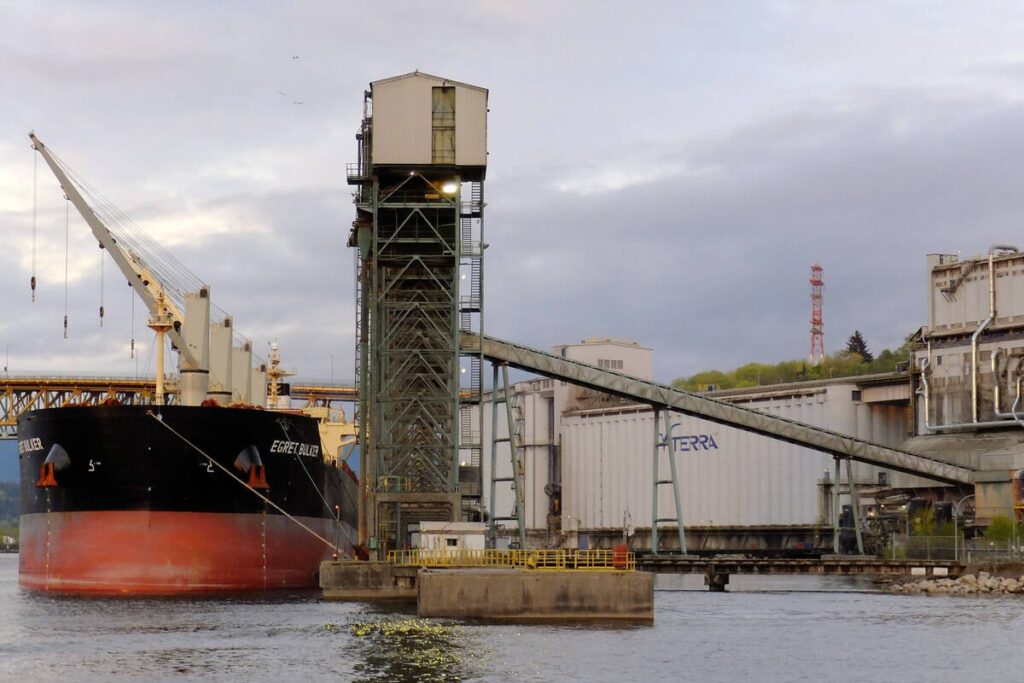
While UNDRIP doesn’t pose a direct threat to private land on the Prairies, there could be risks for major projects in Canada, such as ports and pipelines serving the West Coast.
Farmers and resource industries, including fertilizer companies, want to export their products to the world through B.C.
If building new ports and other infrastructure becomes more difficult because of UNDRIP, it could have economic consequences.
“The feds are trying to push national projects,” Moyse said
“But his (Prime Minister Mark Carney’s) UNDRIP requirements … effectively say he has to get consent … before he does any of these national projects.”
The federal government, on its website, says UNDRIP is not a veto over decision making. It does, though, set a much higher standard for Indigenous consent.
UNDRIP proponents say it’s too early to pass judgment. Canadians are just seeing the beginnings of what could be a new relationship with First Nations, said a lawyer who specializes in Aborginal law.

Source: producer.com