

University of Maine scientists develop plastic-free packaging using mushroom mycelium
The innovative mycelium coating delivers strong barrier performance while decomposing naturally, signalling a major step forward in sustainable food packaging development.
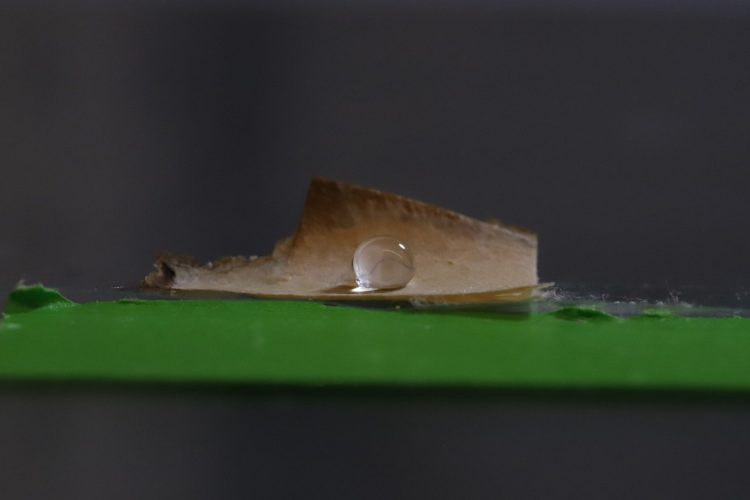
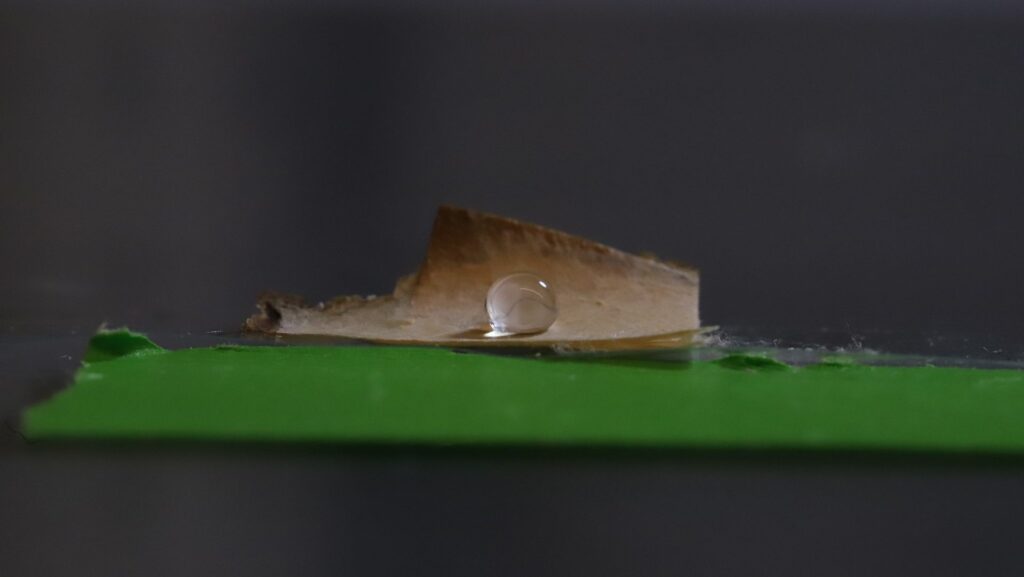
A drop of water sits on top of mycellium coated cellulose nanofibrils used to make plastic-free packaging. It’s part of a test to see how well a surface of the nanofibrils resists water in the lab. Photo courtesy of the Howell Biointerface Lab.
University of Maine researchers have unveiled a fully biodegradable, plastic-free food packaging material made from mushroom mycelium and wood-derived cellulose, designed to replace conventional plastics.
The innovation comes amid intensifying scrutiny of plastic packaging. Recent research suggests more than a quarter of the 16,000 chemicals used in plastics may pose risks to human health, while the United Nations estimates 19–23 million tonnes of plastic enter rivers, lakes and oceans each year. At the same time, retailers and consumers are demanding packaging that maintains the performance and convenience of plastic without its environmental impact.
The Maine team’s solution combines cellulose nanofibrils, a plant-based polymer known for oil resistance and biodegradability, with a thin coating of mycelium, the root-like fungal network beneath mushrooms that naturally repels water.
Caitlin Howell, UMaine associate professor of bioengineering said:
Plastics are very good at what they do, but then again so were forever chemicals and lead in paints and gasoline.
It sometimes takes us a while to understand the long-term impacts of the things we invent, but the good thing is that when we do, we can change. The nice thing about fungi is that we already eat them, so we know that they’re going to be safe for us long-term.”
By combining CNF’s grease resistance with mycelium’s water resistance, the researchers say the material can meet key functional requirements of plastic food packaging while remaining compostable at end of life.
Howell added:
Nature has solutions, and as humans, we can look at and adapt to those solutions and better fit it in with our ecosystem, we don’t have to choose plastic.”
Three-day production accelerates commercial potential
A major barrier to mycelium-based materials has been production speed. The Maine researchers reduced the time required to produce usable material to just three days, a significant step towards commercial viability.
Led by chemical engineering PhD candidate Sandro Zier, the team pre-grows the fungus before blending it with nutrients and CNFs. This process ensures the fungal filaments, or hyphae, start small and grow uniformly throughout the material. The fungus selected for the project, Trametes versicolor, commonly known as turkey tail mushroom, naturally grows on decaying wood, enabling it to use wood-derived CNFs as a food source while forming a protective barrier layer.
Once dried, the mycelium coating measures just 20–25 microns thick, roughly a quarter of the thickness of a human hair. The process can be used either to coat existing substrates such as paper or to create standalone films, with one side slightly fuzzy and the other comparable in feel to plastic.
The team is now focused on industrial scale-up. By adapting the plastic-free coating process to roll-to-roll manufacturing systems used in packaging production, output could increase from square centimetres per hour to square metres per hour. Zier is working with undergraduate researchers to develop a commercially viable roll-to-roll approach.
Howell believes the implications could extend beyond fully replacing plastic structures.
Maybe we don’t need the fungus to grow through everything. Maybe we can just use it on the top as a layer. I think it opens a whole lot of new avenues for creating sustainable materials.”
Source: newfoodmagazine.com