
Vancouver loses 'a culinary community centre' with sudden closure of Floata Seafood Restaurant
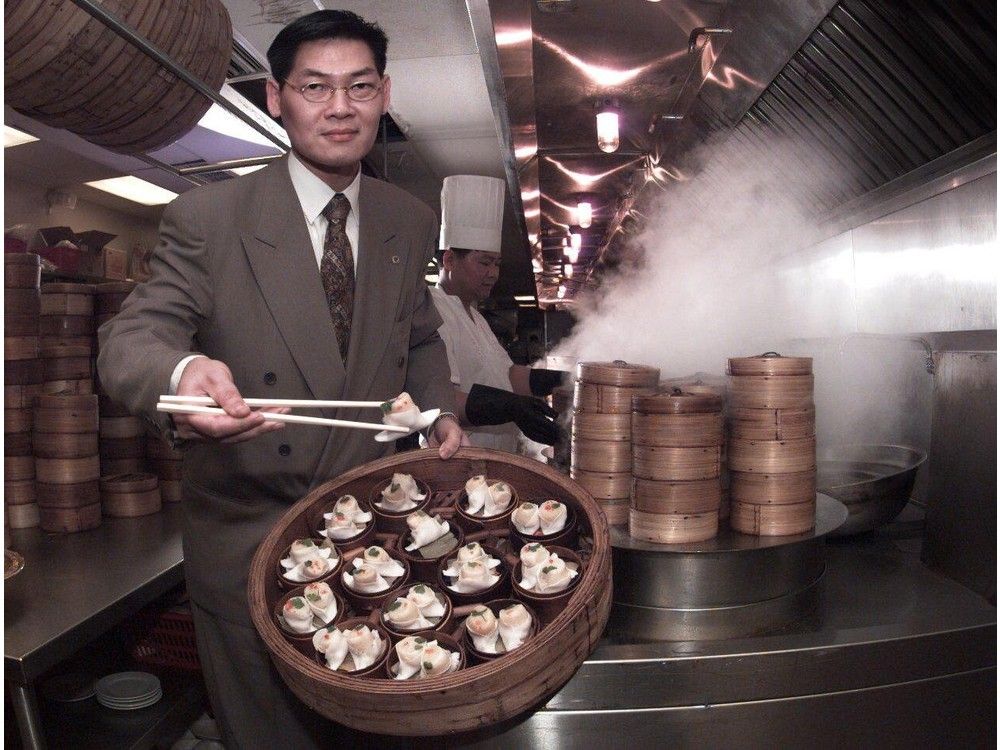
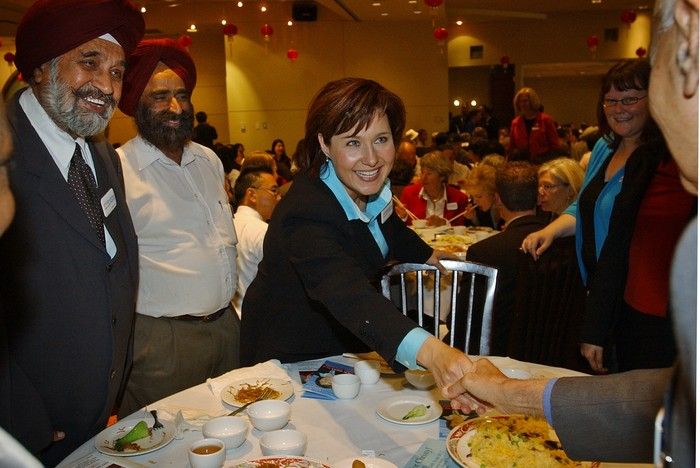
Over the past three decades, the sprawling dining room of Floata Seafood Restaurant hosted prime ministers, premiers, mayors, business leaders of every stripe, and way too many weddings, political events and formal occasions to count, with as many as 1,000 guests dressed to the nines packing the Chinatown landmark for fancy nights out.
But for Donna Seto’s family, the restaurant served a less ostentatious but no less important role: A chance to come together over early morning dim sum.
With Seto’s father working long hours and nights in restaurants in the 1990s, the family’s only chance to all dine together was in the morning. So they would go to Floata, she recalls, which opened early in those days.
“Because of his schedule, he couldn’t come to dinner with us, he couldn’t have lunch with us. It had to be an early breakfast … At seven in the morning, I don’t want to eat dim sum, but I’m scarfing down my har gow and siu mai, because it was our family time together,” said Seto, a local writer and artist. “That’s the only time we had as a working class, immigrant family, we had to squeeze it in. It was important for us.”
Floata’s sudden closure, after 30 years in Vancouver’s Chinatown, came this week as a sad shock to many locals, especially in the Chinese community.
Often called Canada’s largest Chinese restaurant, Floata’s size and layout allowed it to fill a crucial role as a community hub, gathering place and special occasion venue. The restaurant’s abrupt closure — and the uncertainty over what will happen next with its roughly 5,600-square-foot location in the city-owned Chinatown Plaza mall on Keefer Street — leaves a particularly large hole in the community, as one of Vancouver’s last large banquet-style Chinese restaurants.
While Seto was researching her recent book, Chinatown Vancouver: An Illustrated History, she heard from Chinatown seniors who told her about other larger Chinese restaurants in the neighbourhood that had closed decades earlier, such as Ming’s, which opened in 1950 and could serve 350 guests in an upstairs room on East Pender, or WK Gardens, which held 700 people and hosted federal politicians, business magnates and Hollywood stars over the years.
“I never knew those restaurants, because I was too young,” Seto said. “Floata is the one I know, where I went to celebrations. So it’s quite sad and emotional that it’s closing.”
Floata was also a space where community members could encounter acquaintances who they didn’t regularly see, she said. Her parents would sometimes bump into people they hadn’t seen since immigrating from Guangdong in southern China in 1980.
“They didn’t have Facebook or Instagram, so that’s how you connected with people,” she said.
Phone calls and emails to Floata weren’t answered Thursday.
The restaurant’s closure, first reported Wednesday evening by Global News, is due to its landlord, the City of Vancouver, terminating its lease.
The city didn’t reply to Postmedia News’s questions Thursday before deadline.
Floata had struggled coming out of COVID-19, and in 2021, the restaurant’s management asked the city to reduce or waive some of the $300,000 the restaurant owed in back-rent so it could remain afloat, Business in Vancouver’s Mike Howell reported.
More recently, health inspectors found evidence of rodent and insect activity on the Floata premises over repeated visits this year, Vancouver Coastal Health records show.
When the Chinatown Plaza, with its seven-storey parkade and shopping mall, opened at the corner of Keefer and Quebec streets in 1995, The Vancouver Sun hailed the development as “leading the revival” of Chinatown. Floata was its anchor tenant. It’s not easy to run such large spaces in a city where land values, rents and property taxes are so high.
Another 30-year-old dim sum staple, the Victoria Chinese Restaurant in the Royal Centre, closed earlier this year, amid allegations of failure to pay rent. The Imperial in the Marine Building closed years ago.
The Pink Pearl on East Hastings Street is still operating, but its days could be numbered, as the Daily Hive reported last year that the property is being eyed for redevelopment.
These kinds of restaurants were particularly hard-hit by COVID, said Andy Yan, director of Simon Fraser University’s city program.
While some eateries could pivot to takeout or focus on serving drinks on outdoor patios during the pandemic, this wasn’t an option for banquet halls that rely on big, in-person events. Many such businesses still haven’t fully recovered years after the pandemic first hit, Yan said.
“It’s the long-COVID effect, it takes years for this to surface,” he said.
Floata was important not only to Chinatown, but also to the rest of the city and the region, said Yan.
“The issue here is that it’s not only a restaurant where you show up to eat, but it’s a place where you gather. It’s a culinary community centre.”
Yan doesn’t know what will happen next with the Floata space, but hopes another restaurant operator can take it over and run a similar kind of business there.
“These types of spaces are unique, they are built-to-suit,” said Yan, whose father ran the Kwangchao restaurant in Vancouver’s Chinatown in the 1960s and ‘70s. “No one’s building new spaces like that.
“What happens when we lose them? Arguably we become lesser as a city, we lose another gathering space. And if we don’t have these gathering spaces, how do we make a city?”
Related
Source: vancouversun.com