

Vancouver, meet next level yakitori at this Michelin-starred restaurant
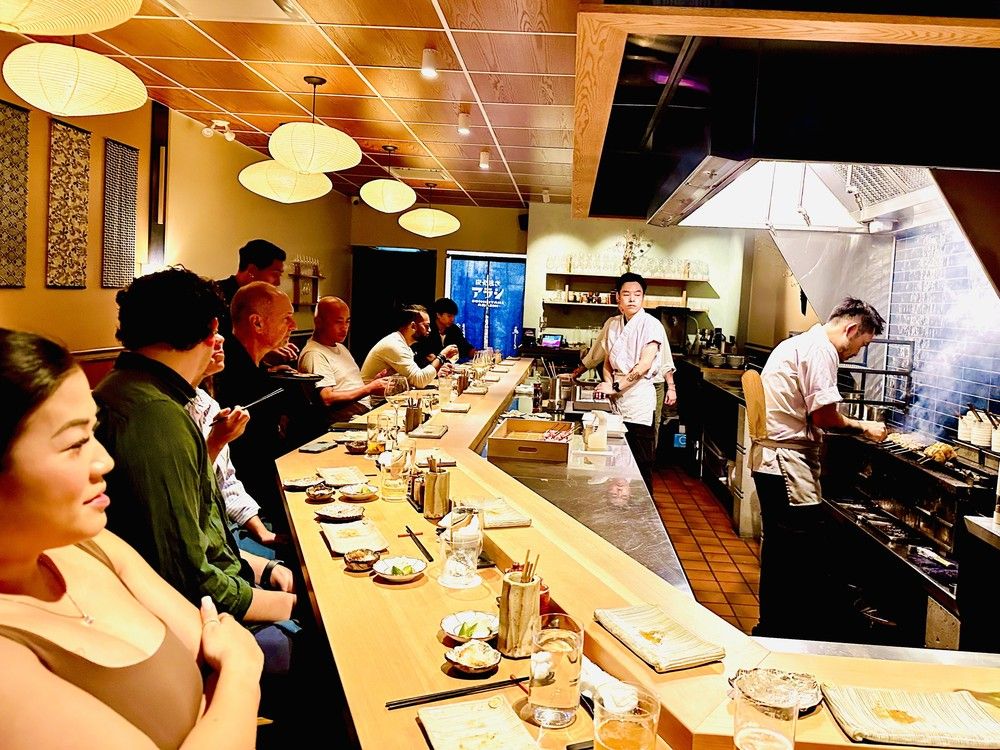
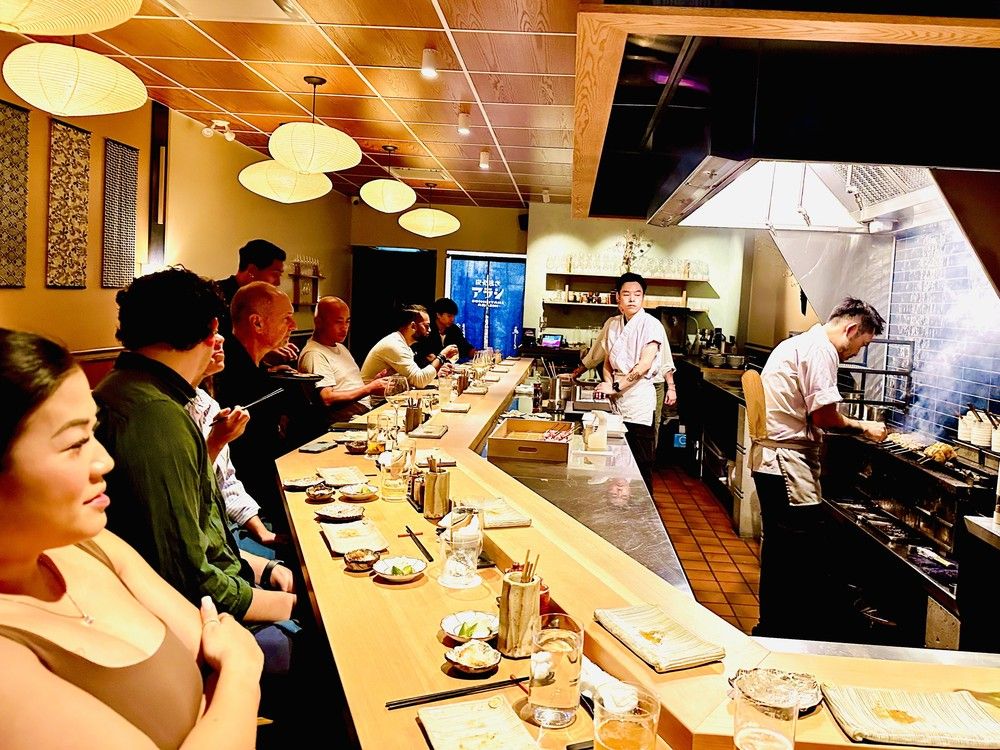
Sumibiyaki Arashi
Where:
363 East Broadway, Vancouver
When:
Dinner, Tuesday to Sunday
Info:
sumibiyakiarashi.com
Behind every great chef, is there a grandma? Often true, I find.
Case in point — Peter Ho, awarded a Michelin star a few short months after opening his first restaurant, Sumibiyaki Arashi. His yakitori restaurant is also a finalist in the annual Canada’s Best New Restaurants Awards, with winners to be revealed later this month.
His inspiration? His late grandmother. “What inspired me the most is her passion and love for cooking and for who she would be cooking for,” he says. “Grandma was a great cook.” She had a side job catering and he cooked with her “learning the foods she’d make — 12-hour braised eggs, braised pork trotter, midnight egg congee, and so on.”
His grandparents would take him a couple of times a year on trips to Japan and that’s where Ho found the love of his culinary life. He cooked in Vancouver (Yuji’s, Wabi Sabi, Hawksworth, Ouest) before heading to Tokyo. While there, he had a serendipitous opportunity to cook with yakitori master chef Yoshiteru Ikegawa.
“Everyone calls him the yakitori godfather because of his passion and the way he treats his guests,” says Ho. “His yakitori is so impactful. There’s no b.s., it’s straight up chicken, charcoal grilled, and he rarely puts other things on the dish.”
Ikegawa is a Professor Higgins of yakitori, elevating, refining and lifting the humble dish to artful dining with meticulous prep, high-quality ingredients, the best charcoal, a kaiseki-like progression, and memory-making guest experiences.
Ho was the first non-Japanese chef invited to work for several months at Ikegawa’s flagship restaurant, Yakitori Torishiki, and then the mentor arranged for him to work at two “disciple” Michelin-starred restaurants. “He loves to spread the art of yakitori and supports people who are passionate about it. A lot of what I’m doing is heavily influenced by him,” says Ho. Ikegawa lists Ho’s restaurant on his restaurant group’s website as a “partner and resonant companion.”
Landing one of the 14 seats at Sumibiyaki Arashi is adult musical chairs. Reservations are accepted on the first day of each month at 9 a.m. or noon (check Instagram for the starting gate) for the following month. Bam! Within seconds, seats are gone. (Tock will notify guests on a waiting list when there are cancellations.)
You pay $175 per person up front — a no-show for a 16- to 17-course meal in this tiny room is not OK. In fact, diners, no-shows are hardly ever OK.
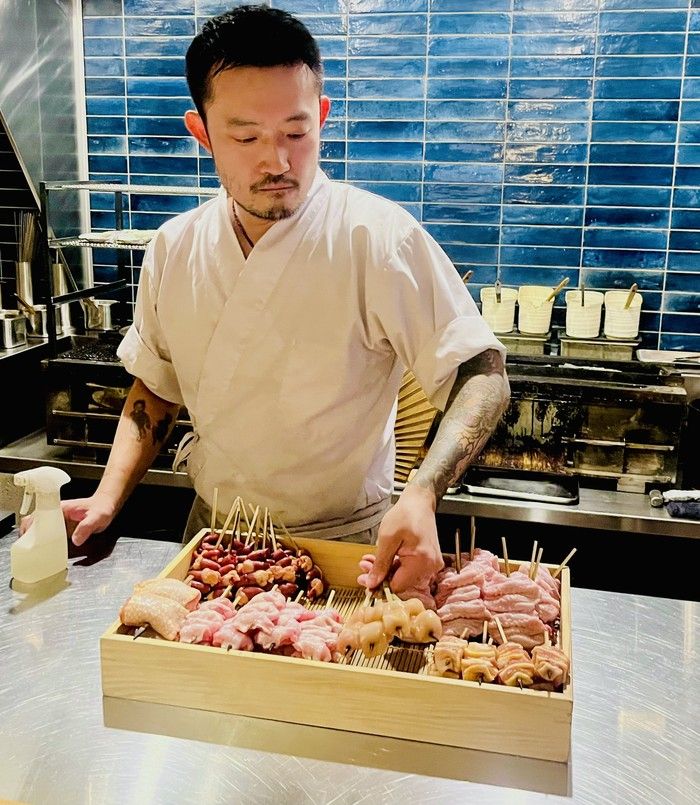
And, you should like chicken! It’s a yakitori restaurant — but not entirely. There are lane changes with seasonal fish, beef and vegetable dishes. In the chicken lane, you will experience parts previously unknown, such as chicken artery, chicken heart or chicken knee (“so delicious,” Ho says). The antibiotic- and hormone-free chicken is locally sourced from Wingtat Game Bird Packers. Finished with a corn diet, they’re hung to dry before delivery to lock in flavour.
Ho uses three layers of charcoal for grilling — eucalyptus white charcoal on the bottom for igniting, then a layer of the remains from the day before, and on the top, Kishu and Tosa binchotan. The Kishu binchotan is made by a third-generation Japanese producer, using dense ubame oak that produces long, clean, intense, smokeless heat. Ho displays a plaque from the company signifying their relationship. “It’s special because not everyone gets one,” says Ho.
His $100,00 ventilation system is sometimes too good at removing smells, steam and smoke. In fact, he likes some cooking aromas, so he’ll whip out a fan he tucks in his back waist to invite a burst of intense heat or flame to caramelize and aromatize.
For some dishes, Ho uses a tare glaze/sauce, which began with a mother sauce from his mentor, Ikegawa. The tare is now 32 years old and, unlike a lot of things, gets better with age. He tops it off daily and keeps it going, like sourdough or molé. “With certain skewers, I’ll grill them to 60 or 70 per cent doneness and then dip as I grill,” he says.
The 16-course dinner proceeds with a quiet reverence, each dish served with a verbal description. The first few dishes were grilled abalone with dashi glaze, yuzu zest and uni; pickled daikon and cucumber; chicken breast with fresh wasabi and sudachi zest; chicken thigh, brushed with tare sauce; and chicken heart brushed with sesame oil and housemade soy sauce. “We make our own soy sauce to take all the edge off. It tastes just like we want,” says Ho.
Buttery Carrara wagyu yakiniku (named for the feathery marbling resembling Carrara marble) was a gorgeous bite, served with a deep-fried quail egg, rice ball with sancho pepper and an egg yolk sauce. Marinated apple reset the palate.

Housemade yuzu kosho (a zesty condiment) brightened a fattier, flavour-packed chicken drumette. The next dish was an add-on to the tasting menu — chicken artery from the top of the heart, and I liked both the taste and texture. Add-ons cost $9 to $12 and might include parts like thyroid or chicken tail. Alas, Vancouver Coastal Health doesn’t allow chicken ovaries. “It’s very popular in China and it’s asked for,” he says. “The Japanese traditionally call it the lantern because it looks like a hanging lantern.”
A Stoney Paradise tomato (the queen of tomatoes) interlude follows and its natural sweetness played well with the vinegared marinade. Paiton chicken soup, thick from reduction, makes sensible use of the bones and other unused parts.
A cube of tofu was fried, skewered and grilled, jacketing it with yummy crunch. It was followed by four skewered shiso peppers. Then, soft sweetness — chawan mushi topped with red Japanese crab and yuzu zest.
Chicken knee is Ho’s favourite part. “It’s a very active part of the bird so has more texture.” The Japanese word for it translates to “around the knee” and is technically part of the lower thigh, he clarifies. And gotta say, the juicy, fatty knee is my favourite part, too. Finely sliced Tokyo negi, like a pungent green onion, balanced the fat.
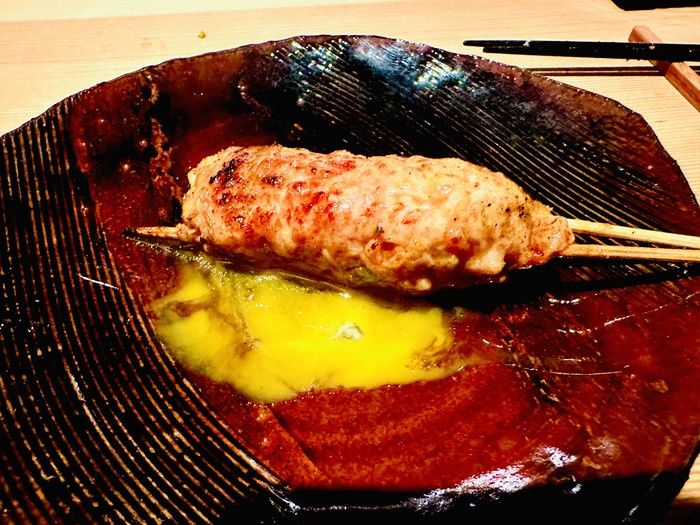
Chicken “meatballs,” more like minced chicken on a skewer, takes a dunk into the tare sauce and is served with egg yolk mixed with tare. Chicken wings (the middle part) are simply seasoned and grilled, finished with chicken fat and soy and served sizzling, with a squeeze of lemon.
In case guests aren’t satiated, the last savoury dish is a bowl of rice with minced chicken, and onsen egg. “Make sure you mix the egg through the rice,” we’re instructed.
And last, a simple dessert of roasted, fried, brûléed Japanese sweet potato and a perfectly ripened local melon.
For beverages, the unfussy program features a handful of sparkling and white wines and Asahi beer on tap. There’s also a solid sake list, offering a variety of styles and price points, with some available by the glass, as well as spirits like Japanese whisky, shochu, and yuzu- and plum-flavoured liqueurs.
Ashlee Jarvis runs the front of house with warmth and aplomb, just as she did, previously, at Good Thief and Anh and Chi.
Sumibiyaki Arashi is small, focused and exudes that Japanese kaizen philosophy of constant improvement, little by little. “It takes repetition,” he says. “The master taught me it’s important when serving customers to notice the little things, like the sound of ice in the glass when it’s empty. All these little things add up. I think more importantly, besides all the skills, it’s heart, passion and treating customers like they’re family. They need sincerity, to feel comfortable and to go home happy.”
https://www.instagram.com/miastainsby
https://www.vancouversun.com/tag/word-of-mouth-blog/
Related
Source: vancouversun.com