
Vancouver restaurants show that sake's time has officially arrived

The late, great French chef Joël Robuchon ran seven restaurants with three Michelin stars and had 38 celestial stars at one-time.
The icon was
a sake devotee, demanding it be in all his restaurants.
“I was completely restricting my kitchens without sakes,” he said.
Another French giant, Richard Geoffroy, was chef de cave at Dom Pérignon for 28 years, reviving the brand to its iconic status during his tenure. But in 2
019, he made a dramatic pivot and opened IWA 5, a premium sake brewery in Japan.
With such vaunted non-Japanese palates besotted with sake, you’d think a stampede of the curious would have followed.
Well, no stampede, but there’s definitely trotting.
Non-Japanese Vancouver restaurants are having “aha” moments followed by sake showing up on their drinks lists. Why now? First, there are sake teachers and agents spreading knowledge.
WSET, the
international certifier for wine and spirit training, has responded to the deepening interest and
now off
ers sake certification and validation. As well, there’s a whole new wave of sake makers in Japan, innovating and experimenting with different
styles and flavours, including sparkling sake and richer, bolder ones.
And, as in North America, alcohol consumption is dropping in Japan, so there’s more product
to export.
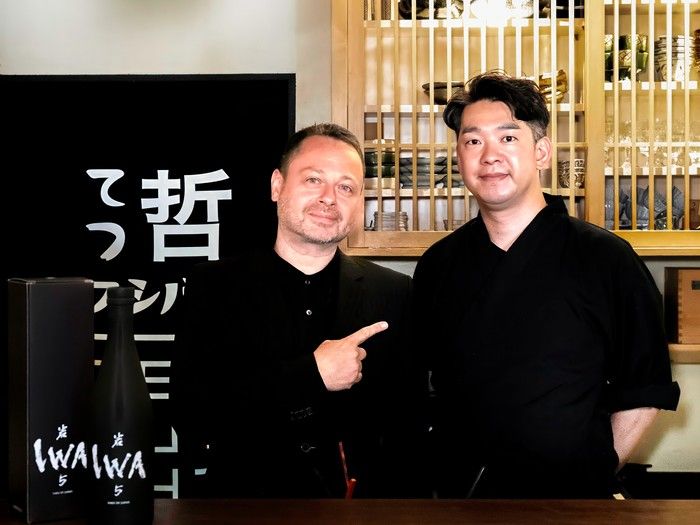
Recently, Geoffroy, the
former Dom Pérignon champagne maker, was at Tetsu Sushi Bar for a sake-paired dinner
(regularly h
appening these days). At the dinner, Ge
offroy
said his dramatic pivot to sake was the creative latitude.
“It was like getting the keys to Home Depot and not just working with a table saw and router,” he said. “And sake is umami in a glass with 20 times more than in wine. It loves food. It amplifies flavour. Sake makes food shine. Try it with pizza. They’re umami bombs.”
Tetsu chef-owner Satoshi Makise invited
Geoffroy be
cause IWA 5 is his favourite sake.
“I feel his style is similar to mine. It’s still traditional but innovative. I love that. He creates different styles of sake using white wi
ne making t
echnology and ages it for different flavours. He’s created a sake with an aftertaste (lingering finish), not just an initial flavo
ur, an
d it can pair with any cuisine.”
Makise created a menu to sync with IWA 5’s terroir, the coastal Toyama prefecture known for exceptional seafood. Geoff
roy
blends three rices and five yeast strains for his sakes, and two of the yeasts are traditionally used in winemaking.
The most startling sake dinner, however, was at The Victor, a steak house, a daring move as I’ll bet 99 per cent of diners feel steaks are wedded to bold red wines. Steak, you say? I want tannins!
Patrick Ellis, one of about a dozen non-Japanese “sake samurais” in the world, was there to prove us wrong. Ellis dislikes saying “sake pairing” because, well, frankly, sake is kind of a floozy — it’ll go with anything and isn’t too fussy about what.
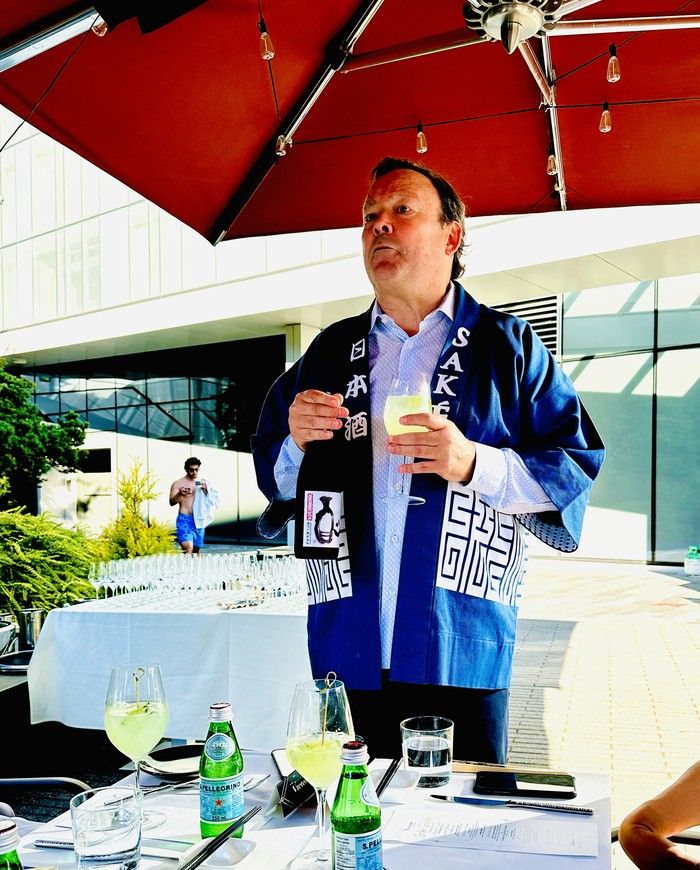
In more professional speak, Ellis s
ays, “It do
esn’t have many restrictions. It doesn’t have the acidit
y of wine, but what it does have is 20 to 25 times more umami than wine, and about 80 per cent of our taste r
eceptors are for umami.
“Umami is based on glutamate amino acids and it’s what starts you salivating,” he says. “It doesn’t fight with food, as wine can.”
Ellis
adds that beef contains inosinate (formed when muscle tissue breaks down) and when glutamate and inosinate are consumed together, it’s pure umami synergy.
“The perceived umami increases by up to 10 times than when consumed on their own,” Ellis says.
At The Victor dinner,
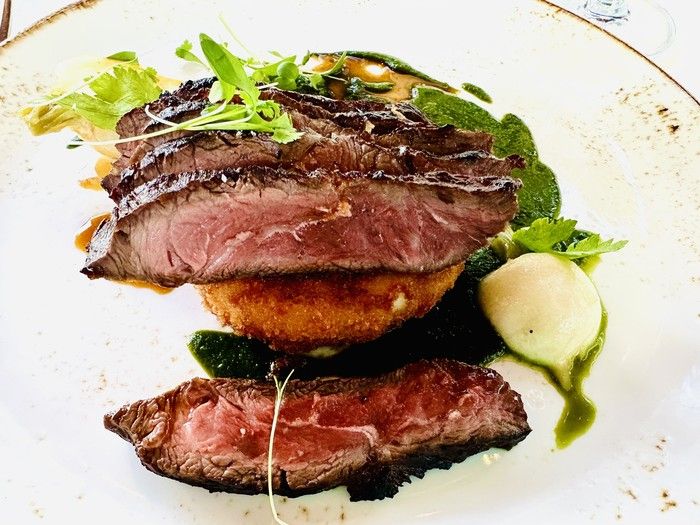
Dassai Junmai Dai Ginjo sake and Wagyu flatiron steak were very civil to one another, and might I say, they liked each other very much. Action! Kiss camera! The Victor is actually the perfect restaurant to test the sake-goes-with-anything claim because there’s sushi and sashimi for a classic pairing and steaks to test out the synergy.
Fanny Bay Oyster Bar is another non-Japanese restaurant that “got” sake. Owner Malindi Taylor says it’s a no-brainer.
“Oysters and sake are a natural pairing, complementing each other due to both being rich in natural umami flavours,” says Taylor. “We’ve had sake on our menu for the last seven years. Guests love seeing it on our Happy Hour menu as it’s not something you see everywhere.”
At Michelin-recommended Yuwa Japanese restaurant,
co-own
er and sake sommelier Iori Kataoka feels sake is finally getting its due.
“We can’t ignore sake anymore,” she says.
Not like when she opened a first restaurant in the early 1990s, and all she could get was boxed sake.
“It was on top of a machine and only hot sake would come out,” she says. “There were only two sake agents and now there are over 16, representing over 300 kinds of sakes.” And by the way,
warm brews are no longer the sign o
f loser sakes. Top brewmasters recommend heating to reveal, not mask, properties in certain sakes.
Yuwa recently held
a special event dinner with six Japanese sake makers and a barley shochu maker.
“Six different ideas for making sake, so it was super interesting,”
Kataoka said. The dinner included a sparkling sake, which she says, has been hugely successful.
“It’s compared to champagne. The bubbles don’t last as long but has the taste a
nd mouth feel
.”
A Wagyu beef dish was serv
ed with Shichihonyari Muu Kimoto, a rich junmai sake known for going well with both seafood and meat. To make richer sakes, there’s less polishing of the rice, keeping more of the husk. It takes skill as it can leav
e unwanted flavours, Kataoka says.
“This sake maker is very good at it, keeping some grain and balancing acidity and depth a
nd umami.”
With every visit to Japan, she discovers sake makers using new techniques, from the rice milling and fermentation, to aging, and experimenting with different woods, and trying different waters and yeasts. Or, for that matter, staying 100 per cent true to terroir.
“France’s wine sommeliers now do sake judging, applying wine analysis to judge colour, aroma, and taste, exactly like wine. Sake makers have always been detailed and specific but now there’s technology to analyze everything and scientifically keep sakes consistent from year to year.”
Restaurant
owner and sake whisperer Miki Ellis, (Dachi, Niwa) another longtime evangelist, loves triggering “aha” sake moments for guests.
“Our team is excited about sake and recommending them, and we try to focus on unusual styles, the weird and wonderful sides of what sake can be, to further add to ‘aha’! We have a lot of somms (sommeliers) and industry people come in and say, ‘Oh my god, I never thought of it this way.’”
And she’s squared off with wine people at private dinners pitting sake against wine for each course.
“Sake won! It surprised us,” she admits. “I have yet to find food that doesn’t go well with sake. It’s more of a challenge with wine.”
Related
Source: vancouversun.com