
WM-FieldForm system debuts as an upgrade
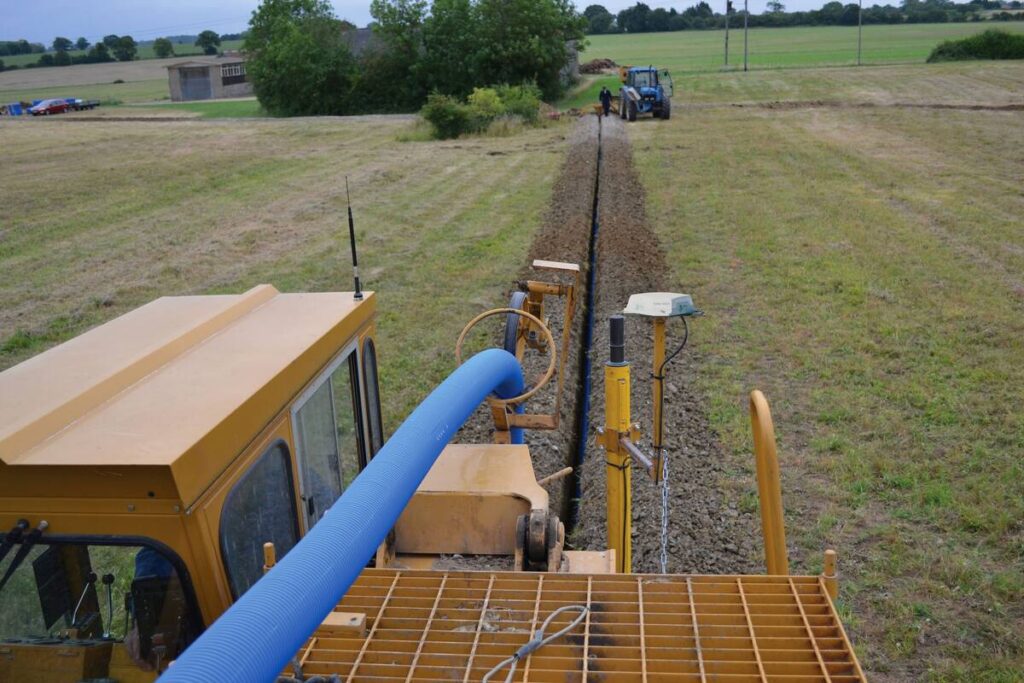
In the past decade, an increasing number of Prairie farmers seem to have turned their attention to improving field drainage.
Late last year, PTx Trimble introduced an updated system to make that process even simpler and less time consuming.
“Last fall we released WM-FieldForm, which is moving our surface drainage solutions from our previous generation of hardware into our GFX displays and utilizing our newest GNSS receivers,” says Josh Ide, PTx Trimble’s strategic marketing specialist.
Read Also
John Deere introduces updates to its combine
The 2027 model year will see the debut of several new features for John Deere’s line of combines, particularly the X9.
“And we’re currently developing our field drain solution, which is moving from our previous generation. It was WM-Drain and our new product will be called WM-FieldDrain.”
The updated systems are designed for use with PTx Trimble’s GFX 1060 and 1260 displays, which are significantly faster than the previous generation displays. They get paired with the brand’s Nav 960 receivers, which can access signals from a larger number of satellites for improved accuracy.
“Previously we only used GPS and Glonass,” says Ide.
“Now we’re using BeiDou, Gallileo and QZSS as well, European, Chinese and Japanese constellations. It’s around double the number of satellites we can use at a time.”
PTx Trimble provides a complete hardware and software package for setting up a tractor and scraper or tile plow to do do field drainage. That includes a hydraulic control valve for the implement, receivers for both tractor and implement, the in-cab display and RTK system.
“If you’re starting from scratch, it’s roughly $20,000 to have all the hardware for the tractor and implement,” says Ide.
“That’s adding our display as well. One advantage is the display and receiver can be used for guidance as well.”
RTK is an essential element for accurate drainage, according to Ide. That is due to the amount of vertical error in satellite systems, which is generally twice the horizontal error distance in a system.
“We recommend that high-accuracy system for corrections. That’s because vertical error is double the horizontal error.”
PTx Trimble’s drainage systems could be installed as a DIY project, but it’s best to have it done by a dealer’s technician.
“We do have installation instructions that could allow you to do it, but it’s not necessarily recommended,” adds Ide.
When it comes to putting the system to work, the process begins by doing a field survey. If a grower knows there are only a couple of problem areas that need to be addressed, a survey could be limited to those areas.
The new PTx Trimble system helps significantly shorten the time it takes to do all that.
“It’s a lot faster than even 2D systems, using lasers,” says Ide.
“(With older systems), farmers could take an entire day or several days just surveying a field, or even individual tile lines.
“With the receiver on a tractor or even an ATV, they can survey a 40 acre field in 30 minutes and know where those problem points are. So, it’s had a huge impact on the speed of doing that.”
Armed with that information, producers can then design each tile or drainage ditch line and install the system.
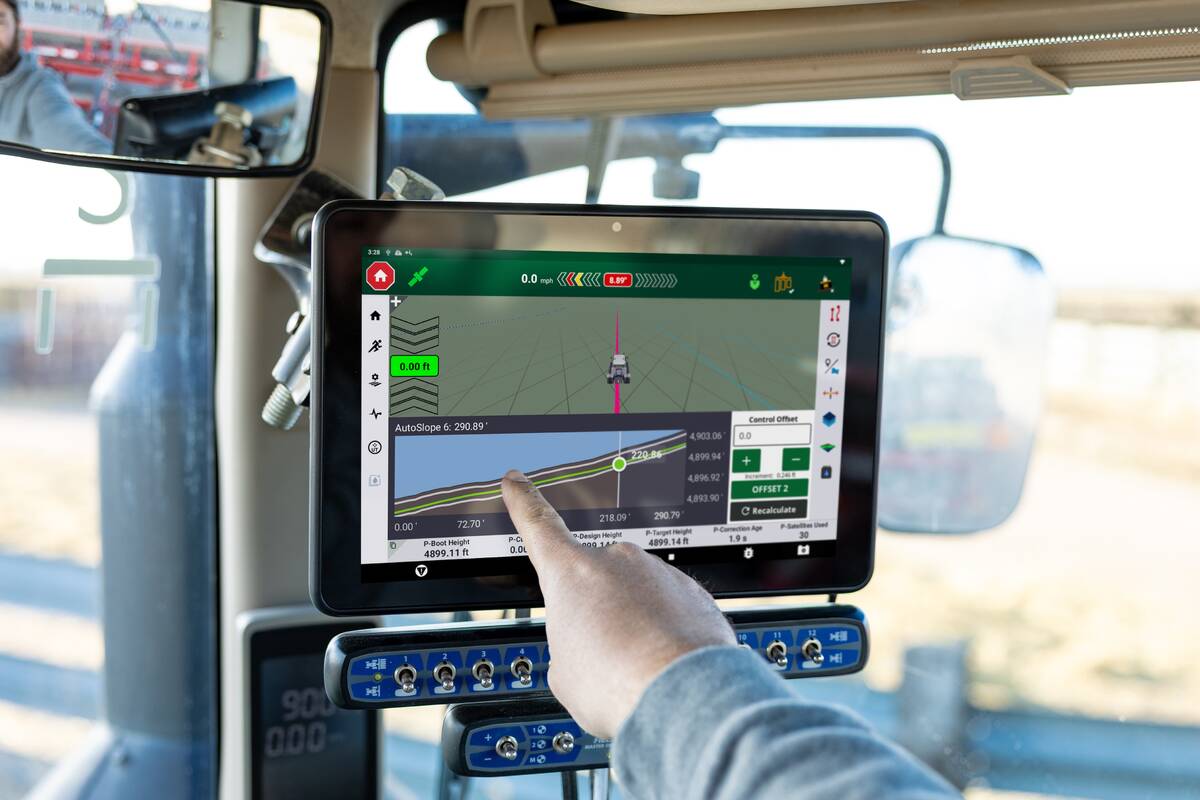
Ide says planning those lines can be done best by producers who know their fields well, and each run will be dependent on the topography.
“Every field is unique. There’s some art to it as well. If you ask 10 people to design for the same field, you’re going to get 10 different responses or solutions. They’d probably all work. Some of those responses are regional. It’s a little bit different everywhere you go.”
While it’s difficult to put a general dollar value on improving yields by installing a drainage system due to the uniqueness of every field, Ide notes there other advantages as well.
“When you do drainage work on a field, you can get days or even weeks, depending on the soil type as far as access to it. That’s a huge advantage. It allows you to get to those problem areas earlier to get as close as you can to those ideal harvest and planting times.”

Source: producer.com