
Women of agriculture’s generational impact
Farm women are increasingly receiving the credit they’re due, but other generations didn’t.
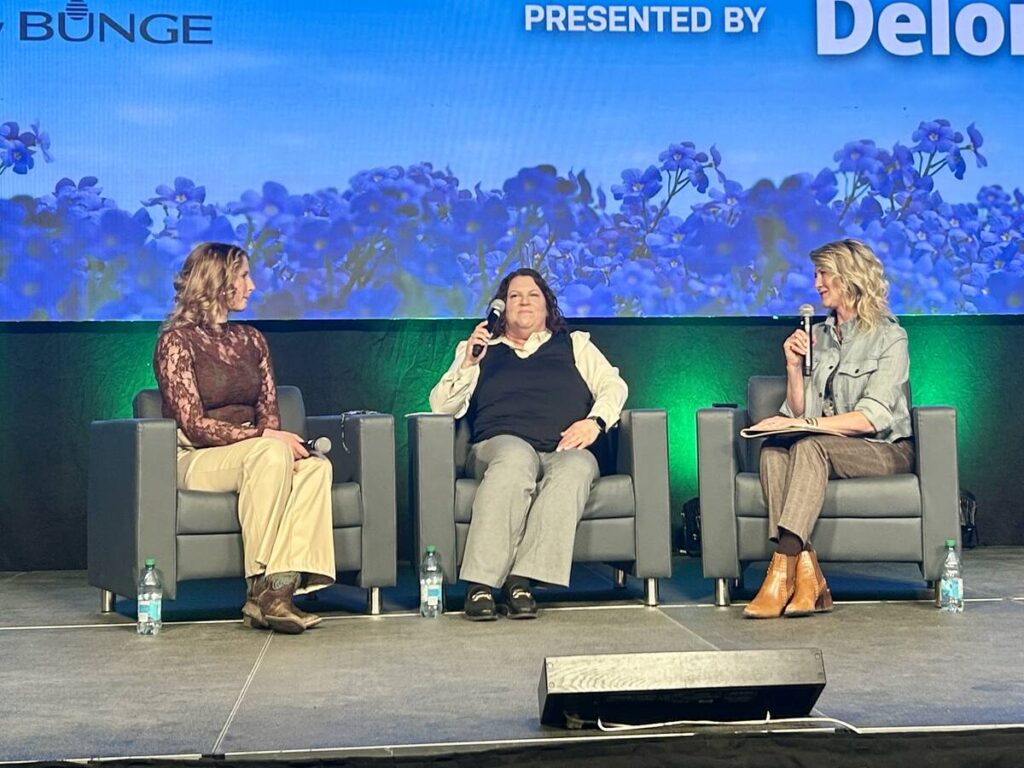
International Year of the Woman Farmer was highlighted during Canada’s Farm Show in Regina on Wednesday with a discussion of the Farmwives books written by Billi J Miller.
You can follow all our coverage of Canada’s Farm Show here.
Read Also
Moving the conversation about women in agriculture forward
Designing farm work environments that unlock the full potential of the people working in them — including women — is the next evolution of good farm management.
The books are the stories of farm women, with the first, Farmwives in Profile, focusing on women between 55 and 90 years old, and the second, Farmwives 2, on women in their 20s to 50s.
During the process of the writing and interviewing for the first book, the question of “why” came up a lot.
“More than one woman said to me in the process of being interviewed, ‘I don’t understand why you want me for this,’ ” Miller said.
“ ‘Like, I haven’t done anything. I’m just a farm wife.’ ”
Miller said she was astounded by that because her rural community revolved around women cooking and hauling meals to the field, running errands for the farm, taking care of the kids, doing the farm books and taking on the farm work themselves.
Without these women, she added, entire communities would crumble.
A desire to acknowledge what many women wouldn’t do themselves was what drove Miller to write the first book, which has led to more since.
Older generations’ knowledge and experiences aren’t often shared, and some were even too personal to include in the books.
“A lot of stories came up that weren’t put in the book,” Miller said.
“A lot of real honest kind of tidbits or advice, or just stories about different losses that these women experience.”
Her second book included a wider variety of voices in order to represent how women in agriculture have changed.
There were women were grew up on farms, were farmers themselves, had married into farm families, worked off the farmor combinations of these. Her goal was to show that these women were also valuable to farms and to offer them a voice.
The younger women in the second book were happy to share how they managed their lives — whether it was on the farm, with their families or making time for themselves — and what they were proud of.
“I’m just so proud of how it turned out because I think it’s a really reflective, diverse voice of how farms look today in Canada, and it looks really incredible,” she said.
The diversity of voices was also a feature of the changes that have occurred for farm women over the generations — their ability to work off farm, to run an operation, to own land and livestock and run equipment, which can be taken for granted.
She said all women in agriculture, in any capacity, have an impact, and the recognition of today’s farm women wouldn’t be possible without the generations that came before them.
“Thanks to the thousands upon thousands of women because of all they’ve done,” said Miller.
“Because of the kids that they raised, because of the families they nurtured and because of who they are, but because of everything that was put on their backs, as they said, in many cases, without running water.”

Source: producer.com