

Flour consumption continues its nosedive in the U.S.
SASKATOON — Flour consumption continues its decades-long slide in the United States, according to a new report.
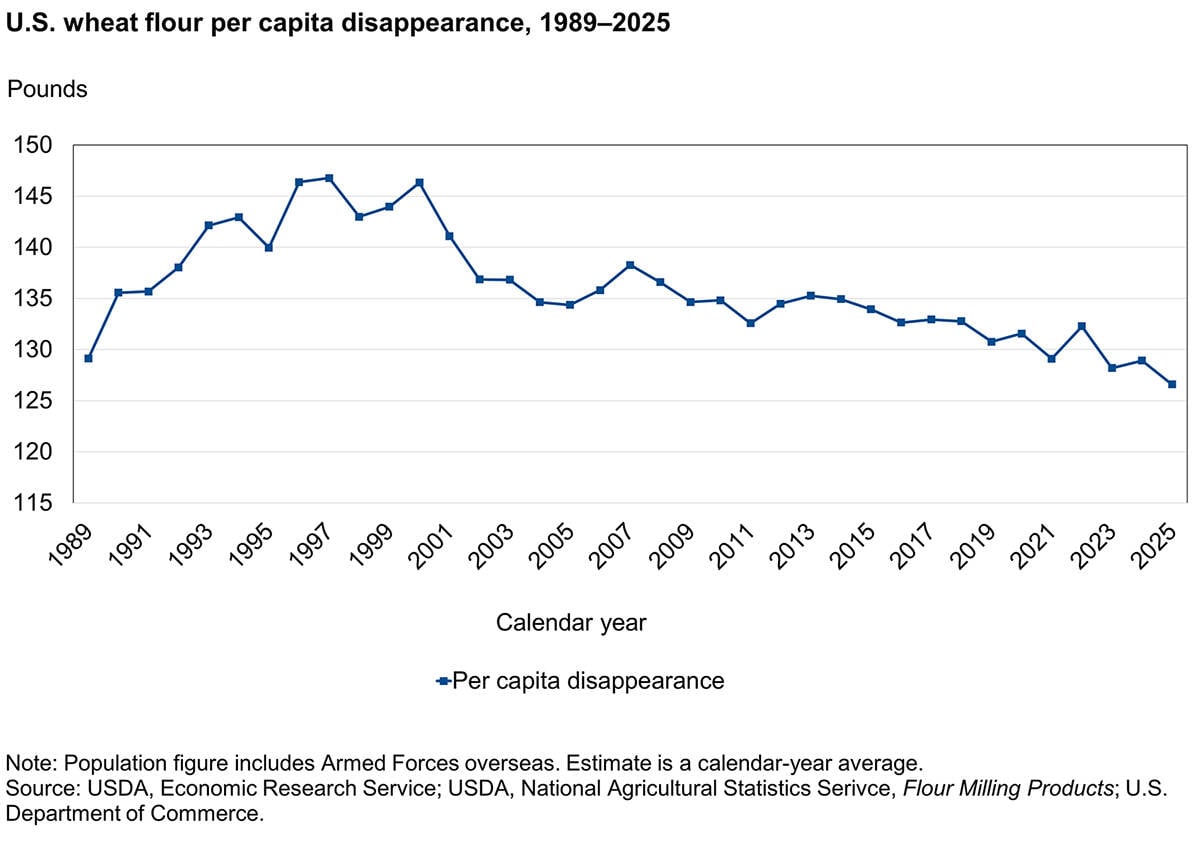
Per capita wheat flour consumption fell to 126.6 pounds in 2025, continuing a trend that started around the turn of the century, according to the Wheat Sector at a Glance report produced by the U.S. Department of Agriculture’s Economic Research Service.
That is well below the 146.4 lb. of wheat flour consumed per person in 2000.
The U.S. buys a lot of Canadian wheat.
That is not great news for Canadian farmers. The U.S. was Canada’s fourth largest wheat market from 2021-25 , accounting for an average of seven per cent of sales.
Jane DeMarchi, president of the North American Miller’s Association, said there are several reasons why consumption has tumbled.
It began with the widespread adoption of low-carbohydrate diets, such as the Atkin’s Diet.
The rise of the gluten-free movement exacerbated the problem.
There was a brief reprieve from the downward trend during COVID-19, when people started eating comfort food at home and making their own bread. Sourdough became particularly popular during that time.
Read Also

But that was short-lived.
“Now we’re in a downward trend again,” said DeMarchi.
The growing popularity of GLP-1 medications that treat Type 2 diabetes and obesity is having a negative impact on a wide variety of foods.
Ardent Mills conducted a study that determined seven per cent of U.S. adults are on GLP-1 medication and another 32 per cent are considering it.
Nielsen Company estimates people on GLP-1 medications consume 700 fewer calories per day than they did before going on the medication.
There is also a new trend of people shifting to high protein/low carbohydrate diets.
SNAC International estimates half of the population is swapping snacks for meals with adults snacking 3.5 times per day and kids five times.
Those multiple snacking sessions are replacing meals where people tend to consume bread, pasta and cereal.
Clearly, there are a lot of factors conspiring against flour consumption, but millers remain optimistic.
“We don’t feel it’s all doom and gloom,” said DeMarchi.
“There are some bright spots.”
Bakery product prices increased by 0.1 per cent in April compared to overall food inflation of 0.5 per cent. The lower inflation rate makes it a more competitive item in grocery carts.
Consumer interest in fibre is on the rise, and grain-based foods are highly associated with fibre.
There is also mounting interest in Asian and Mexican food, which feature products such as buns, noodles and tortillas.
The gluten-free movement appears to have stalled compared to a few years ago when it was very much in vogue.
However, population growth is slowing in the U.S. and the population is aging, which means total consumption of flour is not likely to rise in the coming years.
Slumping flour consumption is part of the reason why U.S. farmers have been cutting back on wheat acres.
However, there are other factors as well, such as less sophisticated genetics compared to corn and soybeans and the lack of industrial markets for the crop.
The U.S. Department of Agriculture is forecasting 9.4 million acres of spring wheat, which would be the smallest crop since 1970.
DeMarchi said some older mills are closing in the U.S., but others are modernizing, becoming more efficient and automated.
They are also diversifying. Instead of producing massive amounts of commodity flour, they are shifting into specialty products such as high-fibre flours.
DeMarchi said while it is undeniable that the flour industry has been confronted by “headwinds,” grain-based foods are still a popular choice for many U.S. consumers.
Source: producer.com