
Automation is popular but human farm operators remain essential
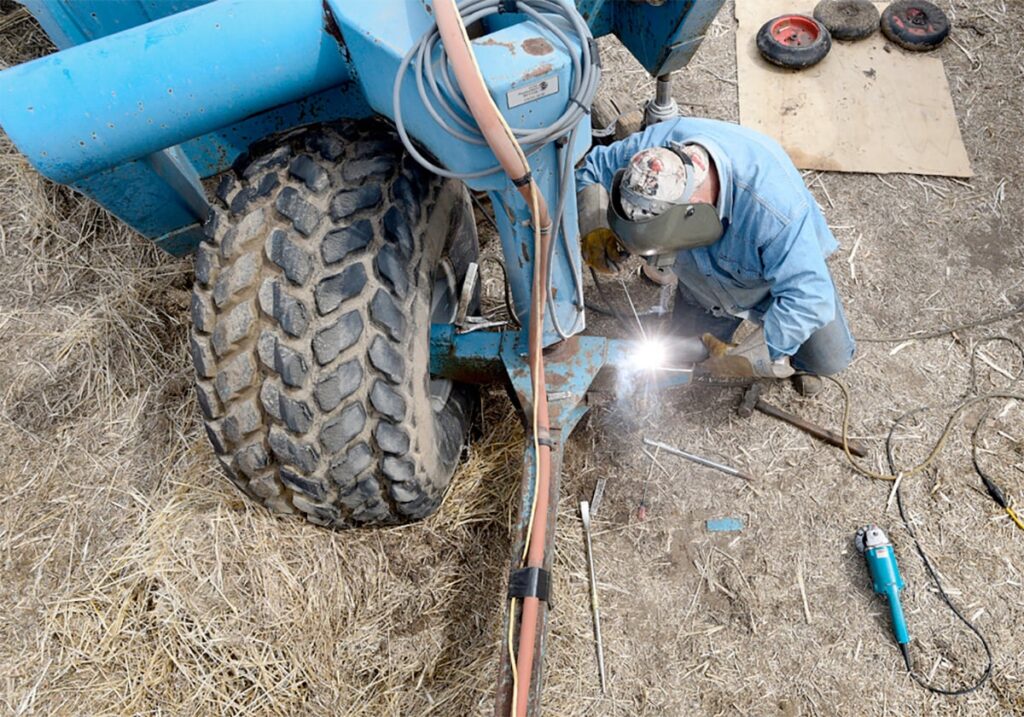
Farming has evolved dramatically, but it still isn’t all high tech.
Even though we like to portray agriculture as all fancy gadgets, computers and automation, a range of tasks exist, many of them still involving various degrees of manpower and drudgery.
I was reminded of this the other day as one of my sons and I battled a fertilizer bin that just wouldn’t open.
The fertilizer, a mix of sulfur and potash, had arrived in March. There hasn’t been a lot of wet weather since in this part of the world, but the bottom hatch of the bin was practically welded shut with caked fertilizer.
Hammer, chisel, pipe wrench, snipe for the pipe wrench and a lot of grunting and groaning ensued. At one point, the pipe wrench slipped and I hit my head on the frame of the bin. The old guy is now sporting a small cut near an eye and a bit of a shiner.
Read Also
Eventually, we prevailed and the fertilizer was loaded out, but it wasn’t a high-tech operation.
I also heard about a large seeding outfit in the area that got bogged down in a small wet spot. When a big tractor pulling a 75-foot seeder is stuck, there’s nothing very glamorous about working in the mud with chains and tow straps. About five hours of seeding time were lost.
Greasing equipment is still necessary, along with other standard maintenance.
Tractors and trucks need to be fuelled.
Filling the seed drill with seed and fertilizer involves better and better equipment, but the human component cannot be replaced.
Canola seed comes in bags that need to be opened and dumped.
Parts and supplies need to be secured and delivered.
Equipment often needs to be moved considerable distances to get to the next field.
Sprayer and tractor operators need a level of skill and understanding that previous generations could not have imagined, but it’s still long operating hours.
Equipment operation is steadily becoming more autonomous, but an operator in the cab will be a fixture for a long time to come.
Management gurus often say that farm owners should work on the business needs of the operation and pull back from day-to-day operations. This isn’t the reality on most family farms, even those with significant scale, particularly in busy seasons.
It’s still relatively rare for owner-managers to not be actively running equipment and participating in all the other necessary tasks.
Some should probably step back and use their time for more leadership and strategic functions, but the work still needs to be done. At busy times like seeding, tasks outnumber daylight hours.
For a new farm employee, it’s often a steep learning curve.
Even if they have previous farm experience, they are unlikely to be familiar with how all the equipment operates, nor will they be acquainted with where all the land is located and the operating procedures.
Many large farms are becoming more structured, with specific expectations for each employee. That’s a natural and logical progression, but on many family operations, young people just grow into the job, gradually taking on more responsibilities. No employee manual exists.
On every farm, there’s no shortage of relatively unskilled tasks that remain crucial to getting all the work done.
For someone wanting to work on a farm, even if they have no farming experience, there’s lots of ways to help out and lots of opportunity to develop new skills.
Source: producer.com