
Phosphate mining in Canada possible, but years to develop
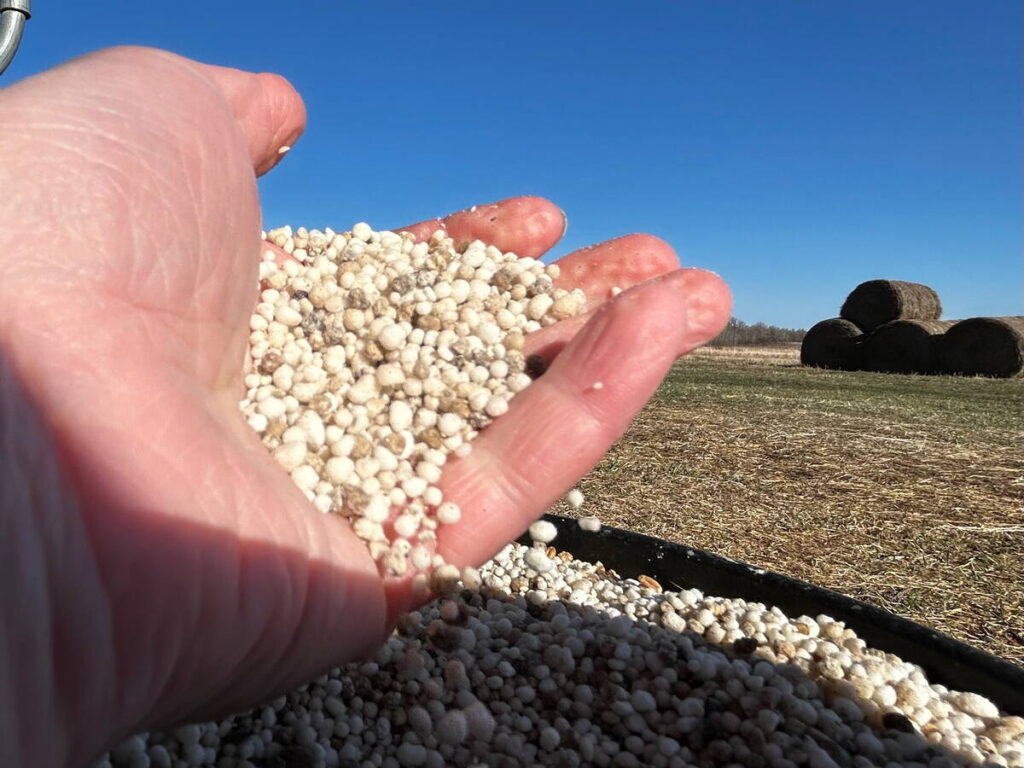
WINNIPEG — There is no global shortage of phosphate rock.
And with recent discoveries in Norway, there could be plenty of phosphate for hundreds of years.
Related story: U.S. phosphate export restrictions unlikely
These facts aren’t all that comforting for Canadian farmers, who have paid sky high prices for phosphate fertilizer since 2022.
In Western Canada, the price of Monoammonium Phosphate 11-52-0 fertilizer has been stuck around $1,200 per tonne for four years, says Manitoba Agriculture data.
Canadian farmers rely on phosphate imports from the U.S., but could Canada produce its own supply?
The good news about high prices is that capitalism works. If there’s an opportunity to make money, private companies will look for new sources of phosphate.
In 2023 a Norwegian company, Norge Mining, announced the discovery of a massive deposit of phosphate rock.
Norge Mining claims the site contains 70 billion tonnes of phosphate.
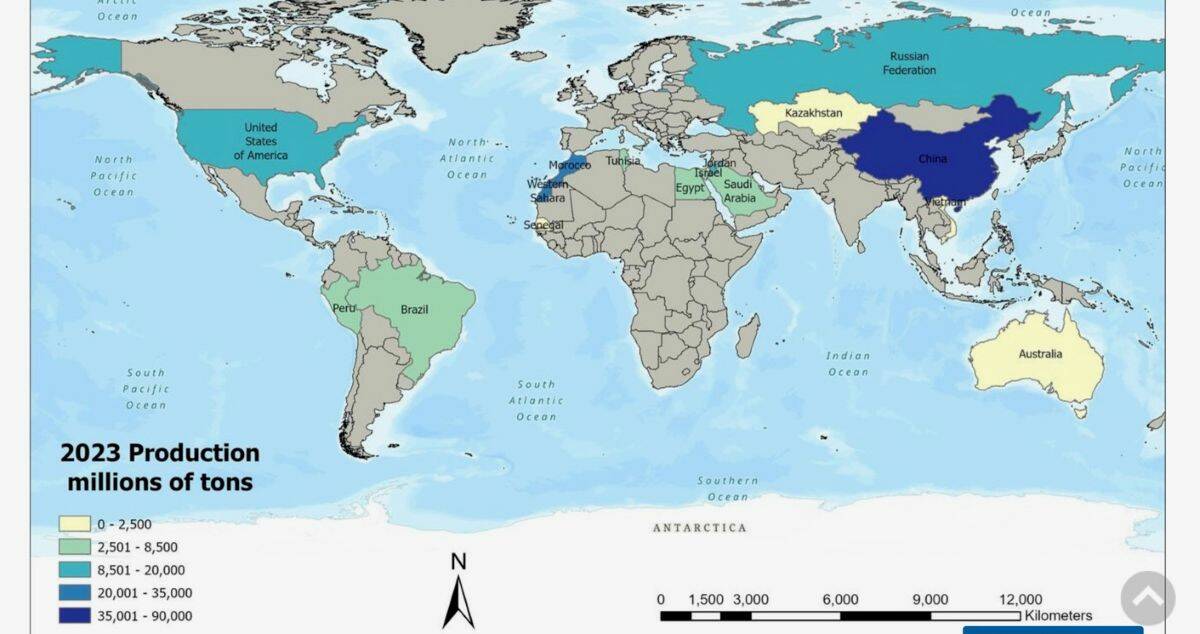
Putting that in perspective, the U.S. Geological Service (USGS) has pegged global reserves of phosphate rock at 74 billion tons.
About 67 percent of reserves are in Morocco, which is sometimes called the Saudi Arabia of phosphate.
Read Also
A functioning mine in Norway is years away, but the discovery should increase phosphate supplies in future decades.
Igneous versus sedimentary
More than 95 percent of the world’s proven reserves of phosphate are in sedimentary rock and the remainder is in igneous rock, says the USGS.
The Norwegian finding was in igneous rock and there could be substantial resources of phosphate, elsewhere on the planet.
“Significant igneous resources” are found in Brazil, Canada, Finland, Russia and South Africa, says the USGS.
“Igneous phosphate rocks tend to have a higher P2O5 (phosphate) content and are processed somewhat differently than sedimentary rock. The processing cost is similar to sedimentary rock,” said Stephen Jasinski, a phosphate rock and potash specialist with the USGS.
Within Canada, the potential igneous deposits are concentrated in Quebec.
First Phosphate, a Canadian mining firm, has been drilling and testing its resources in in Saguenay-Lac-St-Jean, Quebec.
However, the main market for its phosphate will be the Lithium Iron Phosphate (LFP) battery industry, says First Phosphate.
On the other side of the country, a firm called Canadian Phosphate has been exploring a deposit around Fernie, B.C.
It is also drilling and exploring at another site, near Tumbler Ridge, B.C., which it calls the Wapiti Project.
“Wapiti is one of only two known sedimentary phosphate projects in Canada. Both projects are held by Canadian Phosphate,” said company CEO Daniel Gleeson.
“Wapiti forms a cornerstone of our strategic vision to establish a secure, domestic supply of sedimentary phosphate in North America, an issue which has been brought further to the forefront in recent months due to the conflict in the Middle East.”
In the longer term, Canada may have its own supplies of phosphate fertilizer. But converting a deposit into an operational mine can take years and years and years.
Looking globally, potential sources of phosphate (unproven deposits) should supply the demand for fertilizer and other uses for many years.
“World resources of phosphate rock are more than 300 billion tons. There are no imminent shortages of phosphate rock,” says the USGS.
In a typical year, mining companies extract about 230 million tonnes of phosphate. That sounds like a lot.
But at the current rate of production, it would take 1,300 years to exhaust global resources.
Source: producer.com