
Shrinking supplies causing lubricant prices to soar
SASKATOON — Lubricant prices are soaring, and there could be supply constraints on the horizon, according to an industry executive.
“It’s going to be a tight summer with respect to supply,” said Holly Alfano, chief executive officer of the Independent Lubricant Manufacturers Association (ILMA).
“There may be some shortages.”
She has spoken to two independent analysts who think the supply crunch will come to a head in late June or early July as stored inventories of lubricants dwindle.
“It’s hard to say how bad it’s going to be. I don’t know,” said Alfano.
“We’re just watching it really closely.”
Nigel Buffone, senior director of crop protection with FBN Canada, said the company that supplies FBN’s lubrication products tells him they are getting 70 to 80 per cent of their normal supply of feedstocks.
The firm initially told FBN lubrication product prices wouldn’t be rising because it had feedstock supplies it had purchased before conflict broke out in the Middle East.
Read Also
But it has since consumed those pre-war supplies, and prices have now increased 10 to 35 per cent depending on the lubrication product.
Farmers use a lot of motor oils and other lubricants.
Some lubrication products are disappearing from the market. Toyota and its supplier, ExxonMobil, recently announced a shortage of ultra-thin OW-8 and OW-16 synthetic motor oils.
Toyota issued an internal bulletin to North American dealers announcing temporary manufacturer-approved substitutes.
Buffone said lubrication products are critical inputs for farm operations. A tractor needs its hydraulic fluids changed two or three times a year.
“That’s not negotiable,” he said.
“That’s just the reality of running your tractor.”
Some crop inputs can be substituted or even skipped some years. That is not the case with lubrication products.
“When you think of farming, the need for these products is inelastic,” said Buffone.
He agrees that the situation is likely to get tighter as summer progresses, so farmers who need lubrication products might want to buy sooner rather than later.
“I don’t think you will regret making that purchase immediately,” he said.
FBN is in communication with its supplier on a weekly basis and adjusts its prices and delivery times accordingly.
FBN has two new warehouses for distributing its products. The grand opening of its Brandon, Man. facility is June 11, and the one in Grande Prairie, Alta. is June 17.
Alfano said the supply issues for lubricants can be traced back to base oils, which comprise roughly 75 per cent of crankcase lubricants and as much as 98 per cent of industrial formulations such as turbine and hydraulic oils.
The most popular base oil used in lubricants is Group III. Three Persian Gulf producers supply 44 per cent of the Group III oil used in the United States.
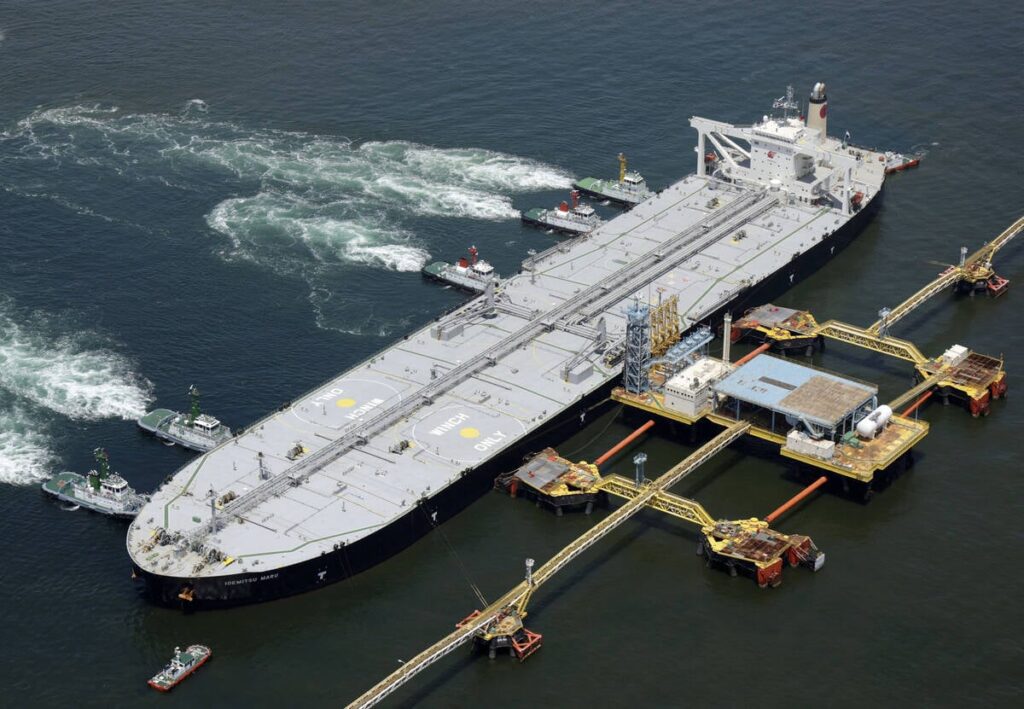
The closure of the Strait of Hormuz has cut off supplies from Pearl GTL in Qatar, ADNOC in the United Arab Emirates and BAPCO in Bahrain.
In addition, all three facilities have been damaged in the Middle East conflict. Shell’s Pearl GTL plant sustained the most significant damage, and it happens to be the world’s biggest producer of Group III.
“It’s going to be offline for over a year,” said Alfano.
“That’s going to constrain supplies.”
ILMA suspects that the U.S. will run out of Mideast Gulf-origin Group III by June.
South Korea would usually be counted on to fill the gap. It typically supplies about 30 per cent of Group III to the U.S.
But it relies on Middle East crude as a feedstock, and it is in limited supply due to the war in Iran.
Korean refiners are rerouting those limited crude supplies to Asian diesel and jet fuel manufacturers who pay more than base oil manufacturers.
Blenders usually shift to Group II base oils when Group III is in short supply. But with diesel margins at 40-year highs, refiners are rerouting Group II oils to the fuel sector.
The upshot is that between the Middle East and South Korea, 74 per cent of U.S. Group III imports are “under direct stress” and the Group II safety valve is effectively closed.
“The result is unprecedented upward pressure on lubricant costs, and conditions are not expected to fully resolve until at least mid-2027,” ILMA stated in a recent bulletin.
Source: producer.com