
How to identify pest grasshoppers on the Prairies
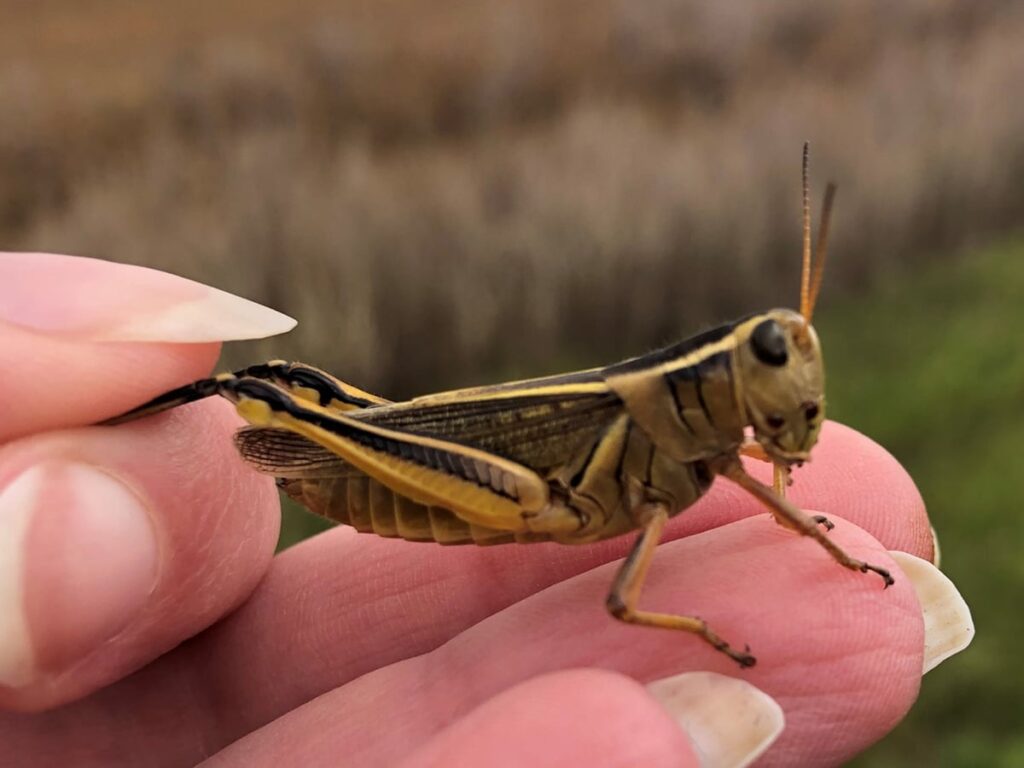
Glacier FarmMedia – Grasshopper risks are familiar to Prairie farmers, but not every grasshopper in a field is a threat.
“There are four primary grasshopper species that are considered to be economic pests on the Prairies,” said Meghan Vankosky, an Agriculture and Agri-Food Canada entomologist based in Saskatoon, speaking during a March webinar hosted by the Canadian Association of Agri Retailers. “But in Western Canada, we actually have about 80 or more species of grasshopper, and the vast majority of those are not considered to be economic pests.”
That means the mere presence of grasshoppers in a field doesn’t mean it’s time to pull out the sprayer — it’s important to know what species they are first.

Photo:
Don Norman
Not all grasshoppers threaten crops, so accurate identification and scouting help target control where it’s needed.
The main pest species include the migratory, two-striped, Packard’s and clear-winged grasshoppers, listed roughly in order of their economic importance on the Prairies.
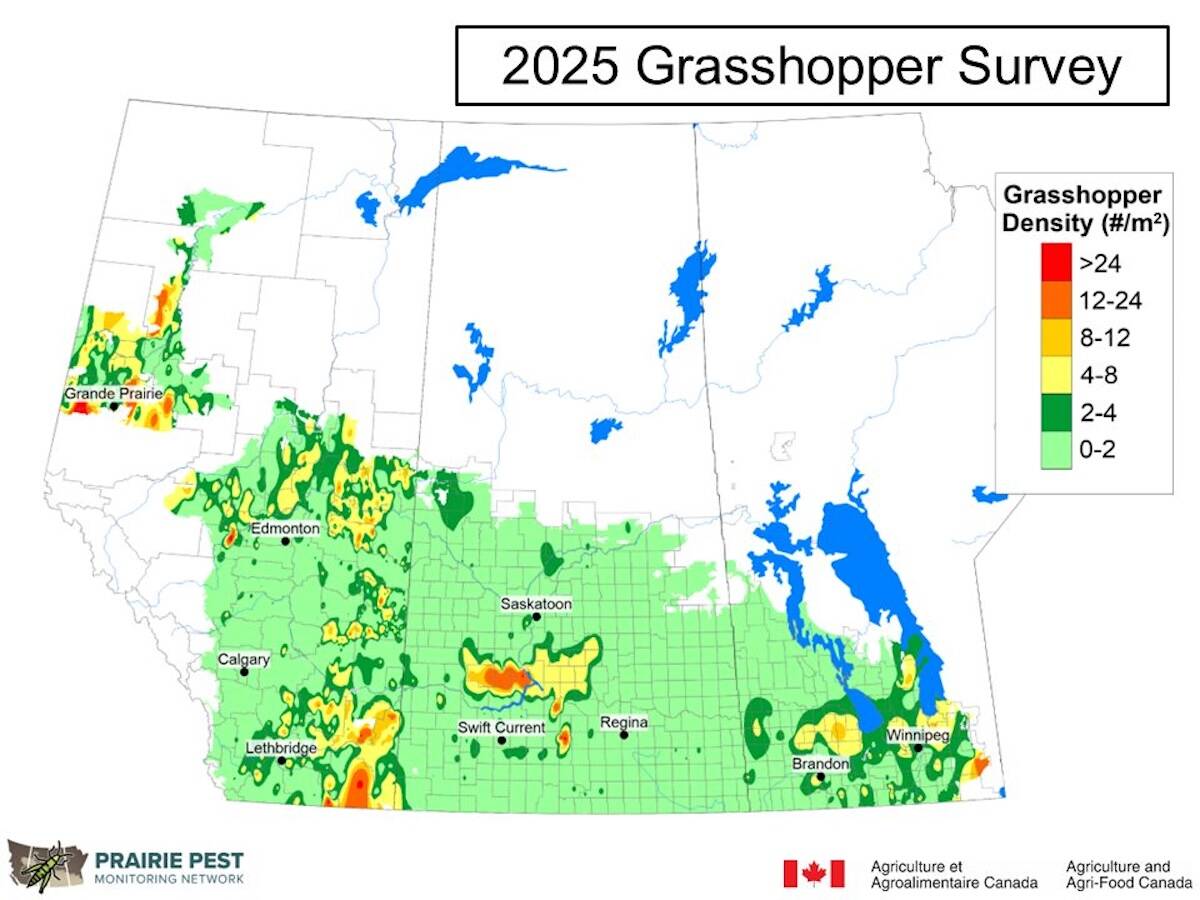
Where those species show up can vary year to year. Based on 2025 survey results from AAFC and the Prairie Pest Monitoring Network, grasshopper pressure could be uneven across the Prairies this season, with pockets of higher populations in parts of Alberta, Saskatchewan and Manitoba. Those surveys estimate overwintering egg levels and help guide risk heading into the following growing season, but conditions can vary widely from field to field, making scouting essential.
Read Also

Most regions are at low levels, but localized hotspots, including parts of southeastern Alberta and southwestern Saskatchewan, could see elevated pressure. Areas of mostly moderate pressure could occur in Manitoba including north of Brandon, between Winnipeg and the lower portion of Lakes Manitoba and Winnipeg, and one small pocket of elevated risk in southeastern Manitoba.
Weather also plays a role, with hot, dry conditions generally favouring grasshopper development.
Spotting pest species
Vankosky said there are a few simple rules of thumb that can help separate pest species from harmless ones.
“If you have adult grasshoppers with fully developed wings that you’re seeing in a field early in the spring, say in April, May or early June, those species are probably not pests,” she said, noting that pest species overwinter as eggs.
Brightly coloured grasshoppers also tend not to be economic pests, and species that make noise while flying or sitting on the ground are typically not a concern.
“Species like those are not typically considered economic pests because they tend to prefer to feed on native grasses and not our crops,” she said.
By contrast, pest species follow a more predictable pattern. They overwinter as eggs in the soil, hatch in the spring and often begin along roadsides and ditches before moving into crops.
That movement pattern makes field edges a key place to start scouting, particularly in areas flagged with higher populations the previous season.
“It’s quite important to be monitoring for them early and to be considering spraying if necessary during the nymph stages,” Vankosky said.
Start scouting early
Younger grasshoppers are smaller and less mobile, making them easier to control. Once they reach the adult stage, they grow bigger and become more mobile, making control efforts less effective.
“Adult grasshoppers can just fly to the next field where a farmer hasn’t sprayed yet,” said Vankosky.
Scouting methods are straightforward but need to be consistent to give a reliable picture. Standard protocols call for walking measured transects and counting grasshoppers within a defined area to estimate density.
Those counts can then be compared against established thresholds. Moderate populations — roughly eight to 12 grasshoppers per square metre — can signal the need for control, depending on crop type and stage.
This approach aligns with integrated pest management strategies, where decisions are based on scouting and economic thresholds rather than assumptions or routine spraying.
Scouting early and knowing what species are present helps growers decide if and when control is needed.
“Proactive scouting for insect pests can help ensure that we’re protecting our crops, protecting beneficial insects and making the right decisions for our farms,” Vankosky said.
Source: producer.com