
Ranchers moving cattle due to fire near Duck Lake, Saskatchewan
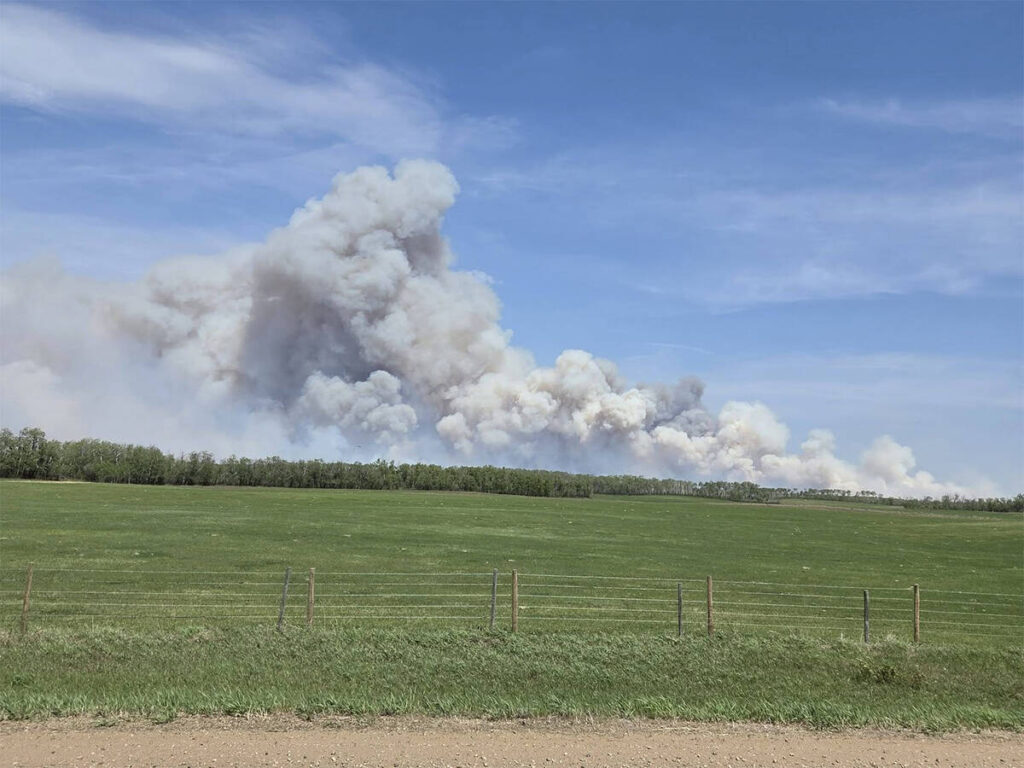
REGINA — Some ranchers near the Lobstick fire, currently burning southwest of Prince Albert, Sask., have moved their cattle as the fire has grown since beginning May 26.
Residents in an unincorporated community known as Lily Plain were initially told to evacuate and are now on evacuation alert. The fire is situated in the Duck Lake, Macdowall and Beardy’s and Okemasis area.
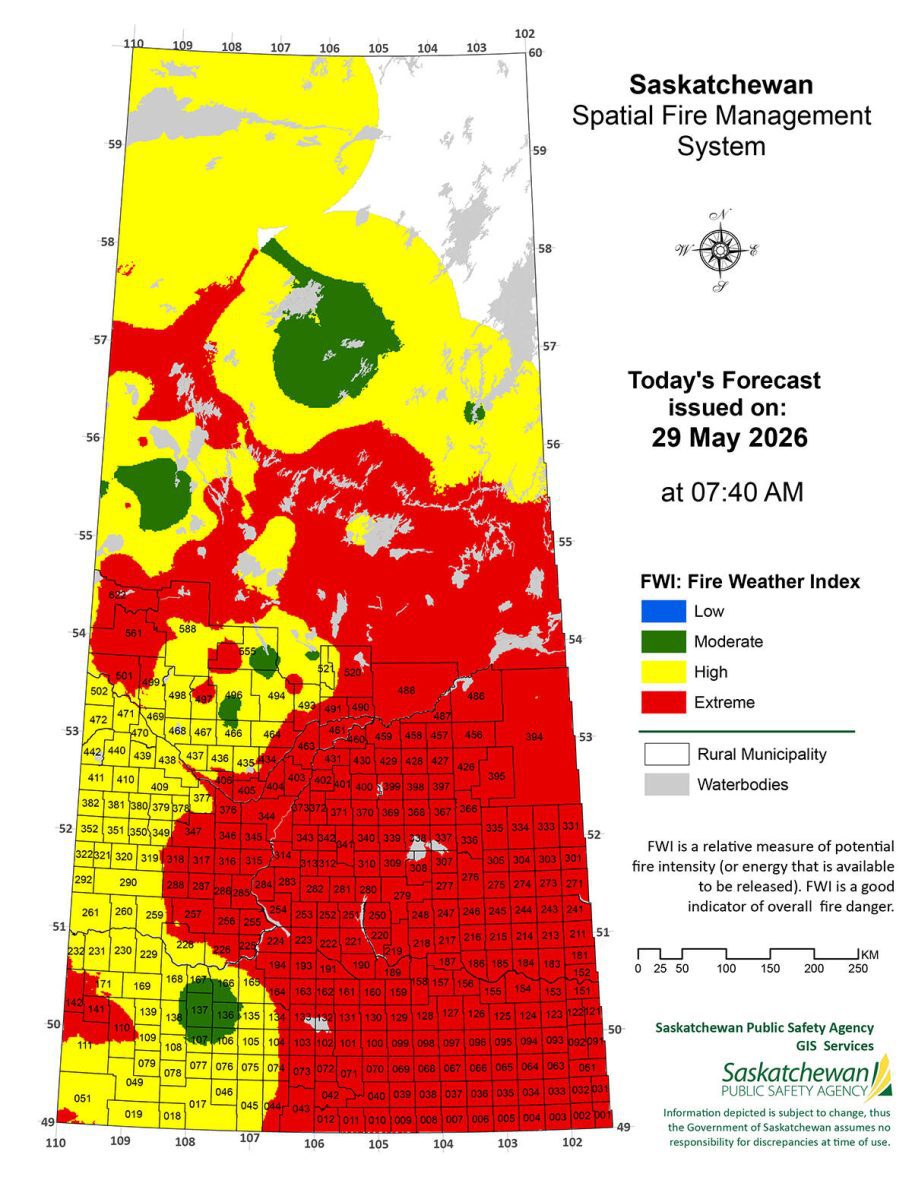
As of May 29, at least 50 rural municipalities had declared fire bans as much of the province remained under extremely high risk of fire. Nineteen urban municipalities also had bans, as well as four provincial parks. The RM bans include areas in the far southern agricultural district.
The minister responsible for Saskatchewan Public Safety Agency, Michael Weger, told reporters that afternoon that if people aren’t sure if their municipality has enacted a ban they should err on the side of caution.
The SPSA implemented a ban in central and southern Saskatchewan for all Crown land, provincial parks and recreation sites in an area north of Prince Albert, not including RMs or incorporated municipalities, which are required to place their own bans. The ban also prohibits use of ATVs in the provincial forest. Maps on the SPSA website indicate where all bans and fires are located.
Read Also
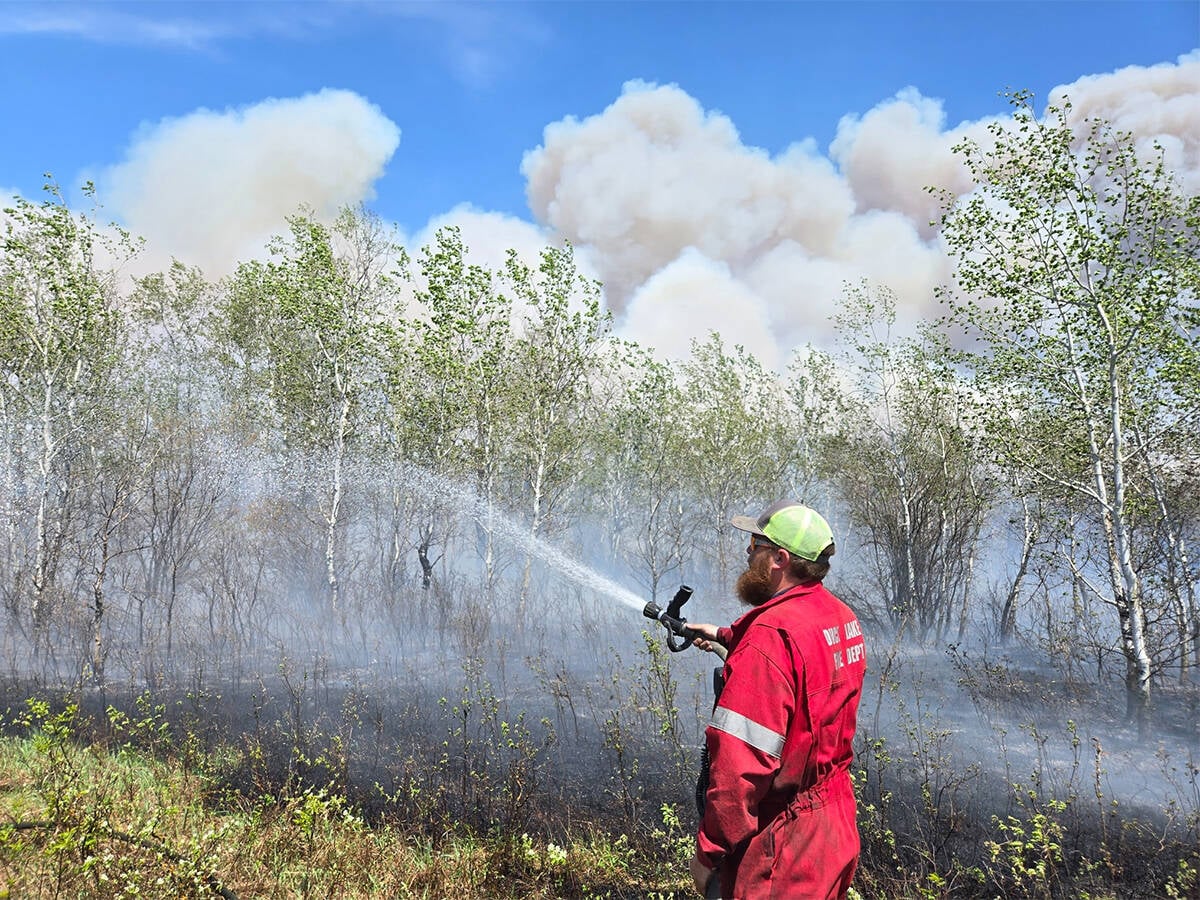
The Lobstick fire began in the Nisbet Provincial Forest and has jumped the North Saskatchewan River where crews were addressing the crossing points. On Friday afternoon it had covered 13,000 hectares or 32,000 acres. Weger said although most fires at this time of year are caused by human activity it appears that lightning caused this one.
He said two outbuildings were damaged by the fire but had no details on how many had been evacuated from Lily Plain.
There are six active fires burning. Two are contained, two are not contained, one is under assessment and SPSA crews are protecting values at the sixth. The Lobstick and the Cayford fire, north of Hudson Bay, are the two southernmost blazes and both considered not contained.
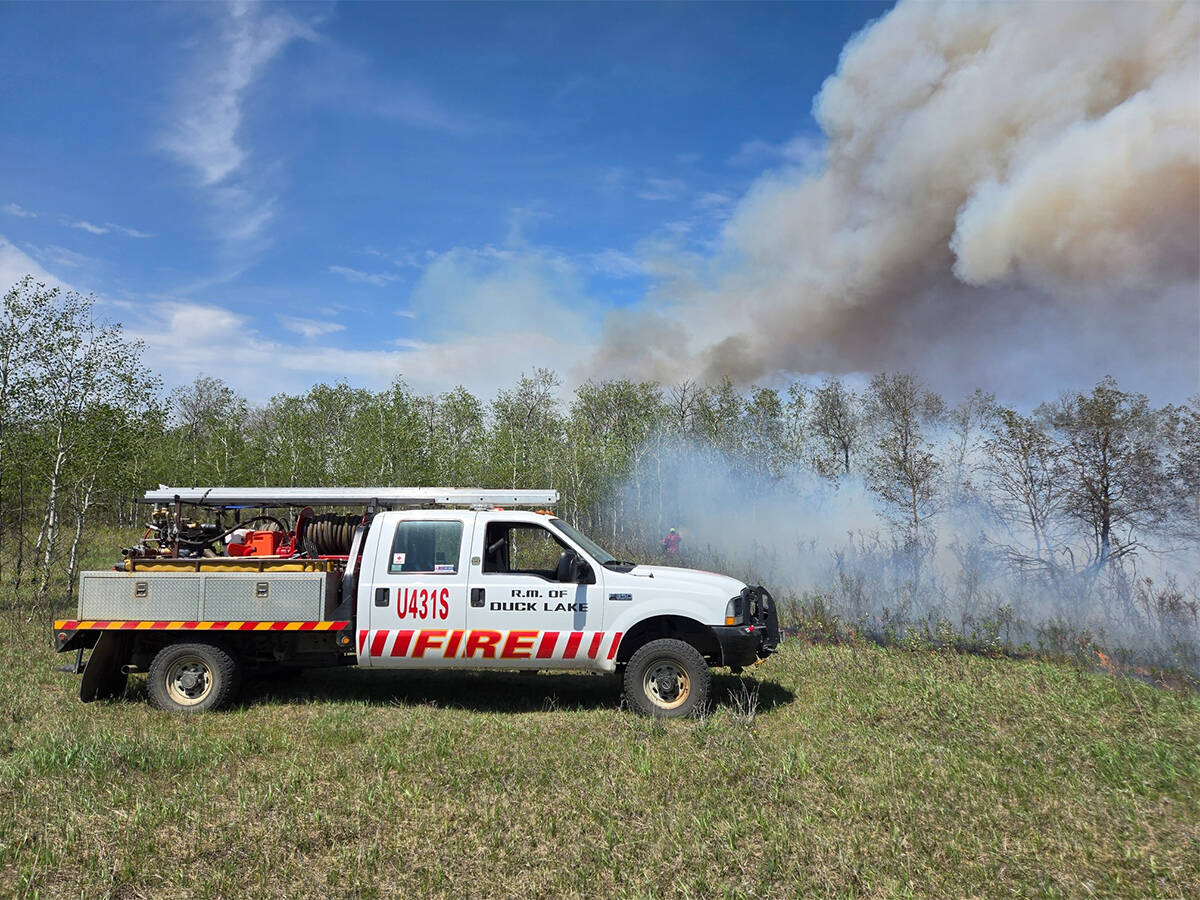
Weger was speaking from the province’s Forest Management Centre in La Ronge. He said the forest industry is facing lost revenue already.
“Some ag land has been affected by this,” he said. “Some farmers have been affected and some ranchers have had to move their cattle to different locations.”
However, he didn’t know if that was due to smoke, the fire or precautionary.
“We are concerned,” he said, heading into the weekend with hot windy weather still expected. “We’re at very high risk.”
Last year was the worst on record for wildfires in the province. There have been 75 fires so far this year, compared to 209 at this time last year.
Meanwhile, SPSA staff are still responding to eight active floods.
Source: producer.com