
Bin monitoring advancements can provide early warning of trouble
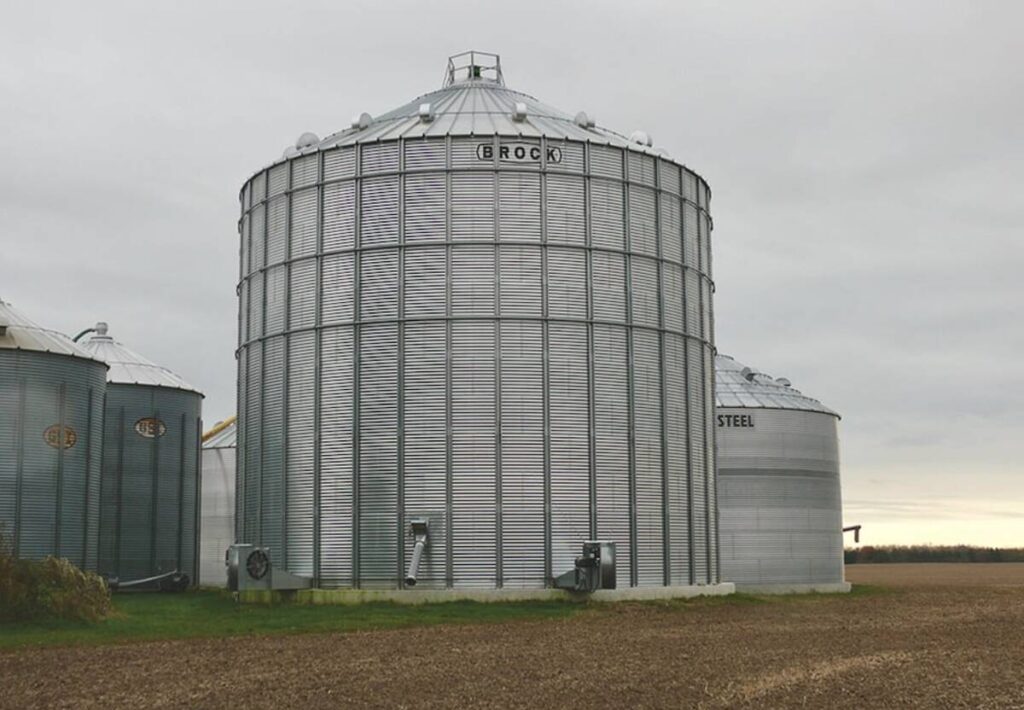
For the last three decades of monitoring stored grain, the focus has been on preventing in-bin spoilage with the goal to simply maintain how it went in at harvest.
“The monitoring space has developed since then as technology has been able to kind of develop,” said Bryan Reimer, GSI’s GrainVue product manager.
“(It’s) more than just grain storage and spoilage prevention, but more around grain quality optimization as well.”
Monitoring systems can provide early warnings, as they utilize cable sensors for monitoring temperature, humidity and moisture inside the bin.
But occasionally issues arise such as insulating effects created by too much distance between temperature probes and grain.
“It is possible that a hot spot can start to occur in a bin long before the probes are going to detect it,” said Kim Stonehouse, a crop extension specialist with the Saskatchewan Ministry of Agriculture.
“Because it’s going to take time to get to that probe to show that the temperature’s increasing.”
Read Also

By then, spoilage may have already began to spread in the bin, he added.
In more recent years, advancements such as carbon dioxide monitoring have come in, enabling action to be taken sooner. The sensor is placed in the headspeace of the bin and continuously monitors the gas levels. Stonehouse called them a “next level of security.”
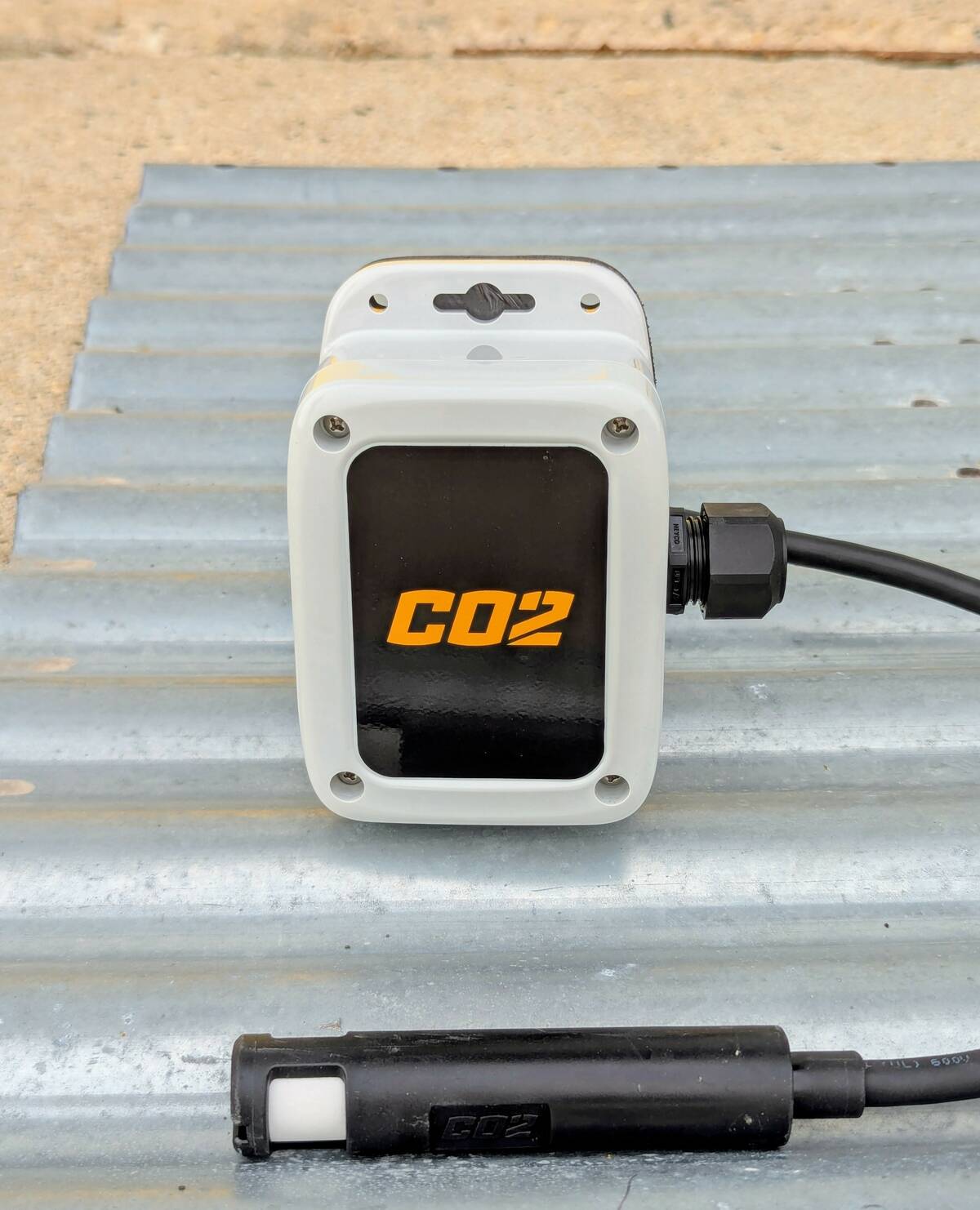
Photo:
GSI
Carbon dioxide rises a little bit everyday in the bin, but rising above 700 parts per million is indicative of fungus, mold or insects beginning to fester in the bin, Reimer explained.
With a CO2 sensor, detection of spoilage occurs much quicker than by using only temperature sensing.
“CO2 starts to rise almost immediately as that spoilage starts to happen,” he said.
“So, we can detect spoilage in a bin days, even weeks, prior to a temperature cable in that bin being able to pick up that high temperature.”
A faster alert allows fans to be run immediately or, in extreme cases, for a producer to turn the bin and move grain to remove the spoilage.
“I have heard in many cases where they’ve really prevented a whole bin from spoiling,” added Stonehouse.
Back to the basics
However, sensors and cables shouldn’t be the only monitoring method. Stonehouse encourages producers to go the old-fashioned route every so often.
“I don’t think that you can rely on them (sensors) 100 per cent,” he said. “You should actually still be checking … the bin for any signs of spoilage.”
In fall and winter, that means checking the top of the bin because the grain is warmer than the outside air during the cooler seasons, which creates perspiration. The moisture migrates upward in the centre of the bin and collects in the top centre. That is where spoilage will start.
In spring and summer, the moisture point shifts because the grain is cooler than the outside air. Moisture will be at the bottom, making it the key check point.
It’s also important to probe and core the grain, pulling samples from the centre and other spots where damage could occur regularly, and keep a record.
Summer grain storage can be particularly tricky as outside temperatures increase and impact grain temperature and moisture.
To limit surprises, the grain must be properly conditioned in fall before it enters the bin, says Stonehouse.
Foreign materials like chaff and weed seed can increase chance of spoilage, and high green seed counts can cause hot spots. But moisture content is one of the biggest concerns for summer storage.
“It actually is more complicated than it sounds because safe storage moisture content is a recommended safe storage moisture content,” Stonehouse said.
“But if you’re going to store grain for a longer period of time, you should actually drop those by a couple of points.”
He gave the example of canola, which is recommended for 10 per cent moisture when kept below 15 degrees. However, if it reaches 25 degrees at 10 per cent, there’s an increased risk of spoilage, so it’d be best to condition it to eight per cent moisture instead.
To maintain a low average temperature, the best choice is aeration. But producers need to be aware of the type of air they’re blowing into the bin — it shouldn’t be humid, and the fan shouldn’t run too long.
“If it’s a dry and warm day, and you turn the fans on,” said Reimer, “you can actually be over drying the bottom of your bin and over drying beyond just the condition of the grain, reducing the weight of your commodity.”
Utilizing the tech
Monitoring systems aren’t only for watching; they can also assist in summer storage.
By using the sensor readings of temperature and moisture, outside weather conditions and the commodity type, producers can determine when to turn on their fans and for how long.
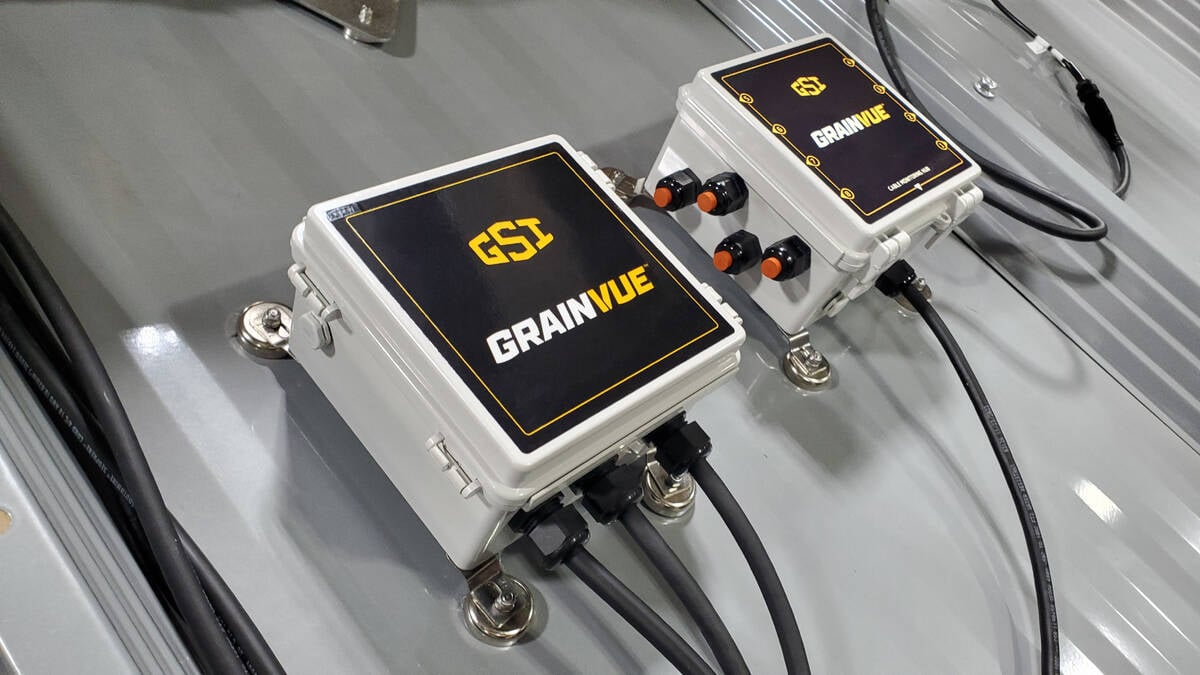
Many systems, like GrainVue, will allow producers to set drying parameters to automate the system to turn on and off. It prevents over drying, eliminates the need for producers to be onsite and limits power use.
“Set what you want to happen, and letting that technology kind of take over to monitor what the air is going to be going into the bin at, so that it can do it in the best way possible,” explained Reimer.
Keep it in the bin
Aeration, moisture content and temperature are key, but even better is right conditioning and leaving the grain alone. With the insulating effect of the seed, once grain is frozen, it can stay frozen into July.
Stonehouse sees more issues arise in summer when producers decide to move grain, particularly on warm, humid days.
“That grain comes out of the bin, and it’s cold, and it absorbs moisture,” he said.
“Once they put it into the next bin, the moisture content has gone up, the temperature is warmer, and all of a sudden they see that they’re having problems with it heating.”
If grain needs to be moved, it’s best to do it in early spring when temperatures are cooler and when humidity is low, or later in the season like August.
Source: producer.com