

From the farm to the Order of Canada
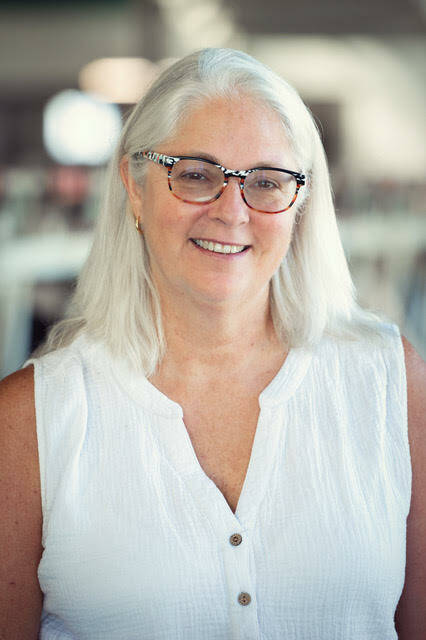
Throughout 2026, we’ll be featuring profiles on women in Canadian agriculture in honour of International Year of the Woman Farmer.
Marina von Keyserlingk, from North Vancouver, B.C., is a UBC professor and global leader in animal welfare science.
She has frequently been recognized for her pioneering research targeted specifically at improving the lives of animals. She is one of the top global scholars in animal welfare, and in 2025, she was awarded the Order of Canada.
Her groundbreaking work has transformed the way people think about farm animals and has guided animal agriculture towards meaningful change worldwide.
Q: How did your early years on your family’s cattle ranch in the Okanagan influence your career path?
A: Marina von Keyserlingk: There is no doubt that growing up on my family’s ranch in North Okanagan had a profound influence on my career path. When I think back to my time on the ranch, I can’t help but think of the role my parents played in shaping who I am today. They were both immigrants to Canada. My mother’s early years were spent on a farm in Estonia, whereas my father’s early years were spent on a farm in Namibia. They independently immigrated to Canada before meeting in the Okanagan, deciding to spend a life together working as ranchers and raising a family.
Read Also
As children, my sisters and I were expected to help, including being hauled out of bed during the calving season when a cow needed help. I know we all complained about having to help at these odd hours, but looking back, I realize that my parents cared deeply and did whatever they could to ensure that our cows and calves were well cared for.
But, that said, as kids we were not given much choice in how things were done. Growing up, I was the one responsible for castrating bull calves and likely, over the course of my youth, I castrated hundreds, each one without pain mitigation. It was simply not discussed that the procedure might be painful, but as something that had to be done. The difference now is that I would never castrate a calf without pain mitigation. Thankfully, in the final years of my parents owning cattle, I was able to convince my father that this was simply the right thing to do, despite there being no return on investment.
Q: What research project, or aspects of a research project, did you find the most challenging and why?
A: One of the areas that my students have worked on that was, and arguably continues to be, very challenging is issues where we are trying to understand the impact a procedure or management practice has on the emotional state of the animal. An example that we continue to plug away at is whether some dairy cattle experience postpartum depression.
A common animal model to study postpartum depression in women is to allow female rodents to give birth, then immediately remove the offspring. We also know that postpartum depression can be a risk factor for other maladies in humans.
Given that the removal of the calf immediately at birth is a routine management practice on dairy farms, and one of the riskiest times for cows to get sick is in the first weeks after giving birth, I feel this is an important area to continue working on — but getting inside the head of an animal to ask how they feel is most definitely challenging!
Q: A great deal of your work over the years has focused on behaviour, housing and management with studies that have contributed to animal welfare improvements. Yet agriculture is very traditional. Change comes slowly, sometimes reluctantly. Can you share some thoughts on how the value of your work has influenced farmers or, perhaps, the difficulties you experienced promoting the results of your studies in the farm community?
A: Agriculture is steeped in tradition, which includes, for example, a myriad of routine painful procedures done without pain mitigation. Change is never easy, but it doesn’t mean it is impossible. When we look at the Canadian dairy industry, the (National Farm Animal Care Council) decided in 2008, with the publication of their first Code of Practice for the Care and Handling of Dairy Cattle, that tail docking was not acceptable, and pain mitigation was a requirement when disbudding calves.
While the beef industry has been somewhat slower at using pain mitigation, it has made progress. Noteworthy is that many beef producers addressed the issue of disbudding by adopting breeds that include the polled gene, which completely removes the issue.
Although sometimes it feels like change will never happen, I now have the luxury of having worked in the field of animal welfare for almost 25 years. When I think back to when I started, almost all Holstein dairy calves were fed only 4 L of milk per day, an amount that we know was insufficient and left them hungry. We recently did a survey in British Columbia where we asked B.C. dairy farmers how much milk they fed, and 86 per cent of respondents reported offering more than 8 L per day. So, compared to two decades ago, most dairy farmers are feeding twice as much milk. This, to me, is a huge success.
Q: Your work has transformed how people think about farm animals and how farmers value their livestock. Can you share any thoughts on how your work may have transformed you in a unique or special way?
A: After having worked in animal welfare for over two decades, I think what I have learned is that change is hard but not impossible, but to be effective in motivating change, we must work together. There is no doubt that farmers (including my late parents) care deeply about their animals, and we need to respect this. At the same time, we need to find ways to have these difficult discussions. To not change is not a solution. This comes back to change having to be collaborative.
Recently, I had a graduate student speak to dairy farmers about adopting social housing of dairy calves. The results indicated that for many farmers implementing social housing is not simply something that you decide to do tomorrow, but rather a process of making the decision, finding information and then (having) a trial-and-error period where you tackle the challenges of making the system work. The results of this type of research contribute to our understanding that the types of challenges farmers deal with every day vary greatly and that we need to figure out how to support them at the individual level.
Q: Your work, and no doubt the teaching quality of your work, has had a profound influence on your students over the years. Can you share a few thoughts on how students have influenced you in that classroom relationship?
A: I think my greatest contribution has been on the teaching/mentoring side of things. I recall a conversation I had with a student very early in my time at UBC. I was teaching a class called Animals and Society, and there were students from many different faculties across campus. Included among them was a young man from the U.S. who grew up on a cattle ranch. He came to me after the first class, concerned, as there were a number of students, including the individual sitting beside him, who had little experience with farm animals and were very critical of the food animal industries. I encouraged him to stay.
As part of the class, I get the students to pair up frequently to discuss different issues and his partner in these discussions was one of the “critical students” who sat beside him on day one. The two of them elected to sit beside each other the entire term and became friends, finding common ground in respecting each other’s views rather than condemning them. At the end of the term, he thanked me for convincing him to stay.
I think back to this student’s experience often.It guides me (and shows me) how important it is for me to continue to create safe places for individuals with differing values to have productive discussions.
Q: You have been recognized and respected as a groundbreaker in your respective field internationally. Can you share your thoughts or emotions on how you feel about the impact of your accomplishments?
A: At the outset of my career, I never thought about having the goal of being a groundbreaker. My goal was simple: how do we create a better life for the animals under our care, and how do we get different actors with different perspectives to come together? In addition to the myriad accomplishments of my students and colleagues, I have been grateful to those who have been willing to engage in dialogue, either through one-on-one conversations or by listening to my presentations.
I am inherently passionate about my field, and I have been told this comes through when I speak. My goal is to get people to think and reflect and to consider all perspectives and, ideally, find solutions to animal welfare issues that work for everyone, including the animals, the farmers who care for them and the people we depend on buying the products.
Q: What’s next? What would you still like to achieve?
A: To continue working on improving the lives of animals. I will likely increase the amount of time invested in research that looks at identifying barriers to proven welfare solutions. This work is important as we have identified many practical solutions, but these solutions are not always adopted. To address this latter challenge, we need to include the farmers’ voices in our research.
Q: You have been recognized and respected internationally as a ground breaker in your field. How do you feel about the impact of your accomplishments?
A: At the outset of my career, I never thought about having the goal of being a ground breaker. My goal was simple: how do we create a better life for the animals under our care and how do we get different actors with different perspectives to come together?
I am inherently passionate about my field, and I have been told this comes through when I speak. My goal is to get people to think and reflect and to consider all perspectives and, ideally, find solutions to animal welfare issues that work for everyone, including the animals, the farmers who care for them and the people we depend on buying the products.
Source: producer.com