
Agriculture committee wants research cuts reversed
REGINA — The House of Commons agriculture committee says Ottawa should “pause and reverse” its decision to close research centres and begin immediate consultation with all involved to understand the scientific and economic impacts.
The committee, during a study, heard from more than two dozen witnesses and received 15 written briefs, none of which supported the cuts announced in January.
You can follow all our coverage of the Agriculture and Agri-Food job cuts here.
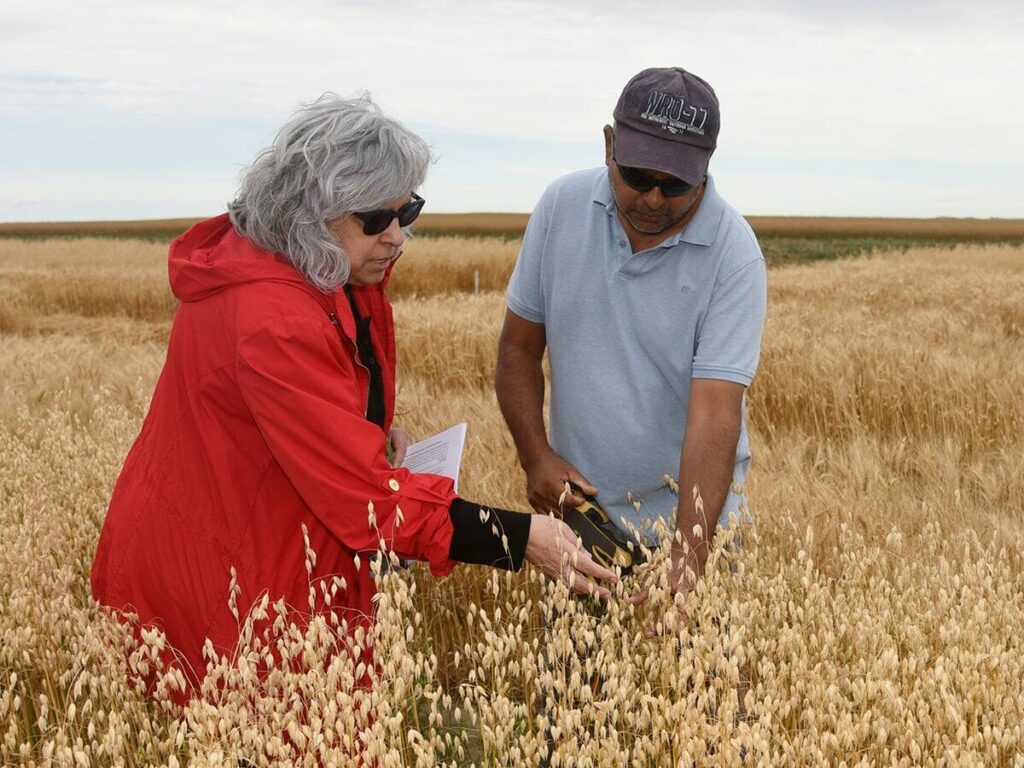
On May 6, it released 20 recommendations, including one asking the government to reconsider canceling the organic and regenerative program at the Swift Current Research and Development Centre.
That program was the only government-led organic and low-input program in the country, and the committee heard public funding is critical to maintain research in sectors like it.
Seven organic organizations submitted a brief calling for the program headed by Myriam Fernandez to be saved.
“This program should be understood as part of Canada’s core public agricultural research infrastructure,” the brief said.
Read Also

“Long-term organically managed field trials and regionally adapted systems research are national scientific assets that cannot be recreated once lost.”
The federal government announced that three research centres and four satellite farms would close as part of overall cost-cutting across departments. These include the Lacombe centre in Alberta, the Indian Head and Scott farms in Saskatchewan and Portage la Prairie, Man. About 27 scientists and hundreds of other employees are affected.
Local leaders told the committee their communities will suffer without the jobs available to their residents.
Deputy agriculture minister Lawrence Hanson said about $90 million of the $300 million spent annually on research and development goes to maintenance and utilities at the centres.
The department said it would save $86 million this year, $41 million in 2027-28, $111 million in 2028-29 and $115 million the year after for total savings of $394 million.
The closures would save $233 million over 10 years and $87 million in deferred maintenance costs.
However, the study notes that amount does not include the costs of relocation, divestiture and decommissioning, nor potential site remediation costs.
One recommendation calls for site-specific cost-benefit analysis to justify the proposed closures.
The report said agriculture should be recognized as a strategic sector and an economic powerhouse. Committee members urged the government to explore new collaborative models and better incentives for private sector companies to partner with public institutions, thereby increasing total funding for agricultural research.
However, the study also notes that some sectors lend themselves better to collaboration, while others, such as Fernandez’s program, rely on public funding and research.
Tyler McCann, managing director of the Canadian Agri-Food Policy Institute, told the committee Canada has to do a better job of thinking about research investment from a national perspective. Budget constraints have put the agriculture research system on the verge of crisis, the study noted.
Alison Sunstrum, from NYA Ventures, an ag tech venture fund, said chronic underfunding has already caused problems, and it’s time to revitalize research to capitalize on new technology.
“Without modern infrastructure, opportunity becomes aspiration. Public research builds the foundation. Private capital scales it,” she said.
“If public investment weakens, private capital moves elsewhere and it rarely returns.”
Protein Industries Canada chief executive officer Tyler Groeneveld said Canada is fifth behind the United Kingdom, United States, Germany and Australia in global food innovation and risks falling further behind if all players, including government, aren’t involved.
The report was tabled in the House of Commons and the government has 120 days to respond.
Also recently tabled was the committee’s report on its study of beef and pork supply chain challenges and pricing. The committee offered seven recommendations, including that Canada implement mandatory price reporting similar to that in the United States.
The committee recommended a transparent way to identify Canadian and previously frozen foreign meat in the Canadian supply without jeopardizing trade obligations, and a protocol to allow provincial meat processing plants to sell interprovincially.
Government should support provincial plants to meet federal standards but adapted to their operational scale so they don’t face such a high administrative burden and cost.
The committee also asked for regulatory amendments to harmonize specified risk material regulations with those of Canada’s main trading partners.
Source: producer.com