
Agriculture shippers want action on Vancouver bridge
WINNIPEG — More than 20 groups, representing farmers, fertilizer companies and shippers, are urging prime minister Mark Carney to take action on a railway bridge in Vancouver.
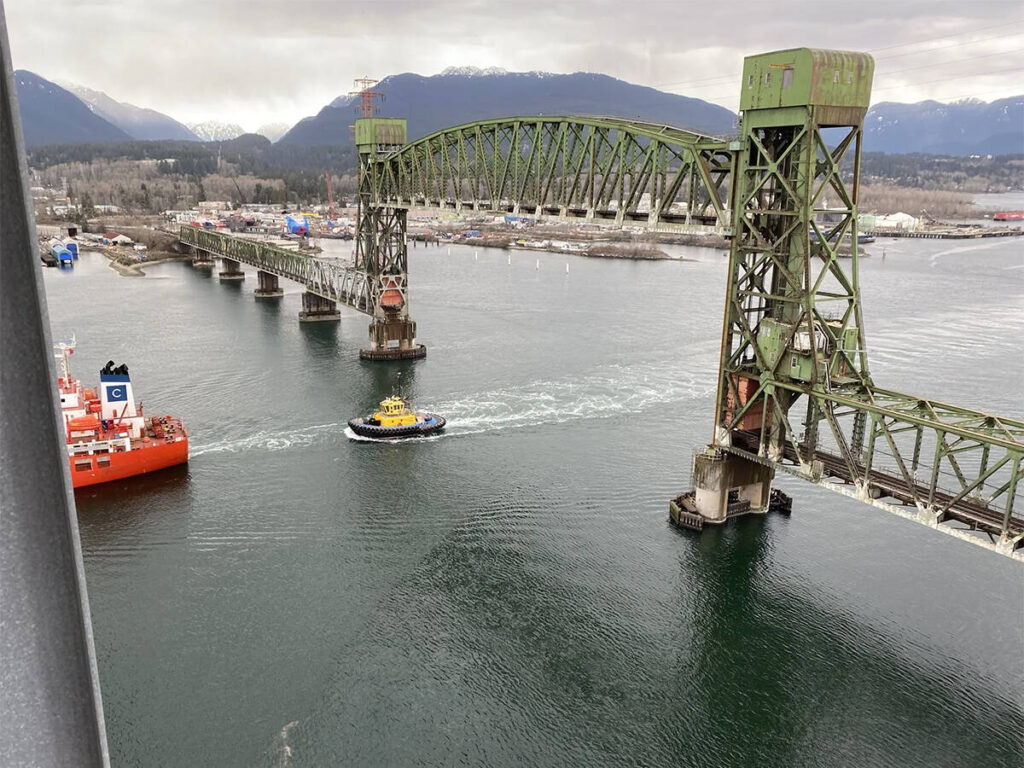
A letter to Carney and transportation minister Steve MacKinnon says the Second Narrows Rail Bridge is a critical artery for Canada’s export economy. Any sort of accident or mechanical problem in the future could shut down the bridge.
That would “immediately halt bulk exports” of grain, fertilizer and other products, the letter says.
“The (lift) bridge malfunctioned in late February and was unable to be raised, halting marine traffic and restricting rail service for four days,” it says.
“Failure to address these infrastructure vulnerabilities will reinforce perceptions of Canada as an unreliable trading partner, with serious implications for investment, market access and the long-term strength of our export-driven economy.”
The organizations behind the letter, sent the second week of May, include the Canadian Federation of Agriculture, the Canadian Canola Growers Association, Sask Wheat, Soy Canada and Fertilizer Canada.
Read Also

The rail bridge, owned by Canadian National Railway, is the only way for trains to access the North Shore grain, potash and coal terminals at Vancouver’s port.
It was broken for several days in late February, locked in its down position.
The bridge carries almost one-third of all cargo that annually moves through the port — 43.7 million tonnes in 2024.
The terminals on the North Shore include G3, Richardson and Cargill for grain, and the Canpotex potash facility.
The Port of Vancouver has invested in a system to optimize traffic, co-ordinating rail and shipping, in the busy waters around the Second Narrows Railway bridge.
The Active Vessel Traffic Management (AVTM) program has increased the volume of traffic, in and out of the North Shore, CN said in a 2025 press release.
“Since AVTM was implemented, we have increased the average weekly train count moving to/from North Vancouver by 10 per cent.”
Those improvements may be making a difference at the moment, but Canada’s export industries need a long-term solution to this bridge, which was built in 1969 and wasn’t designed for modern freight traffic, the letter says.
“Vessel traffic requiring the bridge to lift is only expected to grow…. This bottleneck is actively limiting Canada’s ability to expand exports, pursue new markets, and fully capitalize on global demand for our commodities,” says the letter.
A fertilizer company, for example, might be reluctant to make new investments in Canada if their products can’t be shipped out of the port.
The groups are asking the federal government to think in a “longer horizon” to fully capture the trade opportunities for Canadian products.
Possible solutions could be twinning the bridge or a modern replacement.
Source: producer.com