
Blast those budget blues | The Western Producer
It’s not news that groceries cost more than ever.
We all know about ongoing global conflicts that play a role: gas prices spike due to the Strait of Hormuz blockade; the Middle East war; Russia’s invasion of Ukraine.
It feels like the perpetual but constantly changing state of war from George Orwell’s book 1984.
Other reasons for high food costs include elevated production and transportation costs, disruptions due to climate change and weather variabilities, ups and downs in exchange rates, and the trade war with the U.S. president.
And we all still need to eat.
My husband, Dave, and I do my mom’s grocery shopping, and I keep her fridge stocked. At 90, she still enjoys her food, one of the few real pleasures left to a woman whose sight and mobility are diminished. So, we’ve adopted budgetary measures to make her — and our — food dollars go further without her feeling deprived. As a child of the Depression, my mom understands thrift.
Read Also

To start with, we hardly eat out at all anymore. (So sorry, restaurant friends and colleagues.) Similarly, we never use ready-made meals or prepackaged meals. As a retired chef, home-cooking from scratch has always been my practice.
I keep a deep pantry, and now is the time to embrace it. I bake bread regularly, from my stash of sourdough starter and various flours and seeds. My freezer is my starting point when I plan a meal. By the time I start picking peas next month, I want my freezer empty of all those golden meal prompts: roasted tomato sauce, frozen chicken parts, chicken stock, sausages, Bolognese sauce, fruits and berries.
Mom has a sweet tooth, so I bake cookies, muffins, sweet loaves, tarts and pies, cinnamon buns, cupcakes, the occasional chocolate cake. Home-baked sweets are also great for repaying favours and expressing gratitude. After the last blast of snow in late April, I took gingersnaps as well as cash for diesel to my neighbour Ken when he ploughed us out for the millionth time.
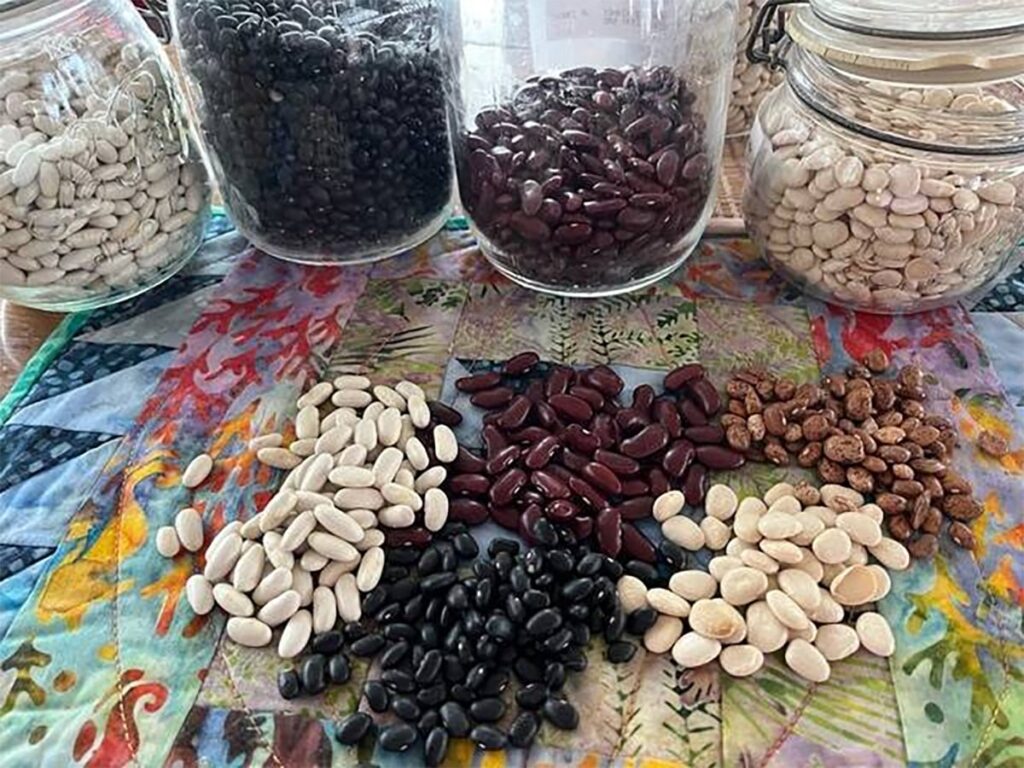
Strategic cooking helps, so I plan for leftovers. We’re eating more pasta and grains, more beans and less meat, which serves as a flavour agent rather than an entrée. I cook mixed beans and smoked pork hock; chili verde made with Great Northern white beans and pork shoulder; brown lentils with bacon; red lentils with sausages and frozen roasted tomato sauce for the best tomato soup. I use my Instant Pot more often to cook chickpeas, half for lunchtime hummus, half for channa masala or chickpea salads.
Strategic consumption helps. I monitor our fridge and rotate leftovers, so nothing gets forgotten, and manage the produce drawers the same way. I keep fewer choices in my mom’s fridge for the same reason.
Strategic shopping helps, too. We put necessities at the top of the list, and we’ve cut way back on snacks. (I bake at home!) When either of us goes to the grocery store, we take a list, as we have for years. We avoid shopping on an empty stomach, when everything edible looks like a necessity. We have a loyalty program and monitor it for beneficial prices, and we look for sales, but neither of us darts from one store to another for lower prices; time and gas are precious.
The farmers market remains my source for those hardy cabbages and root vegetables that are hanging on until our local spring gardens take hold. At the grocery store, we avoid out-of-season, long-travelled asparagus and corn. Because we continue to boycott American goods, I’m willing to buy some produce from countries farther south or east of the U.S.: mandarins from Morocco, the occasional Mexican cauliflower. We live in a challenging climate, but we have to eat fruit and vegetables, so we do the best we can, sending as few dollars to the U.S. as possible.
First, we eat, then we talk about plans for this spring’s garden.
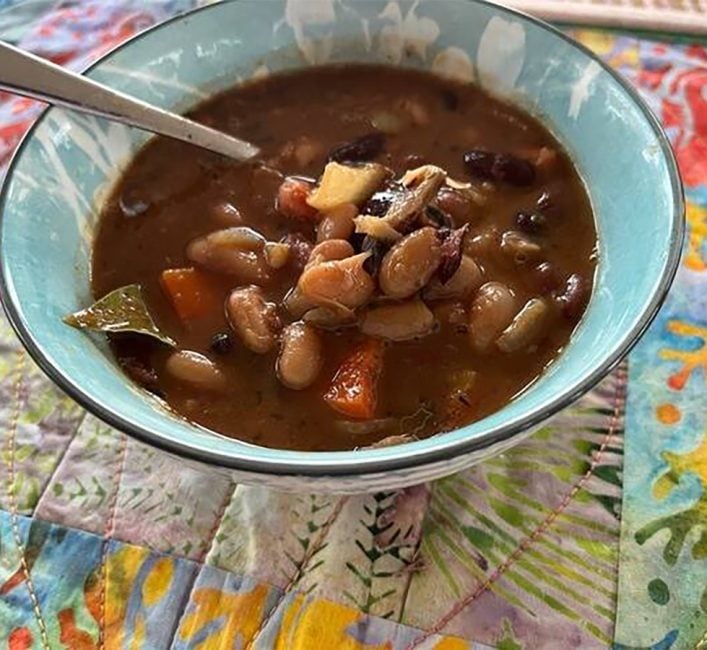
Smoky Pork and Beans
Pull the hock (and maybe cooked beans) from your freezer if you’ve got them stashed away. Serves 8-12.
- 4 c. dried beans (Great Northern, navy, kidney, lima, pinto)
- 1 tbsp. kosher salt
- 1 smoked pork hock
- 1 tbsp. olive oil
- 1 onion, diced
- 2 carrots, chopped coarsely
- 2 celery stalks, chopped coarsely
- 8 cloves garlic, sliced
- 2 bay leaves
- 2-3 sprigs fresh rosemary
- 1 tsp. thyme
- 1 tsp. dried oregano
- 1 tsp. dried basil
- 2 tbsp. sweet Hungarian paprika
- 1 tsp. smoked paprika
- 1 tbsp. Ancho chili powder
- 2 whole star anise pods
- stick cinnamon, broken
- c. pomegranate molasses
- 2-4 tbsp. Worcestershire sauce
- 2 tbsp. brown sugar
- c. tomato paste, tomato sauce or ketchup
- 1-2 tbsp. herb-infused wine vinegar
- kosher salt and freshly ground black pepper to taste
Put beans and pork hock into a pot or Instant Pot with salt, cover with cold water, add a snug lid and cook until tender. Remove pork and pull it from the bone, then chop coarsely. Drain beans, reserving the cooking water.
Heat oil and saut onion, carrots, celery and garlic over moderate heat until tender, about 10 minutes. Add all remaining ingredients except vinegar. Mix well, then add cooked beans and pork with enough of the cooking water to make it sloppy-wet and juicy. Simmer until tender. Taste, adding vinegar as needed to balance. Serve hot. Leftovers make great taco filling.
****************
Click here for more of dee’s stories and recipes.
Source: producer.com