
Crop pests cost industry $204 million a year
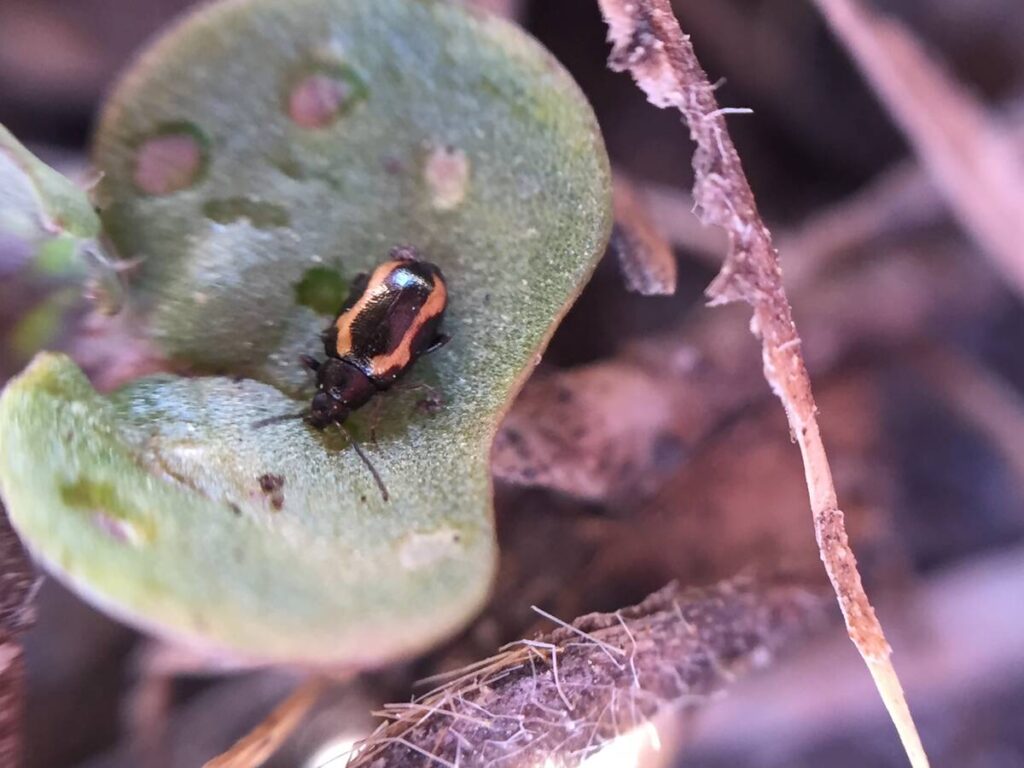
Recently completed research pins the total monetary damage from crop insect pests in Western Canada at an annual average of $203.6 million, with $160 million of that damage produced in canola crops by flea beetles.
Far behind in second place are wireworms on all crops with $11.8 million in damage, cutworms ($11.1 million, all crops), lygus bug ($7 million, canola) and lygus bug again, this time on fababeans with $3 million in crop destruction.
However, those figures may only be a fraction of the true costs of these Prairie pests, say Héctor Cárcamo and Tyler Wist, two Agriculture Canada research scientists who authored the study with Vivek Srivastava from the University of British Columbia.
Read Also
Closing the yield gap in Prairie cereals requires balancing agronomy and economics
Prairie cereal yields remain well below biological potential, but research shows closing the gap requires balancing agronomy with economic returns.
They say there’s a lot more work needed to gain a full understanding of these economic impacts on a Prairie-wide scale.
Why it Matters: Insect crop pest damage figures lay a foundation for further investigation into the true, comprehensive cost of managing these predators.
“I know in other countries — like in many European countries — a researcher would have access to a database that tells him or her how many acres were sprayed with X product for X insect, and we don’t have that information here and it’s a little bit puzzling why,” says Cárcamo.
There needs to be more categories investigated to develop comprehensive data on the costs of managing these predators, he added.
Some of these include opportunity costs and the expense of developing resistant crop varieties.
The industry also needs to take a more exhaustive approach to the pest insects it tracks and surveys, says Wist. Flea beetles, lygus bug and wheat midge are a few that need to be included.
“These are insects that are not currently being tracked in a quantitative manner every year,” Wist said.
The study authors recommend Canada maintain a centralized, high-resolution and curated “long-term data repository to capture and integrate multiple data on biotic stressors, climate, abiotic conditions, and agronomic practices across the Prairies.”
Goal is FAIR data
The study’s data was culled from annual pest reports published in the minutes of the Western Committee on Crop Pests from 2015-24. From these, the researchers often had to convert anecdotal, qualitative information into numbers that would approximate the cost of operations.
That’s why they’re recommending a standardization of quantitative data in insect surveys that can also be employed for experimental research in farmers’ fields, Cárcamo said.
“I just discovered this lovely phrase or acronym called FAIR data … and it means the data should be findable, accessible, interoperable and reusable.”
The past data opened a window to the regionality of the crop pests and their movement over the past decade.
“(Pea leaf weevil) are more important in southern Alberta and southern Saskatchewan and now they’re actually moving up and crossing into Manitoba and more northern regions,” Cárcamo said.
“Same thing for cabbage seedpod weevil. We saw wheat stem sawfly is a major problem in the Foremost area, the drier areas in southern and eastern Alberta. Once you get out of Alberta, they’re not a huge issue, except perhaps in the southern prairies of Saskatchewan.”
Some may wonder why flea beetles are at the top of the list when they remain non-resistant to some key insecticides.
It’s for that very reason why they’re infrequently surveyed, said Cárcamo, but doing so could save producers money on insecticidal seed treatments in the future.
“Hopefully we get to a point where we say, ‘OK, flea beetles are a problem and they can invade fields fast, but we can predict that they’re not going to be a problem this year so why are you putting insecticide on your seed?’ … The same thing applies to pea leaf weevil that are managed best with seed treatments.”
Tech end advancing
Aside from the pest data repository and stepping up surveys for currently neglected insect pests, the researchers’ paper also recommends:
• Investing in dynamic pest risk models, which can offer farmers actionable insights, enabling more effective and timely decision-making,
• Updating and standardizing economic thresholds supported by long-term data repositories,
• Integrating bioclimatic models accounting for temperature and precipitation changes to help predict and mitigate future risks.
• Using advanced technologies such as GIS, machine learning and predictive modelling to enhance pest monitoring and risk forecasting,
• Continuing to employ integrated pest management (IPM) strategies, combining resistant crop varieties, biological controls and reduced chemical inputs.
The tech side of surveying crop pests is already advancing significantly.
Agriculture Canada, for example, has developed artificial intelligence-based methods for counting flea beetles, wheat midge and aster leafhoppers, in the process stepping up the speed and accuracy of surveying, Wist said.
“(I received a) phone call from a grower who said, ‘Tyler, it took me an hour-and-a-half to count that wheat midge trap.… I can’t keep doing this. It’s too much work.’
“And so what we’ve got now is artificial intelligence that — from a picture — will count the number of wheat midge off of a pheromone trap in seconds rather than an hour-and-a-half.”
‘Citizen science’ survey
The team, along with a handful of oilseed, wheat and pulse organizations, is also readying an online survey designed to make it easier for farmers to scout for and record insect pests and beneficials.
Wist is projecting a roughly May 1 start to the survey, but those interested can sign up in advance here.
“We’ve got a few months of testing before we’re going to put it live to everyone, but let’s say — barring any huge mishaps — the first of May would be when it goes live,” said Wist.
“Right now, we’re trying to solicit people that will use it in the hopes that we can get a big database of people. And then I will send out a blanket email saying, ‘here’s your instructions, download this app, subscribe to this survey and away you go.’ ”
The survey centres on publicly available data from the Global Biodiversity Information Facility, a global information database that, among other things, focuses on species distribution.
“We’re trying to build these year-over-year databases using — we’ll call it citizen science because if Héctor or I were collecting it, then it wouldn’t be citizen science,” he said.
“People are going to be out in their fields anyway looking at flea beetles. And if they’ve got this app, they can just do the survey with us and add in the number of flea beetles that they’ve got.”
The survey is being funded by the Agriculture Development Fund, Sask Oilseeds, SaskWheat and SaskPulse.

Source: producer.com