Farm chemicals go off patent
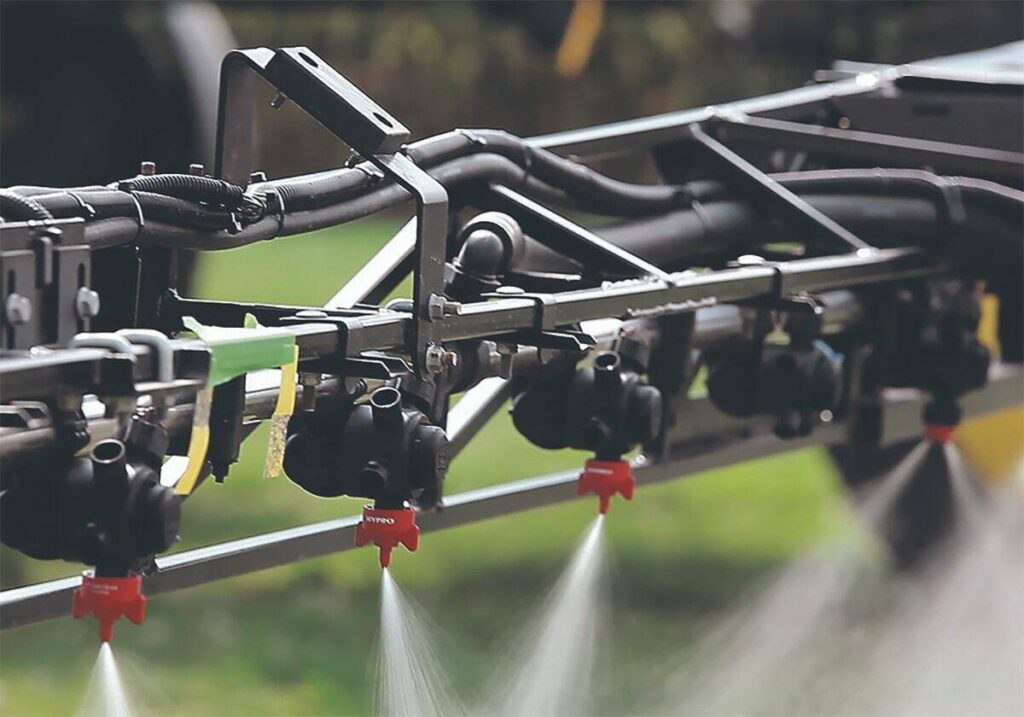
SASKATOON — Farmers are paying way more for fertilizer these days, but that is not the case for crop protection products, says an industry official.
“Almost all the products you can purchase today have come off patent in the last 15 years,” Rob McClinton, head of North America for Fuhua Chemical, told delegates attending FBN’s recent Farmer2Farmer VII conference.
Fuhua is the second biggest glyphosate manufacturer in the world behind Bayer.
Read Also

OutRun tillage automation system released
When OutRun was first shown, Agco said it would eventually expand the system’s capabilities to include autonomous tillage. This year, that system becomes commercially available on the Fendt 900 tractors
McClinton said the 25 top selling active ingredients in the world are all off patent. The last few products remaining on patent are coming off by the end of the decade.
That means more competition and lower prices for those products, he said.
For instance, up until last year, only FMC manufactured chlorantraniliprole, a popular insecticide. As of today, 23 companies in China are either manufacturing the product or gearing up to do so.
“That ultimately means prices at the farmgate come down,” he said.
Why it Matters: Farmers need a break when it comes to crop inputs.
Prothioconazole is one of the biggest active ingredients in the world. The fungicide, marketed as Proline by Bayer Crop Science in Canada, is now manufactured by eight companies.
Bayer was selling that product for almost US$500 per gallon until its patent expired in 2023. FBN is now selling it for $190 per gallon.
“Think of what that means for the economics of your farm,” said McClinton.
He doesn’t fault the big-five chemical companies for charging a premium while they had a monopoly because it takes an average of $300 million and 10 to 12 years to bring a new active ingredient to market.
Companies will screen 100,000 molecules to get one candidate, and half of the candidates fail before launch.
Patents last 20 years, including the 10 to 12 years it takes to bring the product to market, leaving companies with eight to 10 years to recoup their investment.
That is why no new active ingredients have been brought to market this decade. The next one is supposed to arrive in 2029.
McClinton said the big traditional players, such as Syngenta, Corteva AgriScience and UPL, have all blamed recent disappointing financial performance on increased competition from generics.
John Appel, vice-president of category management at FBN, said the crop protection business is in the midst of an industry shakeup.
Corteva has split itself in two. The crop protection side of the business is now an independent company called New Corteva, while the seed business has become SpinCo.
BASF Agricultural Solutions and Bayer Crop Science are pivoting from commodity chemistry toward biologicals, digital agriculture and high-value formulations.
BASF has a minority initial public offering planned for 2027. BASF will remain the majority shareholder in the company post-IPO.
Bayer is closing its Frankfurt production facility by the end of 2028 after a 161-year history at the site.
FMC’s board is considering a possible sale of the $3.47 billion business.
“They have really struggled with earnings and revenue over the past year,” said Appel.
McClinton said manufacturers of generics are also experiencing financial problems. Hebang, which is one of the largest in China, posted revenues of $8 billion for the first three quarters of 2025 but only $13 million in profit.
“Can you imagine a business that big where you’re making that little money?” he said.
That is because more than 700 manufacturers are producing active ingredients in China. The competition is fierce.
It used to be that 90 per cent of active ingredients were manufactured in the European Union and the United States. These days, 70 per cent of the production is in China.
There is enough chlorantraniliprole manufacturing capacity to meet 5.65 times the global demand for the product., enough glufosinate capacity to meet 3.17 times the demand and enough prothioconazole capacity to meet 2.05 times the demand.
That is good news for farmers because excess supply means lower prices.
McClinton said glyphosate prices are sitting at the floor of its price range right now.
That product has been off patent for so long it has weaned out a lot of suppliers. There are 15 manufacturers today, down from 30 in 2010.
However, the remaining companies still have 840,000 tonnes of capacity in China, which is more than the annual global demand for glyphosate.
He believes other products, such as chlorantraniliprole and prothioconazole, will follow the same pattern as glyphosate, setting continually lower and longer-lasting price floors in the coming years interrupted by the occasional price spike due to black swan events.
Glufosinate might be the one exception.
It could soon follow the pattern of 2,4-D, which has been off patent for a long time. Prices of 2,4-D have bottomed out and are now moving higher due to inflation and an anti-dumping duty on Chinese product.
BASF just closed its glufosinate manufacturing plant in Germany, so now all the production is occurring in China and India.
He believes some Chinese glufosinate producers are going to exit the market in the next little while.
The one downside for growers is that purchasing crop protection products is becoming more complicated due to the plethora of manufacturers and retailers.
Comparison shopping is becoming difficult. There was a time when glyphosate prices would be set once for the entire year. Those days are long gone.
“We literally change our price on glyphosate every day,” said McClinton.
“That’s how much prices move when things become commoditized.”

Source: producer.com