
How heat from the sun gets around on our planet
In the last article, we looked at how solar energy is reflected; now we are going to look at what happens when that energy is absorbed.
When solar energy is absorbed by an object, its molecules gain energy and begin to vibrate more rapidly. The faster the molecules vibrate, the warmer the object becomes.
So how does that heat get transferred from the surface into the atmosphere?
Read Also

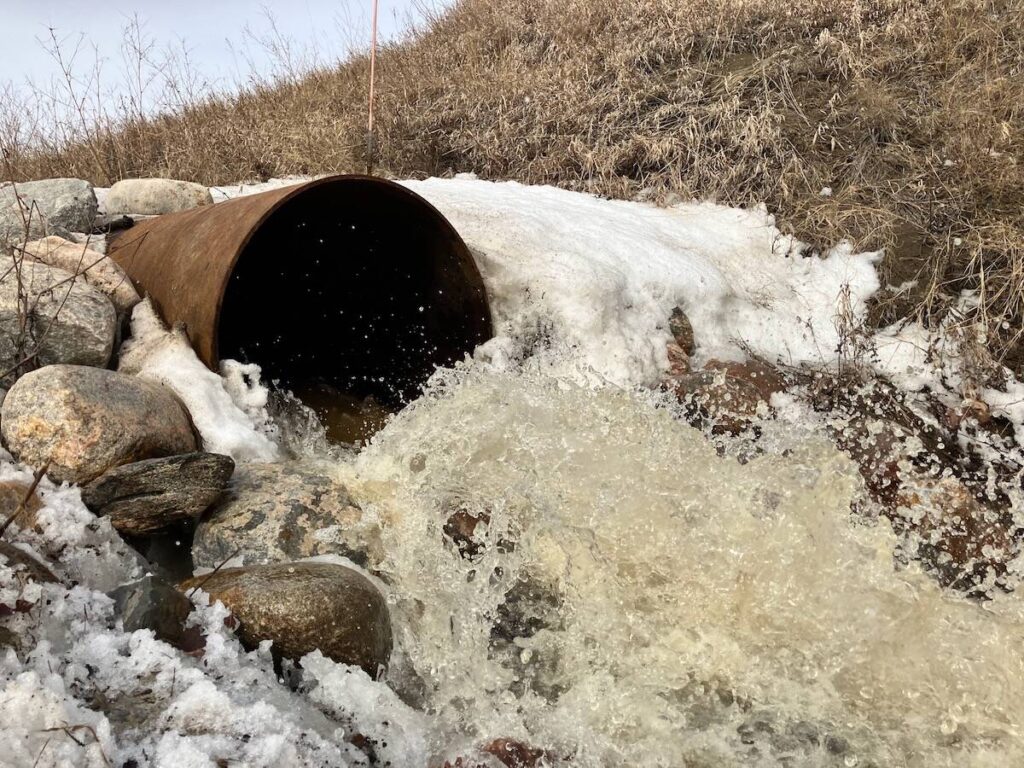
Farms face flooding in northeastern Saskatchewan
Flooding in northeastern Saskatchewan could cause seeding delays and adjustments if there is any more moisture in May.
There are four primary processes responsible for this transfer:
- conduction,
- convection,
- advection and
- latent heat transfer.
Conduction is the simplest of these processes. It involves the transfer of energy from one molecule to another through direct contact.
As solar energy heats a surface, the molecules within it begin to vibrate more quickly, and these faster-moving molecules then transfer some of their energy to the molecules next it and so on.
On Earth, solar energy heats the ground, and the air molecules in immediate contact with the surface gain energy through conduction.
However, this process is only effective over a very shallow layer, typically the lowest couple of centimetres of the atmosphere.
This raises an important question: how is heat distributed through the rest of the atmosphere?
This is where convection, advection and latent heat transfer come into play.
Convection and advection are closely related because both involve the movement of air. The key difference is direction: convection refers to vertical motion, while advection refers to horizontal motion.
Convection is driven by differences in air density.
When air near the surface is heated, its molecules spread farther apart, meaning fewer molecules occupy the same space.
Since density is mass divided by volume, this results in lower-density air. Being more buoyant, this air rises, carrying heat upward into the atmosphere. This vertical transfer of heat is fundamental to many weather processes.
Advection, on the other hand, involves the horizontal movement of air, typically driven by wind.
Through advection, warmer or cooler air masses are transported from one region to another, redistributing heat over large distances.
In latent heat transfer, the term “latent” refers to energy stored in a form that is not immediately felt as heat. This process is closely tied to changes in the state of water.
When water absorbs solar energy, it eventually gains enough energy to escape into the air as water vapour, in a process known as evaporation. The energy used for this phase change is not lost; instead, it is stored within the vapour as latent heat.
As the water vapour rises and cools, it eventually condenses back into liquid.
During condensation, the stored latent heat is released into the surrounding air. Because evaporation requires a significant amount of energy, condensation releases an equivalent amount.
This release of heat plays a key role in powering weather systems.

Source: producer.com