
Human IVF drug can be used to improve cattle breeding
A new use has been found for the human IVF drug cetrorelix.
The drug has been extensively tested in beef and has been shown to improve ovulation synchronization with artificial insemination and be just as effective as the previously used drug, estradiol.
It can also help tighten up the calving period with natural breeding.
Dr. Jaswant Singh, a veterinarian and researcher at the University of Saskatchewan’s Western College of Veterinary Medicine, has been working on the project for more than 25 years.
His interest in livestock production and cattle reproduction was sparked during his PhD work at the U of S in 1993, and he has been at the WCVM since 2000.
“I keep teaching anatomy to first year student, and continue to work on these eggs,” he said.
“And we are trying to find the factors that make the egg happy or sad. In other words, the ones that produce a baby versus that fail to produce a baby. That’s the central focus of what I look for in my research.”
Read Also

Part of his research has been to find an alternative to estradiol after the European Union banned it for estrus synchronization in 2006.
Singh and his graduate students had tried other drugs and hormones, and while some got the job done, none were as effective as estradiol — until cetrorelix.
A trial in Brazil, where estradiol isn’t banned, treated more than 200 animals, some with estradiol and others with cetrorelix. The results of the first 30 days of treatment resulted in identical pregnancy rates of 45 per cent.
“It (cetrorelix) matches it, rather improves a bit over the estradiol,” Singh said.
“Because the way it works in the brain, it’s a directly acting drug that influence the pituitary gland to prevent the LH (luteinizing hormone) release.”
LH is what causes the ovary to release the egg by influencing the pituitary gland and controlling the follicular wave that is the start of the ovulation cycle.
The drug protocol “resets” the wave, allowing the producer greater control over when the cow will ovulate, which improves breeding efficiency with ovulation synchronization and AI.
Singh recommends pairing the use of AI with natural breeding for 45 days following the protocol to maximize conception.
“We don’t advise that you use (the protocol) multiple times,” he said.
“We would say that you use it once on your cows or heifers, and then after one week, you leave your animals with the bull. So, half of the herd is bred with superior semen, and then the remaining animals don’t remain open.”
Cetrorelix matches estradiol’s ease of use, but it is a peptide hormone while estradiol is a steroid.
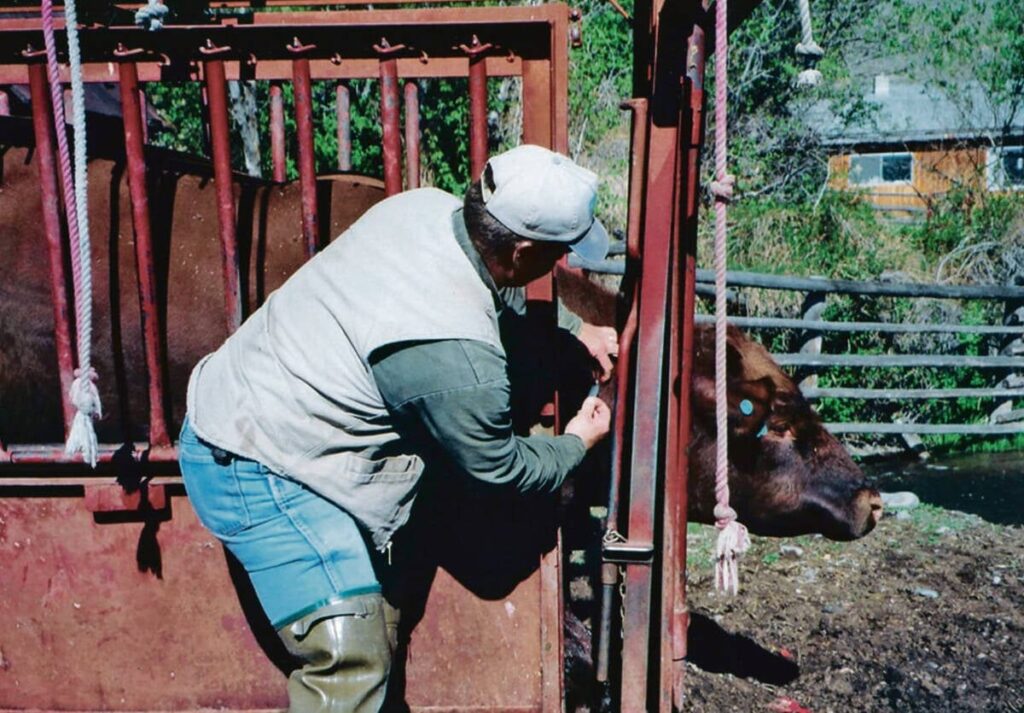
On day one of the process, the animal receives an injection containing three milligrams of cetrorelix and a vaginal implant that contains progesterone to prevent ovulation before treatment.
One week later, the implant is removed and a prostaglandin injection is administered. Two days later, the cow is artificially inseminated and given a GnRH analog injection to induce the LH surge.
“The beauty of this protocol, and same thing with the estradiol, was that at the end of the protocol, you don’t have to watch for cows coming in heat, so you don’t need to detect estrus,” said Singh.
As well, this synchronization protocol is easier and quicker than other alternatives. It only requires three treatments and handling of animals, just like estradiol, rather than the typical four or five.
This factor makes Singh hopeful that producers will be more likely to adopt this technology and the protocol, once it’s available, because the study isn’t just about improving pregnancy rates.
“How simple is this protocol? Is it good for the animals? Those are the kind of factors and improvements that we look for,” he said.
“In addition to improving the pregnancy rate … it’s also the ease of use, particularly for beef cattle production.”
Once it’s on the market, it’s up to the court of public opinion.
Dr. Henry McCarthy, a veterinarian and board member of the Saskatchewan Cattle Association, says artificial insemination is a lot of work in commercial herds.
“I’ve been around AI for 30 years at least, and we didn’t do synchronization,” he said.
“We just saddled our horses at four o’clock in the morning, rode out, heat detected and did the artificial insemination twice a day. You know, morning cows at night, night cows next morning.”
A few years later, they tried synchronization and had reasonable success, just like before, except now it was spread out over a few days. With other protocols, it’s four times down the chute.
For commercial cattle operations, the benefits may not outweigh the labour, but it could be a win on the purebred side.
“Purebred guys have had their hands on it (AI) quite a bit, and maybe they can use this more,” McCarthy said.
“They use the technology more because they are trying to improve and change genetics.”
Until this technique has been used commercially for a while, it’s hard to quantify the improvements, he added.
There’s a lot of steps between market release and market approval.
While use of cetrorelix on the farm is a few years away from being commercially available, Singh is optimistic that it will only take two to three years because it’s already been through the regulatory process to be tested and approved for human use.
To conduct the trials, Singh had to wait for the drug to be released from its patent, otherwise they would have been subject to royalties because the owning company wasn’t interested in seeing the product used on animals.
The U of S applied for an experimental patent once it was released so that it could trial it for breeding purposes.
It’s not a production patent, but Singh and the U of S are working with pharmaceutical companies to bring cetrorelix to market for producers. Singh expects it to be a similar price to other products already on the market for this use.
There are plans to trial the protocol with bison, sheep and dairy cattle at the university and horses and water buffalo in India.
The bison trial will be underway in late summer, with the experimental study permit already received.
Implications for the dairy sector will be realized soon because there is ongoing research and collaboration to fund the work.
Singh said the protocol will likely be easier to implement with dairy cattle because the animals regularly go through handling systems, and adding an extra treatment isn’t as strenuous on the animal or the handler.
However, there are additional aspects to consider, such as the effect on milk production, quality and content.
The researchers are looking into ways to test blood and milk to asses how long the drug stays in the animals’ system, but they don’t expect to see much impact, based on human studies, where the drug has been found to totally disappear within eight hours.
Source: producer.com