

Key part of soil health is annual soil testing
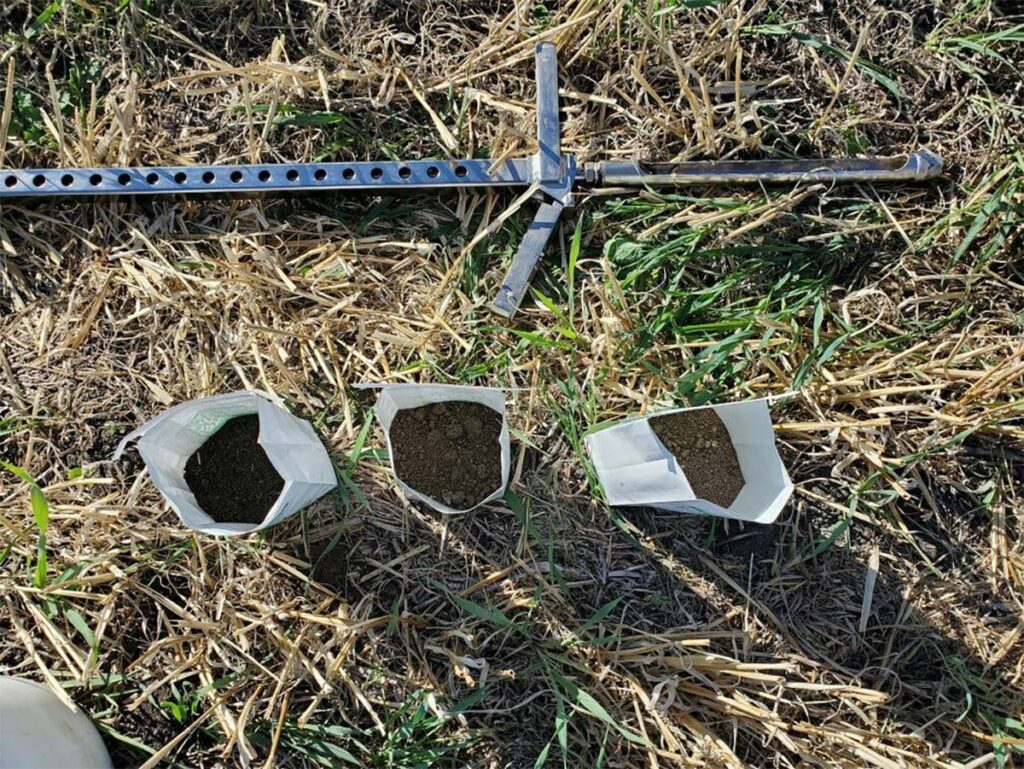
Soil samples don’t just tell producers what they need to apply ahead of their next growing season. They also help to understand what the soil can do for the producer.
The basics of soil testing are to measure plant available nutrient concentrations in the soil to predict fertilizer needs of the planned crop.
To figure this out, soil efficiency and environmental conditions must also be factored in.
Read Also
ArrowTube a new tool for uniform corn emergence, says U.S. company
A seed delivery system for use in planters is being marketed as a tool for seed orientation, a growing interest among corn producers.
This is particularly important when it comes to effective 4R nutrient stewardship in the field.
However, to take it a step further with 4R stewardship, soil testing has to occur on every field or zone every year.
“That really ramps up the soil testing requirements and needs in order to achieve that true 4R nutrient stewardship status,” Marla Riekman, a soil fertility specialist with Manitoba Agriculture, said during a recent Saskatchewan Agriculture Soil Sampling and Testing webinar.
“Because we need to be able to predict what those fertilizer and manure requirements are in every field in every year, so that we can best target the amount of nutrient that we are applying.”
By soil testing every year, rather than just when issues arise, producers can create a record to refer back to that enables the diagnosis of oddities and the ability to review the effects of fertilization plans.
This can be identifying salinity or residual nitrate, or determining how or why yields are or aren’t being met and the effects of weather on the nutrient plan.
It can be especially important to monitor long-term trends in soil if producers are dealing with issues of salinity and to note nutrients that deplete easily, such as nitrogen and sulfur, or those prone to spike, such as potassium and phosphorus.
A Statistics Canada survey from 2021 found high levels of testing for soil nutrient content:
- Ninety-two per cent in Manitoba.
- Eighty-eight per cent in Saskatchewan.
- Eighty-four per cent in Alberta.
However, when asked who tested annually, those numbers dropped considerably.
- Sixty-two per cent in Manitoba.
- Forty per cent in Saskatchewan.
- Thirty-six per cent in Alberta.
“Timing of soil sampling, the ideal recommendation is always to wait until soil temperature is less than five degrees,” Riekman said.
“Because this minimizes the risk of mineralization. You have less risk for mobilization happening at this point because your biological activity is decreased.”
However, there are a few exceptions to this rule. For example, Riekman doesn’t recommend fall sampling if the field has high leaching or denitrification rates or if sampling is conducted too close to fall fertilization.
Producers will have to consider what works best for them and their operations because ideal versus practical timing will vary.
To get the best soil sample, 15 to 20 sub-soil samples per field or zone should be extracted.
“The reason for this is because we have a lot of soil that we’re trying to represent in a very small sample,” said Riekman.
“So, for 160-acre field, it’s 2.5 billion pounds of root zone soil, and your sample that you’re sending into the lab is less than a pound.”
While variety offers a more accurate profile of the soil, there are some places to avoid, such as depressions, sand ridges and other odd spots in the field. Saline areas in particular should be avoided because they can throw off sulfur measures.
“It’s really important that we stay out of these areas because sulfate is a main component of the salts that we have in our prairie soils,” she said.
“The soil test in that area might have 10,000 lb. of sulfate, and it will kind of grossly overestimate the amount of actual sulfur that is in that field.”
There are three systems for taking soil samples: benchmark, grid and zone pattern.
For benchmark, the 15 to 20 samples are taken in a small zone to represent the whole field, and that zone is returned to each year. It’s a way to capture some of the variability within the soil from a small space.
“Then, over the years, you’ll see that fluctuation maybe a bit more clearly because you’re always going back to that same location,” Riekman said.
The grid method is similar to the benchmark method, but instead of a small space, the producer creates a systematic grid, and the samples are taken from varying spots in the grid, which are recorded for next year.
The zone pattern is necessary for producers using variable rate systems because it helps identify the needs of each zone based on topographic data.
When taking samples, zero to six inches are recommended for immobile nutrients such as phosphorus, potassium and micronutrients, which are retained in the topsoil, and six to 24 inches for nutrients such as nitrogen, sulfur and chloride that are negatively charged and affected by water.
“Twenty-four inches is the number to give you the best, most accurate understanding of how the crop is going to respond to those nutrients,” she added.

Source: producer.com