
Prairie producers’ battle against soil erosion must continue
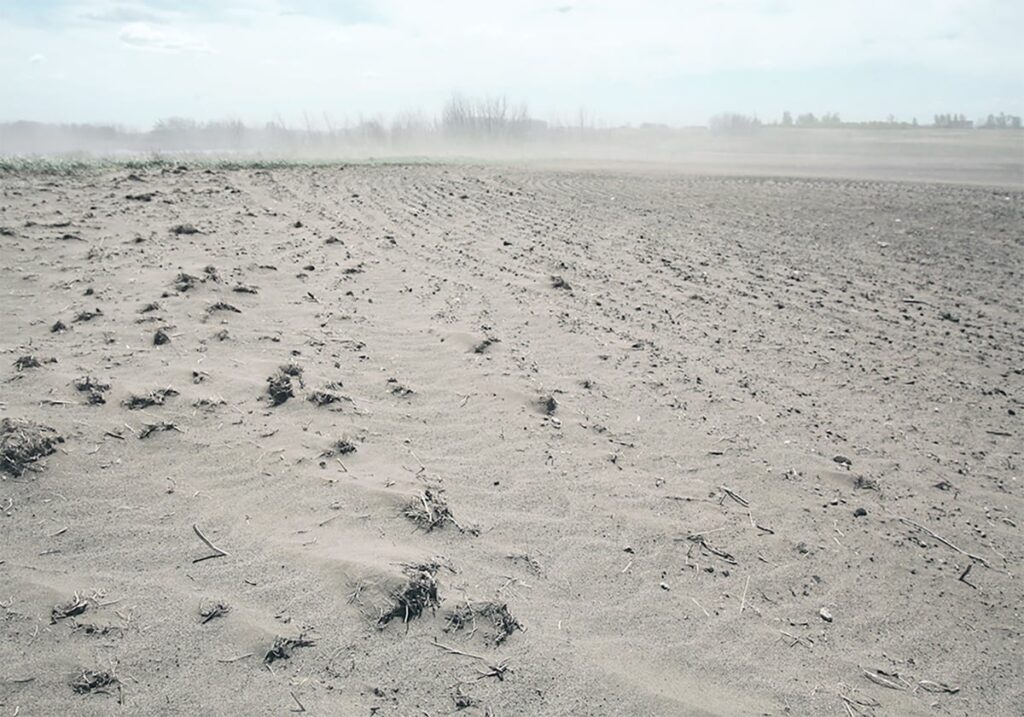
It was a problem of epic proportions in the Dirty Thirties and a huge concern back in the 1980s.
Based on what has happened this spring, if we continue to let our guard down, soil erosion could be a big problem again.
We’ve all heard the stories from the 1930s, and you can still see the aftermath.
I have a short row of caragana trees at the edge of a field, part of a homestead yard that’s long gone. The mound of dirt in the middle of the tree row is two or three feet high — soil that was trapped from windstorms 80 or 90 years ago.
It’s hard to imagine soil erosion so serious that some fence lines were completely buried.
The mindset at the time was that a black soil surface with little or no crop residue was the sign of a good farmer. You wanted fields that looked like a garden patch.
Read Also

That thinking changed, and producers began to conserve crop residue, but the problem wasn’t really solved.
The dust storms of the 1980s are within the living memory of many more people. Poor crops led to limited soil cover. Summerfallow by tillage was a common practice, and some ugly spring dust storms ensued.
As the patent on Roundup expired, the price of glyphosate dropped. This made spring weed control feasible with a herbicide application rather than tillage. As direct seeding implements were invented and adopted, erosion risk dropped.
At the same time, weed control in summerfallow switched from tillage to herbicides. Chem fallow replaced two to four tillage operations.
As well, the acreage of summerfallow steadily dropped as pulse crops flourished and producers switched to continuous cropping.
Serious wind erosion became a problem of bygone eras. Modern agriculture had triumphed.
So, what changed? Why so many serious soil erosion events this spring? Why are some ditches filled with blow dirt?
It’s easy to blame the high winds this spring, but high wind is often a feature of the Prairie climate. Some springs have more wind than others, but we haven’t seen erosion of this scale in so many locations in a long time.
Tillage is on the rise in many areas, especially fall tillage.
Unfortunately, as glyphosate becomes less and less effective due to herbicide resistance, tillage may become more necessary.
The importance of pulse crops — lentils, field peas, chickpeas and soybeans — cannot be overstated for their sustainability and profitability.
However, pulse crops leave a limited amount of crop residue on the soil. In regions where every second year is typically a pulse crop, that can spell erosion disaster.
Pulse crop fields are typically rolled to push rocks into the ground and let the combine header slide over the ground more easily. This often pulverizes the soil, making it vulnerable in high winds.
And, of course, drought-reduced crops mean less residue, no matter what you’re growing.
While soil erosion has been bad in many areas this spring, it could have been worse.
Many producers, including me, dodged a bullet. Headlands on some fields had already sifted a bit, and a spell of very high winds was forecast. Fortunately, rain arrived before the wind became extreme, or the sky would have been black in even more areas.
Seeing the soil blow away is sickening. We need to be more vigilant and thoughtful in our farming practices to minimize the risk.
Source: producer.com