
Tension with China seen as possible threat to Australian canola
SASKATOON — Early estimates are calling for a decent Australian canola crop, but there is potential that farmers in that country could lose a key export market, says an analyst.
Lachstock Consulting, an Australian grain market analysis firm, is forecasting 6.78 million tonnes of production in 2026-27, according to an article published by Grain Central.
That would be a far cry from the record 8.45 million tonnes produced in 2022-23 but would still be the fourth largest crop on record.
Lachstock’s forecast is identical to the U.S. Department of Agriculture’s estimate of 6.8 million tonnes.
Grain Central reports that Australia’s canola seeding is nearly finished and the crop is off to a good start in all regions except the northern half of New South Wales, where it has been dry.
So, it sounds like a decent crop is on the way, but one analyst is concerned that there could be trouble in a recently resurrected market for the crop.
Read Also

Australia sent its first shipment of canola to China in November 2025 following a five-year ban due to disease concerns.
Dennis Voznesenski, agricultural economist with the Commonwealth Bank of Australia, wonders if that new trade route could be short-lived due to mounting political tensions between the two countries.
“China could put measures in place to reduce or halt canola imports,” he said in the May 7 edition of the bank’s Agri Commodity Weekly Alert publication.
Australia could become a big competitor to Canada in China given its proximity to the market.
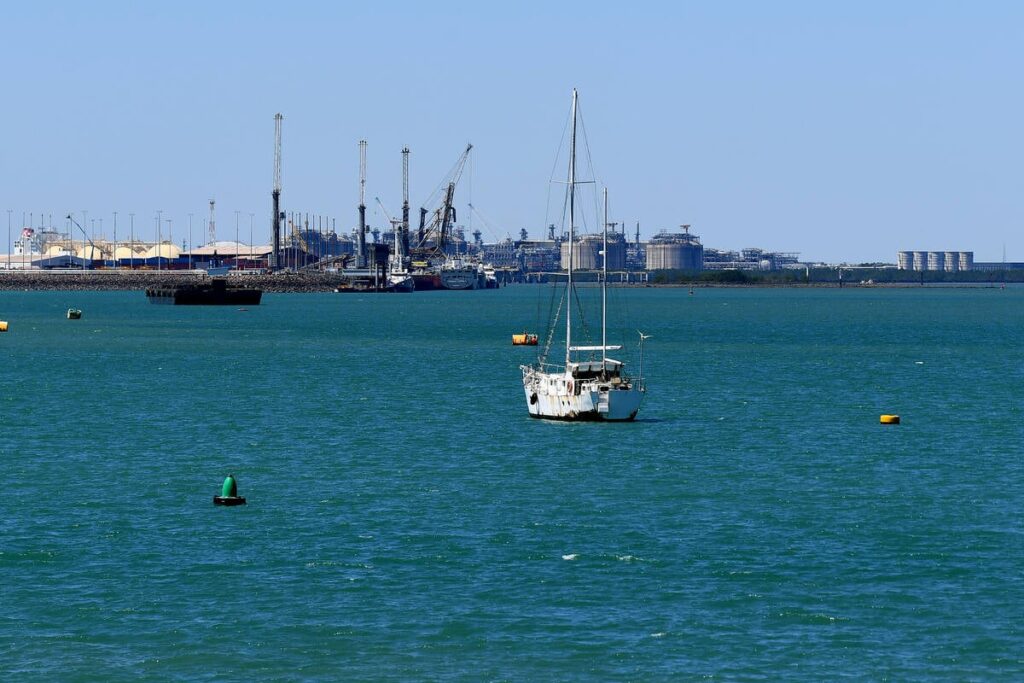
The tensions stem from a dispute over the ownership of the Port of Darwin.
The port is owned by Landbridge, a Chinese firm that secured a 99-year lease on the facility for US$506 million in 2015.
Australian prime minister Anthony Albanese promised to terminate that lease during his 2025 federal election campaign.
He wants to return the port to Australian hands for national security reasons, and his government has been actively searching for a buyer for the asset.
That isn’t sitting well with China.
Chinese ambassador to Australia, Xiao Qian, told reporters in January that there will be economic consequences if the Albanese government takes action.
“If anything happens, like the port (being taken) back by force or forceful measures, then we have an obligation to take measures to protect the Chinese company’s interest,” said Xiao, according to a story published by the Australian Broadcasting Corporation.
“Should Landbridge be forced to leave that port, I think it might also affect the substantive investment, co-operation and trade between Chinese companies and that part of Australia.”
In May, Landbridge announced that it is taking legal action against the Australian government through the World Bank’s International Centre for Settlement of Investor Disputes.
The company said in a statement that the Australian government’s attempts to return the port to Australian hands is discriminatory and inconsistent with the country’s obligations under the Australia-China Free Trade Agreement.
“Landbridge acquired its interest in the port through a fair, open and competitive process in full compliance with all applicable Australian laws and regulatory approvals,” stated the company.
“Multiple Australian government reviews have confirmed there are no national security concerns.”
There is a precedent for China targeting Australian agricultural exports in retaliation for a political spat.
China imposed an 80.5 per cent duty on Australian barley on May 19, 2020, in response to Australia calling for an international inquiry into the origins and handling of the COVID-19 virus.
The duty was removed more than three years later, on Aug. 5, 2023.
Source: producer.com