
The largest cropland owner in Canada is feeling bullish on ag

WINNIPEG — High grain prices could be around the corner and may remain high for a while, says the owner of 250,000 acres of cropland in Western Canada.
Robert Andjelic is feeling bullish about Canadian agriculture because a global shortfall of wheat and other grains is a realistic possibility for 2026 and 2027.
Prices may spike, and Canadian farmers can take advantage of the opportunity.
“I’m not talking a 10 per cent (increase). Wheat and some (others) could double (in price),” Andjelic said recently.
“Wheat is going to surprise a lot of commodity brokers and producers as to how much it’s going to go up, potentially.”
A shift toward hotter and drier weather around the globe, combined with fertilizer shortages in some countries, should increase demand for Canadian grain.
Andjelic is the owner and founder of Andjelic Land, which leases cropland to more that 250 producers, mostly in Saskatchewan.
He doesn’t specialize in market analysis and doesn’t watch the day-to-day moves in the commodity markets.
However, Andjelic closely follows events and trends that affect global agriculture.
Read Also
Two items, the U.S.-Israel war with Iran and the possibility of a Super El Niño, are expected to limit grain production in 2026 and 2027, Andjelic said.
Because Canada has a domestic supply of fuel and fertilizer, and competitors such as Australia do not, Canadian grain farmers have an edge right now.
“Canada, along with most likely … Russia, are best positioned to take advantage of what’s coming,” Andjelic said.
Super El Niño?
There’s a 90 to 96 per cent chance that an El Niño will develop this summer or autumn, says the NOAA Climate Prediction Centre in the United States.
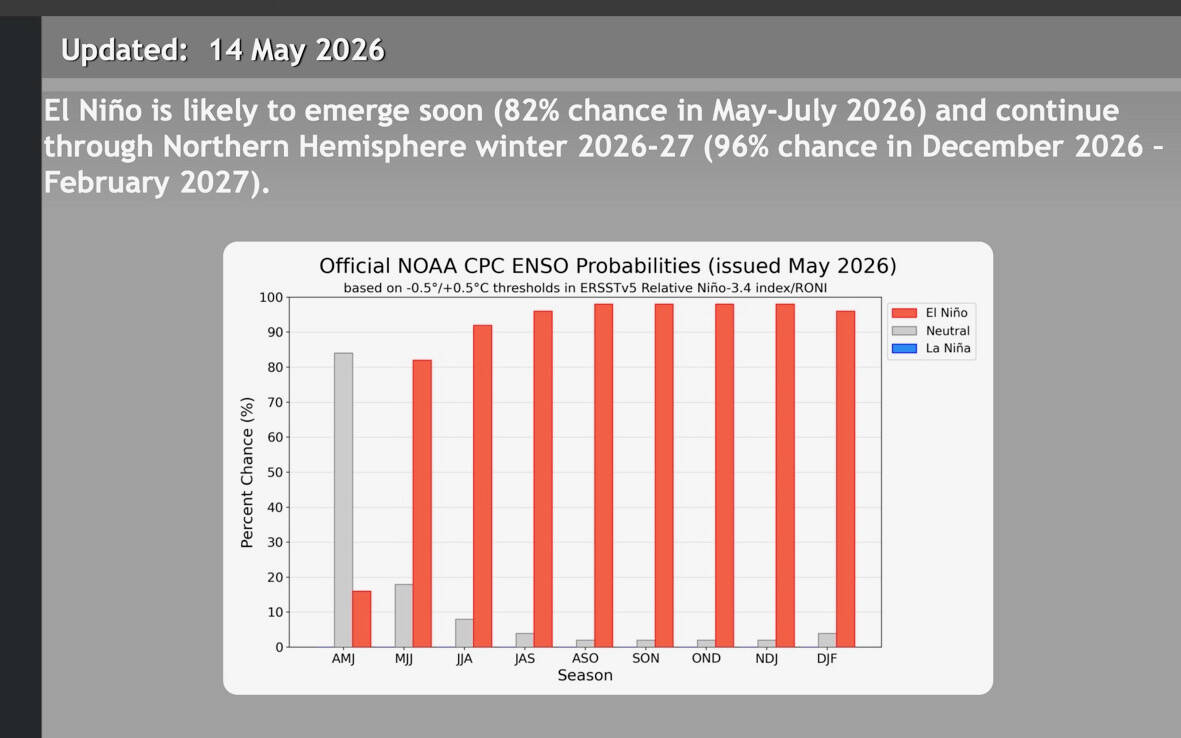
Photo:
NOAA
The critical question is whether it develops into a strong or very strong “Super El Niño.”
An El Niño usually delivers warmer weather to agricultural regions of North America, including the Prairies and U.S. Midwest.
If it becomes very strong, Western Canada could see a repeat of 1997-98, a winter with minimal snowfall and mild temperatures.
Previous El Niños have disrupted crop production around the globe, including key exporters such as Australia.
It could be unrelated to El Niño, but farmers in the central U.S. Plains, are already suffering through a drought.
A lack of precipitation this winter and spring hammered the hard red winter wheat crop in Kansas and surrounding states. The U.S. Department of Agriculture is forecasting the smallest winter wheat crop since 1966.
“The USDA’s numbers were not just supportive (for price), they were historically supportive,” Allison Thompson, a market analyst and owner of the Money Farm in Ada, Minnesota, said in AgWeek.
The winter wheat crop in northwestern Kansas is about a month ahead of normal development, said Jeanne Falk-Jones, an extension agronomist with Kansas State University.
Growers are looking at fields with unusually short and thin stands of wheat. Many farmers are having conversations with their crop insurance agent, trying to decide if their wheat is worth harvesting in June, she added.
Looking beyond this spring and into the winter of 2026-27, an El Niño weather pattern is not helpful for the central U.S. Plains.
“That drought is not going to be solved in any short time in the near future,” Andjelic said.
Fertilizer scarcity
Countries in the Persian Gulf region produce about 30 to 35 percent of global urea exports. With the chaos in the Strait of Hormuz, Australia and other countries who rely on imports are coping with a shortage of nitrogen fertilizer.
Farmers are making hard decisions about what they grow and how much fertilizer they apply.
Market watchers such as Thompson are realizing that the threats to wheat supplies are much larger than the drought in the central U.S. Plains.
“They don’t have the fertilizer…. Especially in the Southern Hemisphere, we’re going to start hearing about that,” she said.
“Australia is looking at a big cut in acreage this next year to wheat.”
There is a chance that the U.S. and Iran find a solution to the Strait of Hormuz stalemate, restoring shipments of urea and other products this summer.
However, global fertilizer supplies won’t snap back to normal.
Export terminals in the Persian Gulf could be damaged, and rebuilding such infrastructure doesn’t happen in a week, Andjelic said.
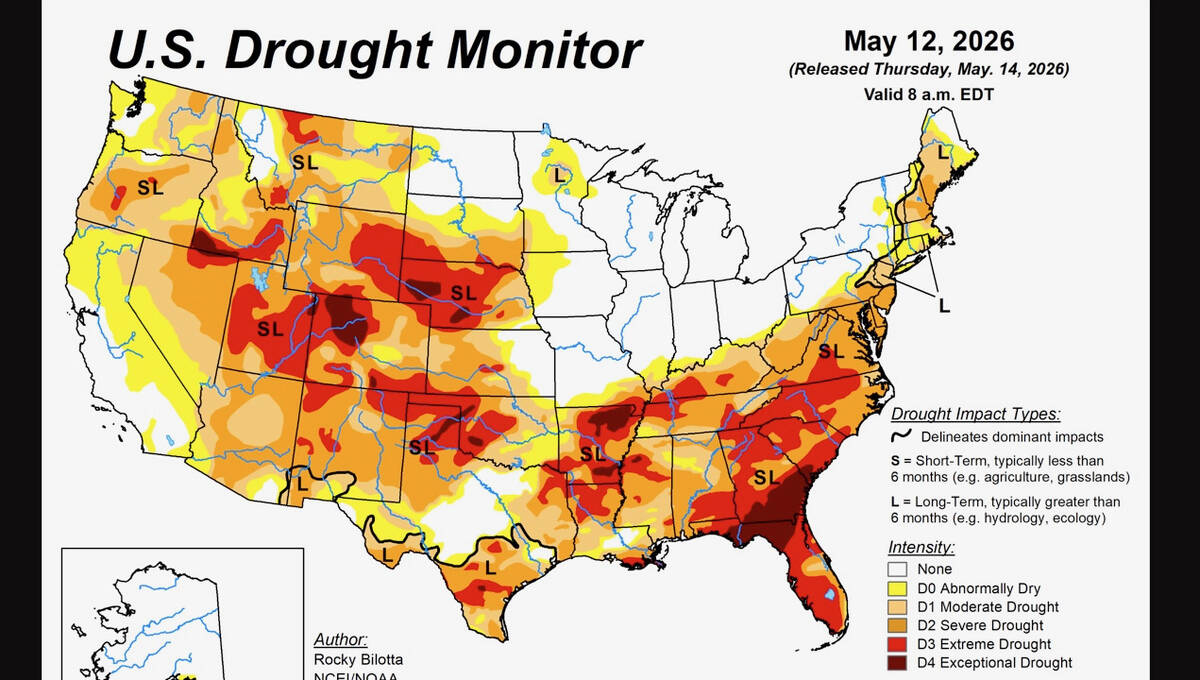
Photo:
U.S
“This stuff isn’t like you going to the local Home Depot and picking up the parts,” he said.
“Some of those (terminals and production plants) won’t be coming on stream for years.”
Chicago and Kansas City wheat futures have gained US$1.50 per bushel since early February. Kansas futures, for new crop, have been creeping towards $7.50 per bu., the highest level in two years.
As a result, the forecasted El Niño and the fertilizer shortfall may already be priced into the market.
However, the risks to global grain production are bigger and broader and will stick around, Andjelic said.
Canadian farmers are in a relatively good situation for 2026 and 2027, he added.
“With Canada’s position for production and global limitations … I’m very optimistic right now.”
Source: producer.com