
U.S. dairy exports to Canada increase
WINNIPEG — U.S. dairy exports to Canada have increased nearly 80 per cent since 2020.
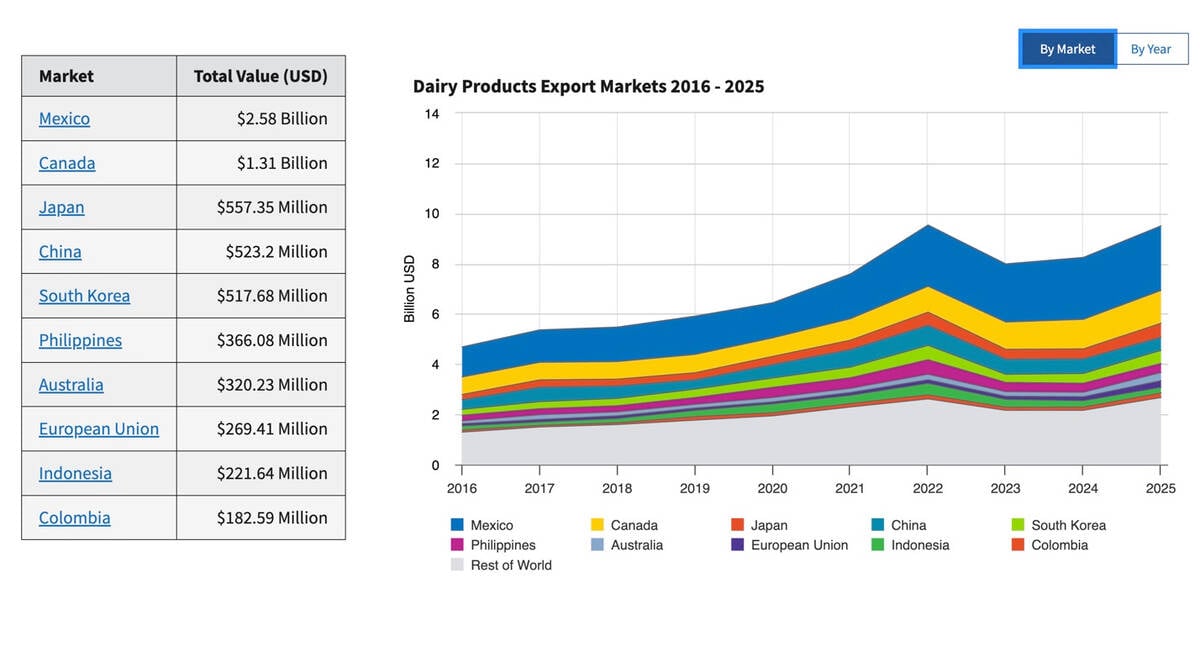
Five years ago, American businesses sold US$736 million worth of dairy products to Canadian buyers.
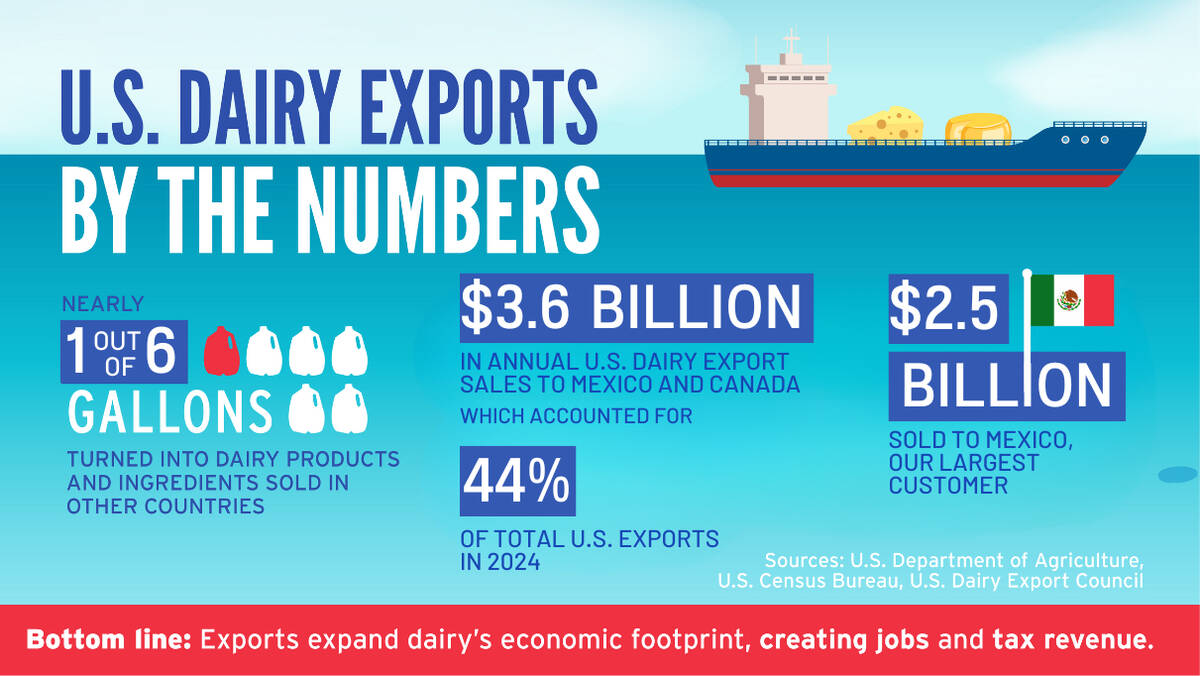
Last year, in 2025, that number was $1.31 billion, says data from the U.S. Department of Agriculture Foreign Agriculture Service.
Read Also
Canadian wheat faces tougher fight for markets
As global competition tightens, Canada’s wheat sector is leaning on customer support, training, and market diversification to protect sales for farmers.
It represents a 78 per cent increase in exports in just five years.
Canada is the No. 2 market for American exports of dairy products; Mexico is No. 1.
In 2025, the U.S. shipped $2.6 billion in dairy products to Mexico.
Overall the U.S. dairy industry had a good year in 2025 — exports to all countries were up 15 per cent compared to 2024.
WHY IT MATTERS: Dairy trade between Canada and the U.S. will be a major sticking point during the re-negotiations of the Canada-U.S.-Mexico Agreement.
“These are challenging times for U.S. dairy farmers, but they would be untenable without the export progress we’ve made as an industry — and the growth we continue to generate — in markets beyond U.S. borders,” Krysta Harden, president and chief executive officer of the U.S. Dairy Export Council (USDEC), said earlier this year.
American exports of cheese and butterfat led the export gains in 2025, especially butterfat, which jumped by 167 per cent, says the USDEC.
Canada was the top buyer of U.S. butterfat, with shipments to Canada increasing 50 per cent year over year.
The USDA numbers show strong growth in the Canadian market, but they don’t align with Agriculture and Agri-Food Canada data.
Imports of American dairy were significantly lower than US $1.3 billion, the department says.
The numbers are different, but the trendlines are the same.
U.S. dairy exports to Canada increased by nearly 48 per cent from 2022 to 2025, says the Canadian data.
Frustration continues
America shipped C$1.06 billion worth of dairy products to Canada last year, AAFC says. The most significant categories were butterfat and cheese, valued at approximately $500 million.
The numbers are positive, but American dairy exporters are unhappy with persistent Canadian barriers to trade, said Tony Rice, senior director of trade policy with USDEC.
“The trade data does show a significant increase … but there are a few elements missing from that conversation…. We hear from our exporters that it’s a nightmare to get quota access into the (Canadian) market.”
Under the Canada-U.S.-Mexico Agreement (CUSMA), the U.S. is entitled to 3.5 per cent of Canada’s dairy market. That access is provided through tariff rate quotas (TRQ), or tariff-free volumes of certain products.
American dairy exporters are struggling to fulfil those quotas because Canadians businesses that are closer to consumers — retailers, restaurants and food service — don’t receive any quota, Rice said.
Most of the quota still goes to Canadian dairy processors, he added.
Again, the trade data suggests that American dairy farmers are selling more products to Canada and that CUSMA is working, but U.S. politicians aren’t buying it.
About 80 members of Congress (Democrats and Republicans) penned a letter to U.S. Trade Representative Jamieson Greer, urging him to push Canada on dairy trade during the re-negotiations of CUSMA.
A joint review of the agreement by Mexico, Canada and the United States is formally scheduled to begin July 1.
The letter from the politicians to the USTR says Canada has “a long history of unfairly restricting imports of U.S. dairy products while (dumping) low-price nonfat milk solids onto the global market.”
In some positive news, the members of Congress say CUSMA has been helpful for U.S. farmers, businesspeople and workers.
However, those politicians are convinced that Canada is a bad actor around dairy.
“We ask that before and during the 2026 review process you work to strengthen (CUSMA) … and hold Canada accountable to its commitments.”

Source: producer.com