
Federal Seed Increase Unit must be preserved
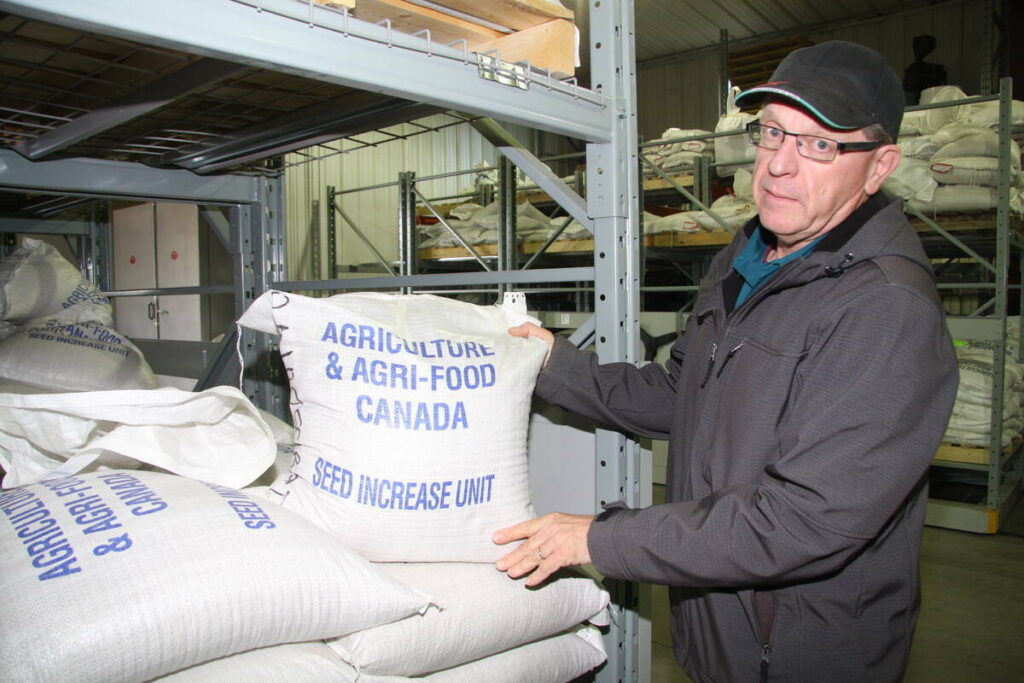
I am concerned for the future of the Agriculture Canada Seed Increase Unit at the Indian Head Research Farm.
Because the research farm is slated for closure this year as part of the announced cuts, the future of the Seed Increase Unit (SIU) is in question.
• Follow all our coverage of Agriculture and Agri-Food Canada’s proposed cuts here.
Read Also

Agriculture sector must fight against proposed AI data centres
The author argues a data centre near Regina would adversely impact water use, air quality, the growth and yield of crops and how future expansion could reduce farmland.
For 25 years I worked at the Indian Head Research Farm.
My program responsibility was head of the SIU, which produces breeder seed of crop varieties developed by Agriculture Canada scientists.
It functions as a bridge between plant breeders and pedigreed seed growers.
The SIU receives small amounts of seed from the originating scientists, which it propagates to produce breeder seed.
This is then distributed to pedigreed seed growers, who multiply it and sell the varieties as certified seed to commercial farmers. Thus, the breeder seed produced by the SIU is the ultimate seed source of the varieties in question.
According to data from the 2026 Saskatchewan Seed Guide, varieties produced as breeder seed by the SIU at Indian Head represent close to 20 million acres of insured commercial crop production in the three prairie provinces and British Columbia. Considering this critical role, the unit merits continued operation.
The Indian Head Research Farm is an ideal location.
Its Class 1 soils are highly productive and the fields maintained to provide a clean slate for pure seed production. Finding suitable land for breeder seed production at another site would be challenging.
In addition to its land base, the SIU has a well-equipped seed plant and the specialized equipment necessary to produce, condition and store breeder seed. It is an excellent facility.
For decades, the SIU enjoyed a stellar reputation as the provider of breeder seed with excellent genetic integrity, purity, freedom from seed-borne disease and high germination. Thousands of 15 kilogram “units” were shipped to select growers with very few issues.
What changed?
Physical facilities are only half of the recipe for successful breeder seed production. The other critical component is the team producing the seed.
The head of the SIU must be well versed in plant breeding, agronomy, pedigreed seed production, have a working knowledge of plant pathology and have official plant breeder status from the Canadian Seed Growers Association. It is not a part-time position for someone at a research centre hundreds of kilometres away.
In my opinion AAFC management has lost an appreciation of the critical role of the SIU.
When I was hired as head of the unit, my performance was subject to scrutiny by an advisory committee consisting of senior Agriculture Canada plant breeders, representatives of the CSGA, the seed trade, Saskatchewan Agriculture and the head of the University of Saskatchewan’s Crop Development Centre.
I understood the high expectations of my position.
How does current Agriculture Canada management view the role of the SIU and its importance? The answer will be shown by their plans for it.
Apart from the Head of the SIU, its operational staff must be experienced, well-trained and certified to condition, sample and grade the seed.
The requisite knowledge is gained from years of practical experience. Attention to detail and a methodical approach are necessary because a single error can destroy a whole year’s effort.
In short, the SIU staff are essential to successful breeder seed production. They must be properly educated, accredited, experienced and motivated.
By nature, they must be intolerant of shoddy work — perfectionists. Anything less is a recipe for failure.
The SIU is an essential element of the Canadian pedigreed seed system. Its neglect or demise would be a serious blow to Canadian agriculture.
Those in position to affect the future of the unit must be held responsible for the results of their decisions.

Source: producer.com