
Fertilizer supply must be protected amidst trade concerns
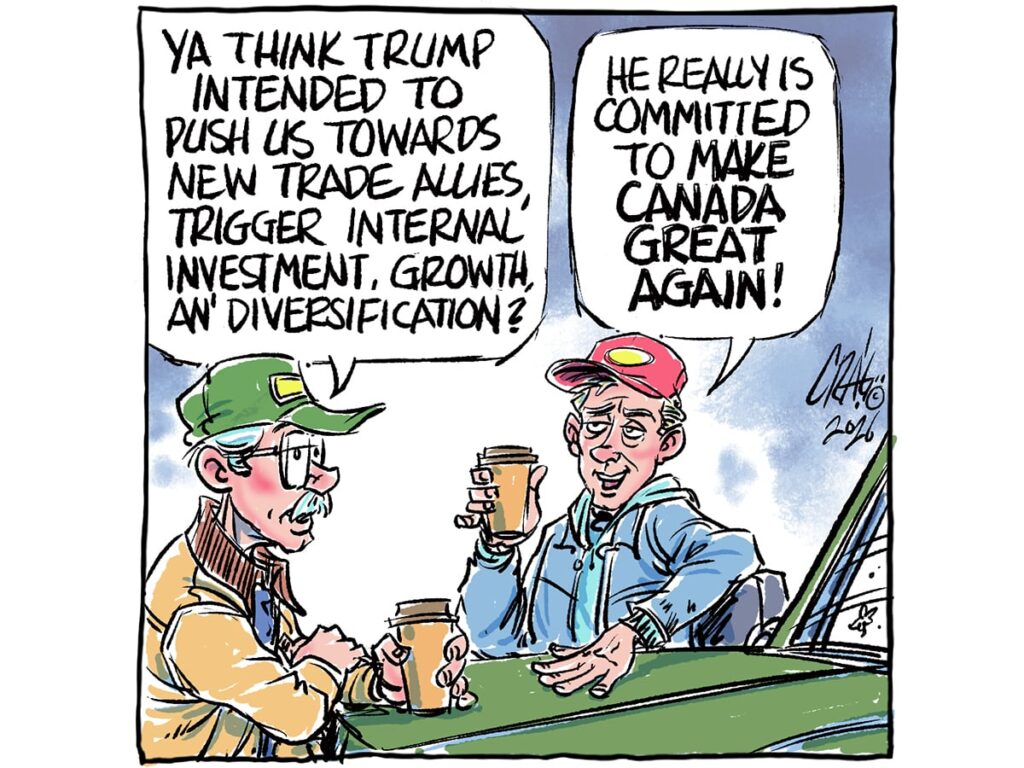
There are troubling signs ahead for the joint review of the Canada-United States-Mexico Agreement that is set to begin July 1.
U.S. commerce secretary Howard Lutnick said Canada’s trade strategy is the worst he’s ever seen.
Prime minister Mark Carney recently said many of Canada’s former strengths, which were based on our close ties to America, have become weaknesses that must be corrected.
Read Also

Agriculture sector identifies gaps in farm safety net
Canada’s farm risk management programs are lagging behind rising risks on Canadian farms, leaving coverage gaps, a group of ag experts say.
The two sides haven’t been at the table since last fall, and the United States is reportedly demanding what amounts to an entry fee from Canada before negotiations restart.
The biggest concern for Canadian farmers when it comes to the upcoming talks is to maintain access to U.S. agricultural markets, which CUSMA largely protected from Trump’s trade wars.
However, the ability to import fertilizer from our southern neighbour is a growing concern.
One-third of global fertilizer shipments, including almost half of the global urea trade, moves through the Strait of Hormuz.
Its closure due to the conflict in Iran elevated global fertilizer prices and even threatened access to crop nutrients in important growing regions.
The United Nations recently warned this disruption to the fertilizer trade is threatening global food security and could trigger a global food catastrophe.
Closure of the strait has some fertilizer-producing countries considering protectionist measures that would have been unthinkable a short time ago.
For instance, a senior executive with the American Farm Bureau Federation, John Newton, recently said the U.S. should strongly consider restricting its fertilizer exports and create a strategic fertilizer reserve.
This would be bad news for Canadian farmers because 38 per cent of all U.S. fertilizer exports in 2025 headed north of the border.
Another story worth watching is the U.S. Department of Justice’s recent opening of investigations into major fertilizer producers, including Nutrien, for potential price-fixing and collusion.
China is one of the world’s largest fertilizer suppliers, and it often restricts exports when global supplies tighten to insulate its farmers from price shocks.
Access to fertilizer could soon become a significant risk for Canadian farmers, and the country should move to bolster domestic production and diversify its suppliers.
In a recent column in The Western Producer, D’Arce McMillan argued that Canada’s energy industry should join with farmers to make an additional home-grown nitrogen fertilizer plant.
This approach would increase domestic demand for natural gas, enable the country to capitalize on growing fertilizer demand and require far less infrastructure compared to getting another natural gas pipeline to the coast to bolster exports.
Western Canadian farmers have reliable access to nitrogen in the form of anhydrous ammonia. There are deficits of urea and UAN, which are mostly met by imports from the U.S.
Where Canadian farmers are most vulnerable is access to phosphate, because close to 85 per cent of the phosphate used by Canadian farmers is barged up the Mississippi River from New Orleans.
Canada should move to reduce this exposure because it’s within the realm of possibility that the U.S. could restrict access to phosphate.
A new phosphate fertilizer trade corridor is already being created to service farmers in Western Canada.
V6 Agronomy and the Port of Johnstown reactivated a long-dormant section of the St. Lawrence Seaway to connect western Canadian farmers to eastern Canadian and international markets.
Phase 1 of the Odyssey Terminal project includes construction of a 20,000-tonne fertilizer storage building that can accommodate a full Handysize bulk carrier vessel and is expected to be complete by July 2026.
Phase 2 will add another 50,000 tonnes of storage to accommodate the loading of rail cars all winter. That phase is scheduled for completion in late 2027 or early 2028.
There is also an opportunity in the expansions planned at the Port of Churchill to add the ability to import phosphate.
There is enough fertilizer on hand to get farmers through the seeding campaign now underway.
To make sure there is enough fertilizer to make it through next spring, suppliers should look seriously at developing more options when it comes to where they source product.

Source: producer.com