
GrainFox adds AI chatbot to marketing platform
Manitoba-based GrainFox has added an artificial intelligence chatbot to its grain marketing platform.
The new tool, called Sinoa, lets users ask grain-marketing questions in plain language.
Mark Lepp, chief executive officer and founder of GrainFox, said the chatbot builds on the company’s Smart Advisor tool, which was launched in 2023 to provide individualized sales recommendations to growers.
“This is the next step in evolution of our technology,” he said.
AI tools can help streamline farm operations such as grain marketing.
The chatbot’s answers draw on GrainFox’s existing market data and analysis, as well as information entered by users.
“It’s purpose built for grain marketing,” he said.
“It’s designed to help our customers make better, faster grain market decisions by turning complex data into actionable guidance.”
The launch comes as farmers make greater use of digital tools for marketing and business decisions.
Bushel’s 2026 State of the Farm report found 56 per cent of respondents use an app or software for grain marketing, while 14 per cent said they are already using AI tools on the farm. Among large farms using AI, the report said the top use was business or financial analysis.
Read Also

Lepp acknowledged a farmer could put a marketing question into a general-purpose large language model such as ChatGPT and get an answer. However, he said those tools would not have GrainFox’s proprietary data, historical analysis or farm-specific information behind them.
“There would be no context behind it,” he said.
GrainFox has been providing grain market analysis and sales recommendations for more than 20 years. Lepp said the company has built its platform around the idea of marrying market signals with the realities of individual farm operations.
Sinoa sits on top of GrainFox’s analytics engine, rather than starting from scratch.
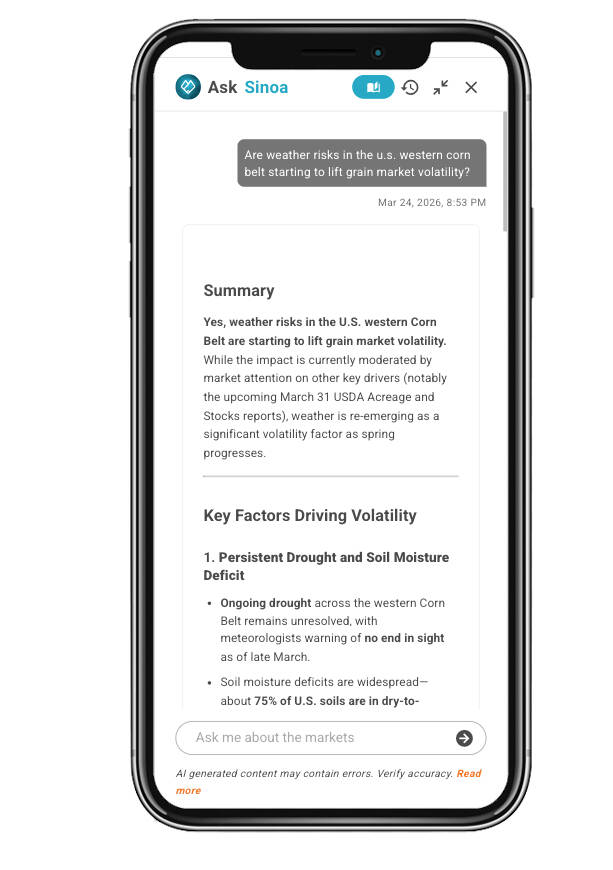
Photo:
GrainFox
Prior to the Sinoa overlay, a farmer would read through GrainFox market updates, dashboards or reports and then apply that information to their own farm. The chatbot allows them to ask direct questions about their inventory, sales plan or market outlook.
“It translates all of that into plain language insights and recommendations for the customer,” Lepp said.
“It’s literally an analyst in your pocket that you can ask questions of.”
However, Lepp said the tool is not meant to make decisions on its own or replace farmer judgment.
“It’s not autonomous,” Lepp said.
“It augments and it doesn’t replace farmer decision-making. It empowers it, kind of like a co-pilot, not an autopilot.”
He said the best results still come from combining strong data, useful tools and experienced judgment.
“AI just strengthens that combination,” he said.
“It certainly doesn’t replace it.”
Source: producer.com