
The un-economics of creep feeding calves in 2026
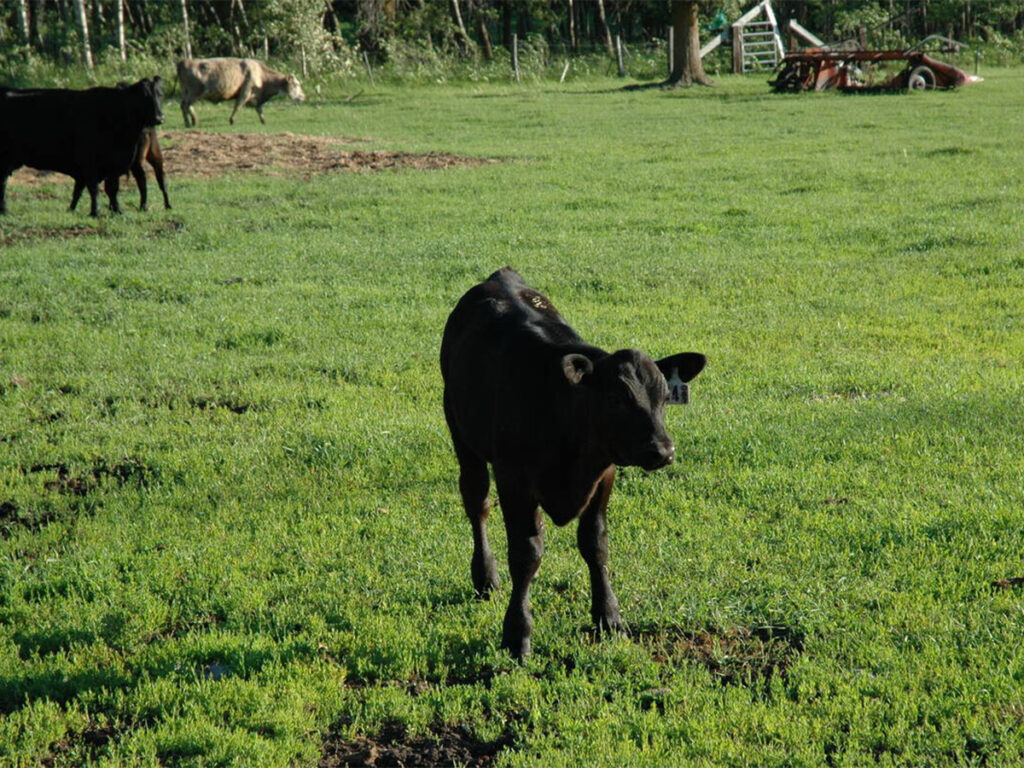
It was common years ago to set up a simple fence around a wooden creep feeder that kept the cows out and allowed the spring calves to eat a couple pounds of whole oats.
It worked to maintain growth on their young frames as mom’s milk dried up and pastures became less nutritious. That was the original concept of creep feeding calves.
As a friend of mine who raises 400 Angus-Simmental beef cows says, sometimes you have to throw your calculator away to see the best on-the-farm benefits.
Sorry, I am not ready to throw my calculator away just yet. Instead, I have calculated the annual profitability of creep feeding calves over the last 20 years.
Except in a few years, when feed prices were exceptionally high compared to fall calf prices, it has been profitable to creep feed calves on paper. Sometimes, it was a few dollars per head, other times, such as in 2025, a tidy profit of $170 per head was pocketed.
Read Also
The funny thing about 2026, the economic conditions are similar to last year (high calf prices relative to feed prices), but I am surprised that creep feeding may not be profitable or some people will break even at best.
The present breakdown of creep feeding spring calves is illustrated in the following chart.
I input the current market price for 600 pound calves at $6.90 per lb. and make a big assumption that it will maintain itself until autumn.
Plus, my home-made creep ration costs $350 per tonne, which contains a lot of $6 per bushel barley. With a traditional negative price gradient discount in place of $10 hundredweight, a phenomenal profit of $285 per calf should be realized.
However, the truth of the matter is, the higher the calf prices, the greater the volatility and market discounts as calves increase in weight.
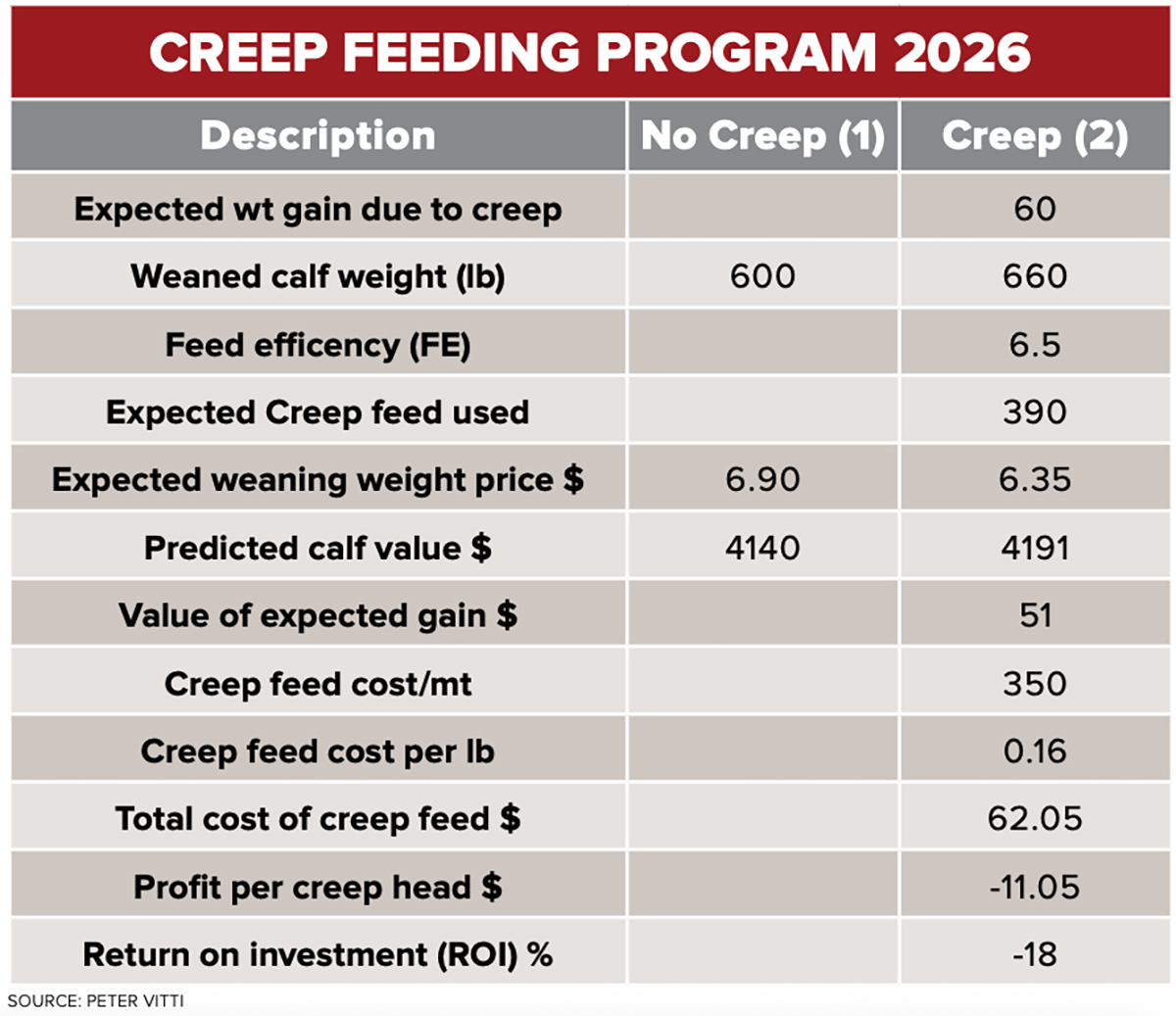
In my particular example, the raw hundredweight discount from 600 to 700 lb feeder cattle is $50 to $60 cwt., which results in a nominal loss of about $10 per calf.
To many producers, when solely based upon such pure economics, it makes creep feeding hardly worth the effort of moving creep feeders out to pasture.
At this point, this is where my friend’s theory of “un-economics” kicks in. He argues that six on-the-farm benefits remain the same due to creep feeding:
- Drought – The true purpose of creep feeding is to fill the nutritional gap between the nutrient requirement of spring calves’ growth and what nutrition the nursing cow and pasture provide. During drought conditions, it is not unusual to see spring calves visit the creep feeders more often than when pastures are lush and cows are milking well.
- More saleable weight — Producers can average 30 to 80 lb. per calf of added gain with creep feeding, particularly on large-frame good quality steers with a lot of future growth potential.
- Efficient gains are achieved — Good quality steers are masters of turning high quality and palatable creep feed into lean body tissue. Spring calves often convert good quality creep at the rate of six lb eaten into one lb of gain.
- Not so dependent on the cow — I know of a few producers who put their creep feeder out as early as possible in the grazing season. As a result, they have witnessed that weaning weights tend to be higher by 20 lb. with steady feed efficiencies of six to seven lb. of feed per lb. of gain.
- More uniform weaned calves — Creep feed tends to even out the nutrition received by all calves within a cow herd, and as a result, similar weaning weights by fall time. That’s because some cows are not producing as much milk compared to others, such as first calf heifers compared to older brood cows.
- Less weaning stress — Another friend of mine weans about 300 calves every fall. She finds that her creep-fed calves cry out for a day or so, but they quickly forget about mom. These weaned calves are also bunk-broke and tend to go onto a 45-backgrounder feeding program in a faster way.
These benefits are good creep feed testimonials. Even in 2026, when its direct profitability might be break-even dollars, producers might still consider putting out their creep feeders onto pasture, anyway.
Source: producer.com